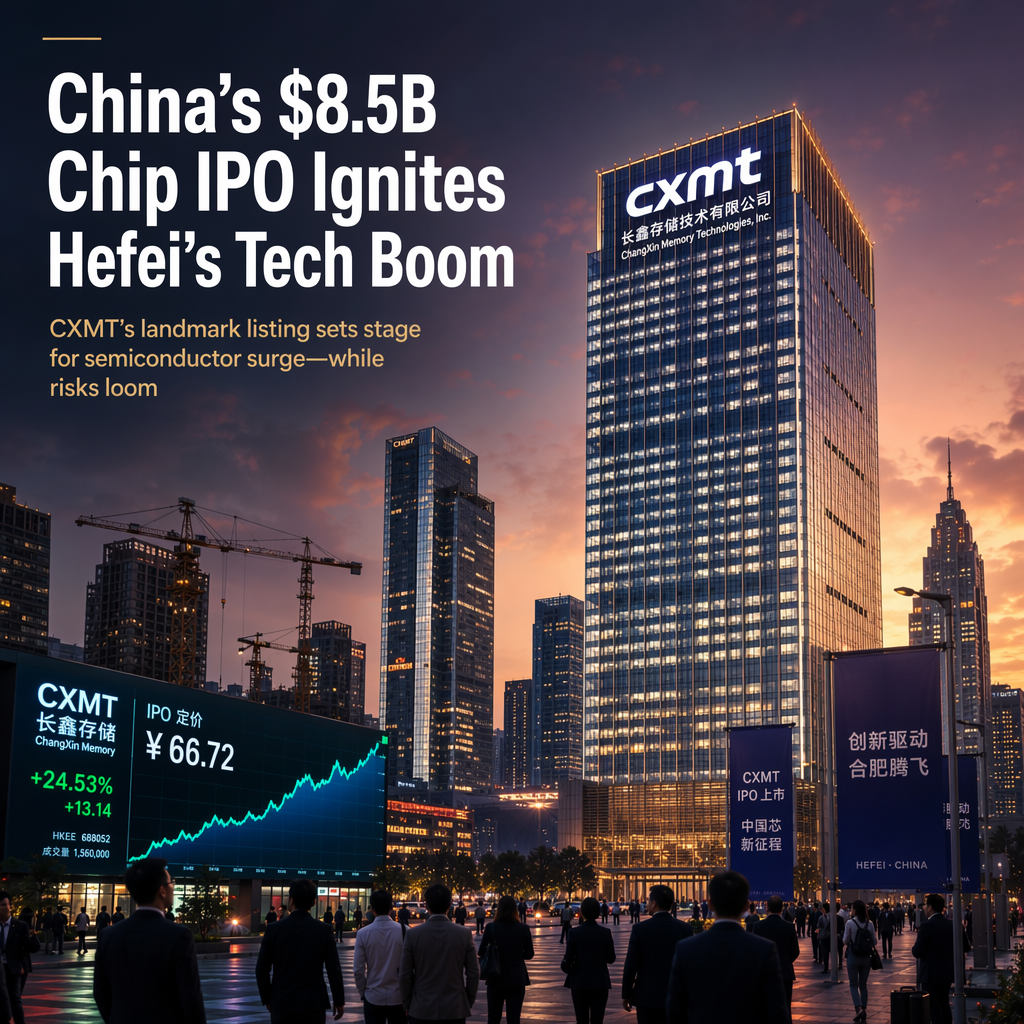
Chinese memory chip maker CXMT is preparing to launch an $8.5 billion initial public offering (IPO) on Shanghai's bourse next week, marking the largest Chinese chip IPO to date [1]. The company’s headquarters are located in Hefei, a city that has rapidly transformed into an economic powerhouse by leveraging investment funds to attract technology companies like CXMT [1]. This strategic approach has positioned Hefei to reap significant rewards from its bet on the semiconductor sector, further enhancing its reputation as a hub for tech investment [1].
The anticipated success of the CXMT IPO is drawing close attention from both investors and policymakers, as it is expected to serve as a bellwether for future market sentiment toward Chinese semiconductor companies [1]. If the IPO performs well, it could catalyze additional capital inflows into the sector, reinforcing the model of local governments investing heavily in Beijing’s priority industries [1]. However, the article also highlights concerns among market analysts regarding the risks of overinvestment. As more local governments attempt to replicate Hefei’s strategy, there is a growing risk of inefficient capital allocation, potentially resulting in unprofitable or redundant projects [1].
A Shanghai-based technology analyst noted that while Hefei’s success has inspired other cities to pursue similar strategies, not all regions possess the same resources or market environment to ensure success [1]. The intensifying competition for tech investments raises the stakes, especially if these ambitious bets fail to deliver expected returns [1].
Overall, the CXMT IPO is seen as a pivotal event that could shape the trajectory of China’s semiconductor industry, with the potential to attract further investment but also to heighten caution among investors wary of overheating in the market [1].
CONCLUSION
CXMT’s upcoming $8.5 billion IPO in Shanghai is a landmark event for China’s semiconductor sector and Hefei’s investment-driven growth model. While the listing could spur further investment and solidify Hefei’s status as a tech hub, analysts caution that the rush to replicate this approach may increase risks of inefficient capital allocation and market overheating.