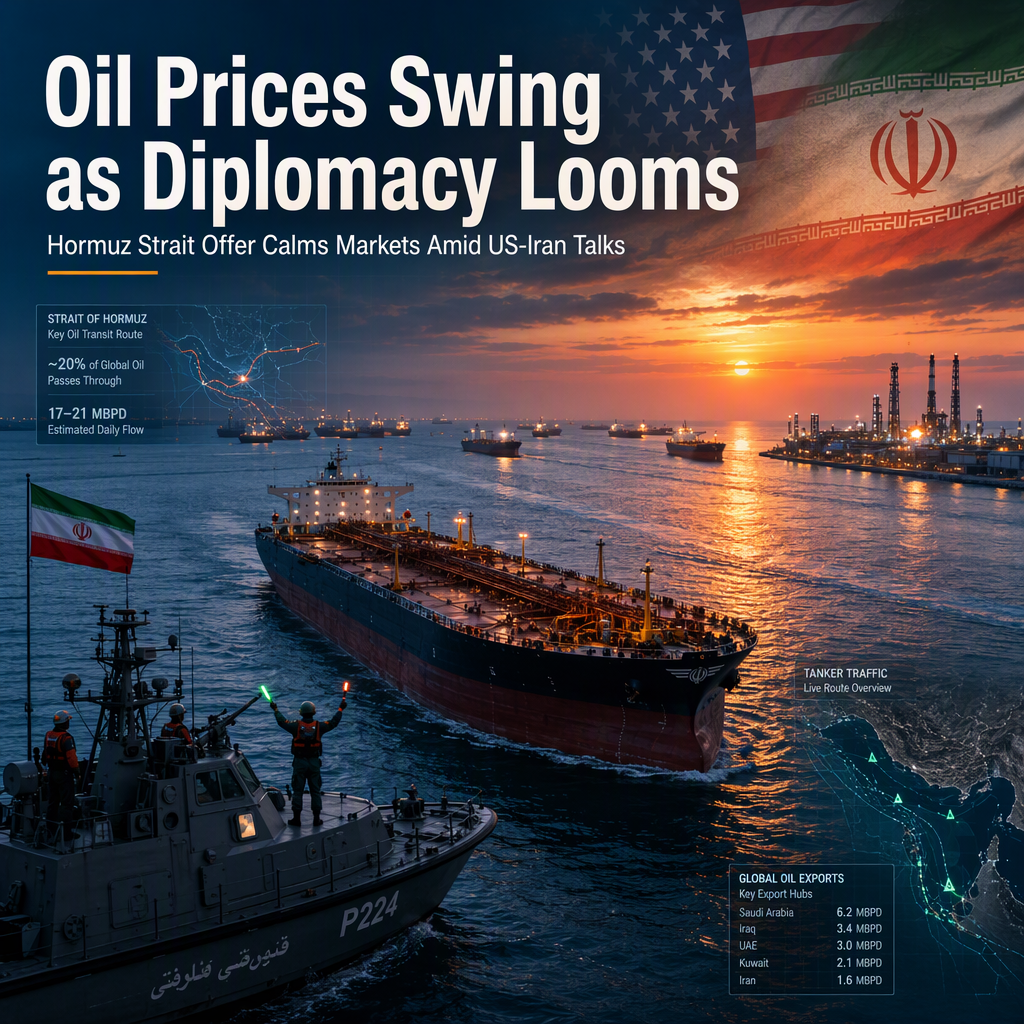
Iran has offered to reopen the Strait of Hormuz, a vital passage for nearly 20% of the world's energy supply, within seven days if the United States initiates steps to reduce military pressure, according to a senior Iranian official cited by Kyodo News [1]. This development comes as geopolitical focus intensifies ahead of the United Nations General Assembly in New York, where US President Donald Trump is scheduled to address the assembly and potentially meet with Iranian President Masoud Pezeshkian, as well as other key leaders from China and Gulf nations [2].
The oil market has responded sharply to these headlines. WTI oil prices experienced significant selling pressure, dropping 1.65% to near $90.00 after earlier gains, following news of Iran's offer [1]. However, during European trading hours on Tuesday, WTI stabilized and hovered around $92.40 per barrel, breaking a four-day losing streak as traders adopted a cautious stance in anticipation of possible US-Iran diplomatic developments at the UN [2].
Market anxiety appeared to ease after reports that energy supplies successfully transited the Strait of Hormuz over the weekend. Saudi Arabia reportedly moved crude through the strait at a rate of 2.9 million barrels per day over the past six days, and satellite images showed supertankers with a combined capacity of 14 million barrels docked at Saudi export terminals—the highest count since at least June [2].
Strategists at Deutsche Bank noted that markets performed strongly over the last 24 hours, even as Brent crude briefly fell below $100 per barrel, declining by 3.40%, amid growing hopes for a diplomatic solution in the Middle East [2]. The Trump administration has also proposed a $5 billion fund to support reconstruction in the region, further contributing to the diplomatic momentum [2].
CONCLUSION
The oil market remains highly sensitive to geopolitical developments in the Middle East, with Iran's conditional offer to reopen the Strait of Hormuz and upcoming US-Iran diplomatic engagements driving volatility. While immediate supply concerns have eased, traders are closely watching for further diplomatic progress, which could continue to influence oil prices in the near term.