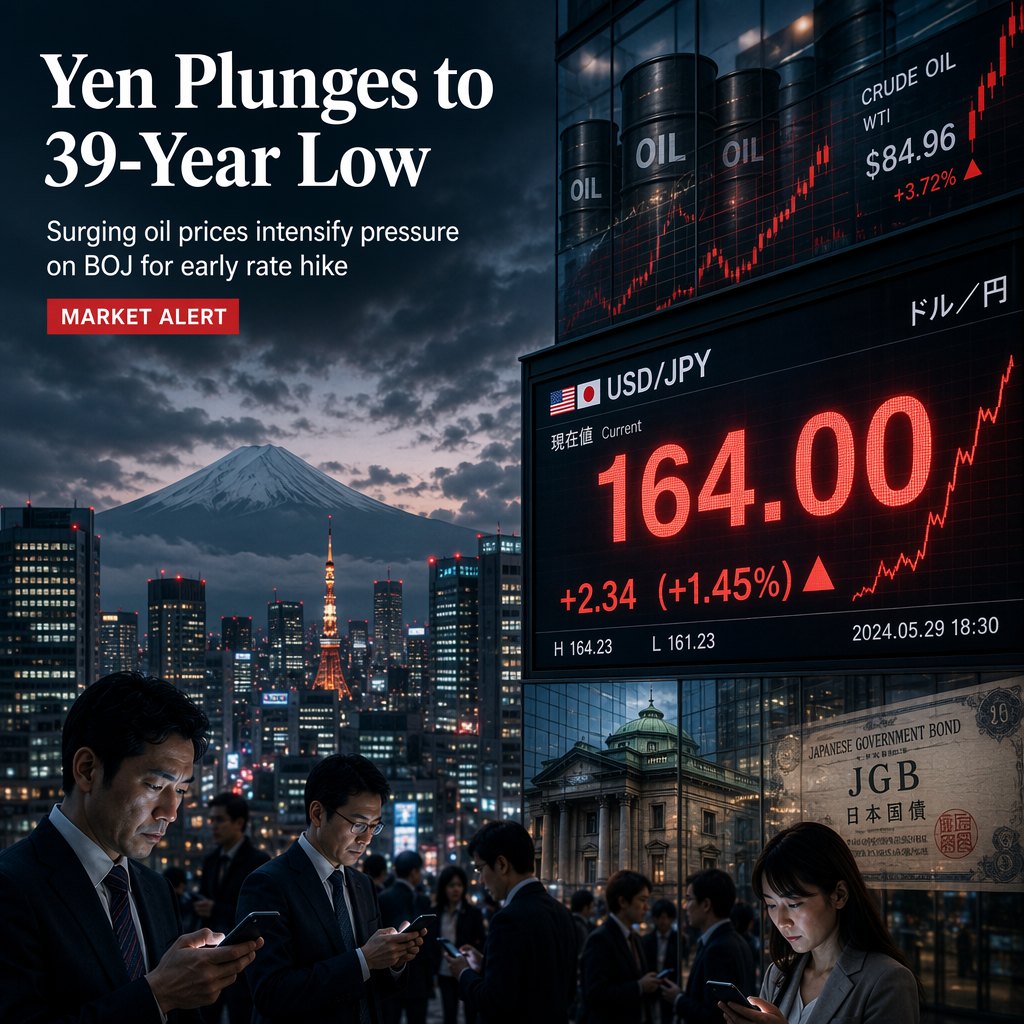
The Japanese yen has fallen to its weakest level in 39 years, nearing 164 per dollar, as escalating US-Iran tensions drive oil prices above $100 per barrel and reignite inflation concerns in Japan [1]. This sharp depreciation has intensified market speculation that the Bank of Japan (BOJ) may be compelled to raise interest rates sooner than previously expected to avoid falling behind the curve on inflation [1]. A Tokyo-based currency strategist noted that the yen's decline, coupled with rising energy costs, is increasing pressure on the BOJ to act, warning that delayed action could undermine confidence in the central bank's ability to contain inflation [1].
Japanese government bond yields are also rising, approaching 3%, as fiscal concerns grow and speculation mounts about the actions of Japan's mega pension fund, which is believed to be buying large amounts of JGBs and influencing both yields and the yen [1]. Traders are closely watching the 163-164 yen per dollar support levels, with technical indicators suggesting continued heavy selling pressure on the yen unless there is a strong policy response from the BOJ [1].
Market sentiment remains cautious, with participants balancing geopolitical risks, rising energy prices, and the potential for shifts in Japan's monetary policy [1]. Political developments in Tokyo, including discussions of new economic blueprints, are also being monitored for their potential impact on fiscal and monetary policy [1]. Any clear signal from the BOJ regarding a rate hike or intervention to support the yen could quickly alter market dynamics [1].
CONCLUSION
The yen's slide to a multi-decade low and surging oil prices have heightened expectations for an earlier-than-anticipated BOJ rate hike. Market participants remain cautious, closely watching for policy signals from the BOJ as volatility and inflation risks persist.