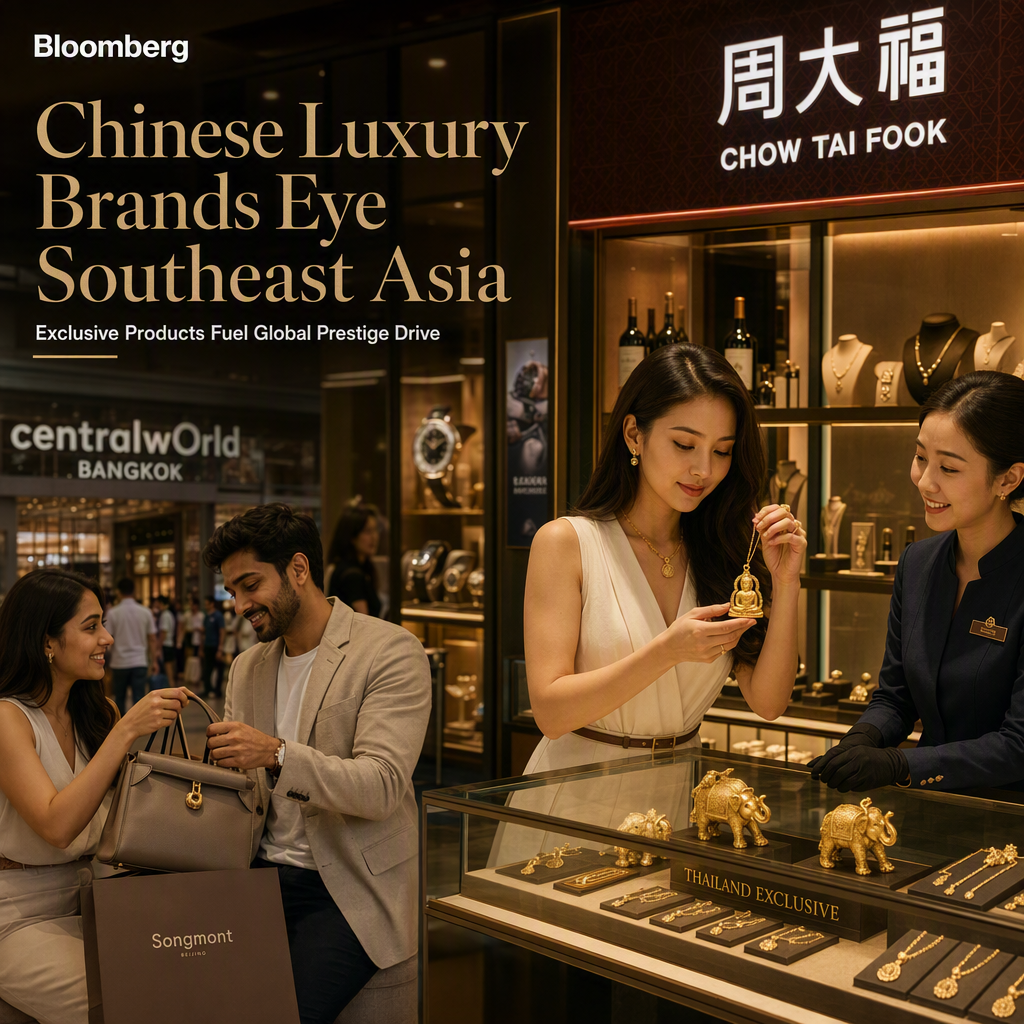
Chinese luxury brands are increasingly using Southeast Asia as a testing ground for their international export strategies, aiming to establish a premium image abroad by targeting affluent consumers in the region with products such as jewelry, watches, and wine [1]. At Chow Tai Fook's Bangkok store, staff are promoting Thailand-exclusive jewelry items, including gold elephant figurines and Buddha pendants, as part of a localized approach to appeal to Southeast Asian tastes [1]. Similarly, Chinese handbag brand Songmont has opened its first overseas pop-up store in Bangkok's centralwOrld shopping center, attracting international shoppers such as Nathan from India, who purchased a handbag for his girlfriend [1].
This trend follows previous successes by Chinese brands in exporting cars and TVs to Southeast Asia and reflects a broader push to diversify markets and build global prestige after establishing themselves in China and other export destinations [1]. Industry observers cited in the article note that Southeast Asia's openness to new luxury brands and vibrant retail environments make it an attractive market for Chinese exporters seeking to build brand cachet [1]. The strategy of offering exclusive, locally tailored products is seen as a way to resonate with local consumers while enhancing the brands' international reputation [1].
No specific financial figures, trading advice, or technical indicators were provided in the article [1].
CONCLUSION
Chinese luxury brands are leveraging Southeast Asia's growing affluence and openness to new brands as a springboard for global expansion. The focus on localized, exclusive products is intended to build brand prestige and diversify export markets, though no financial data or market reactions were disclosed.