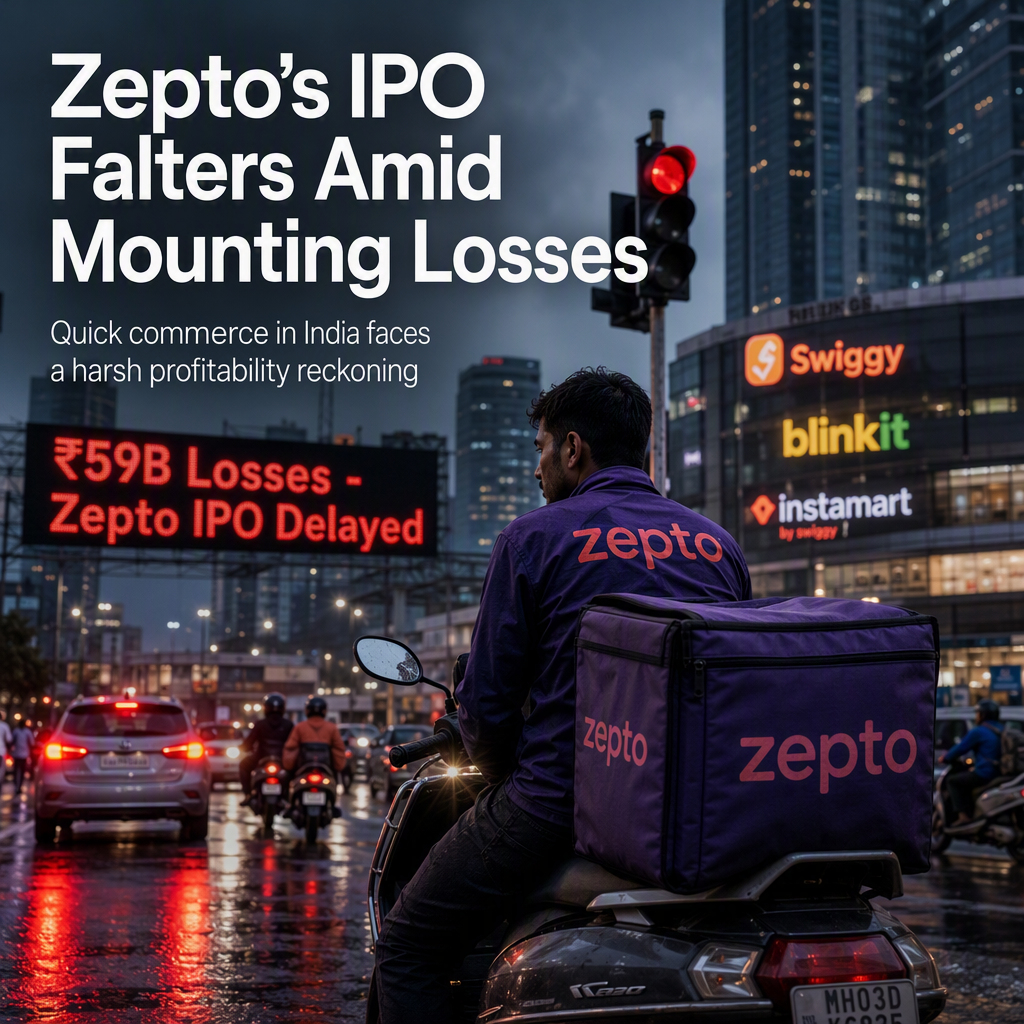
Zepto, a prominent player in India's quick commerce sector, has faced a setback in its IPO process, drawing attention to the industry's deepening challenges and fault lines [1]. The company's losses surged 25% year-on-year, reaching 59 billion rupees ($620 million) for the fiscal year ending March, underscoring concerns about the sector's ability to achieve sustainable profitability [1]. Market analysts attribute these losses to relentless price wars, costly logistics, and high customer acquisition expenses, all of which are inherent to the quick commerce model that promises delivery within minutes and demands substantial investment in infrastructure and supply chain management [1].
Investor sentiment has shifted markedly, with enthusiasm dampened by mounting losses and intense competition. While the sector was previously viewed as a hotbed for rapid growth and innovation, the reality of deep financial losses has tempered expectations [1]. Trading sentiment around IPO candidates in the quick commerce space remains cautious, and price levels for sector leaders reflect investor uncertainty. Technical indicators suggest resistance at valuation levels previously achieved during peak fundraising cycles, indicating a lack of strong support for new listings until clearer signs of profitability emerge [1].
Analysts warn that the sector's economics are still being defined, and the current trajectory is unsustainable without a shift towards profitability. Investors are now prioritizing disciplined financial management and evidence of sustainable margins before committing capital to companies in the space [1]. The Zepto IPO setback serves as a warning to other quick commerce firms: as competition intensifies and losses continue to mount, the sector must adapt its strategies to regain market confidence [1].
CONCLUSION
Zepto's IPO setback highlights the urgent need for profitability and disciplined financial management in India's quick commerce sector. Investor sentiment has turned cautious, with mounting losses and intense competition dampening enthusiasm for new listings. The sector must demonstrate sustainable margins to win back market confidence and attract capital.