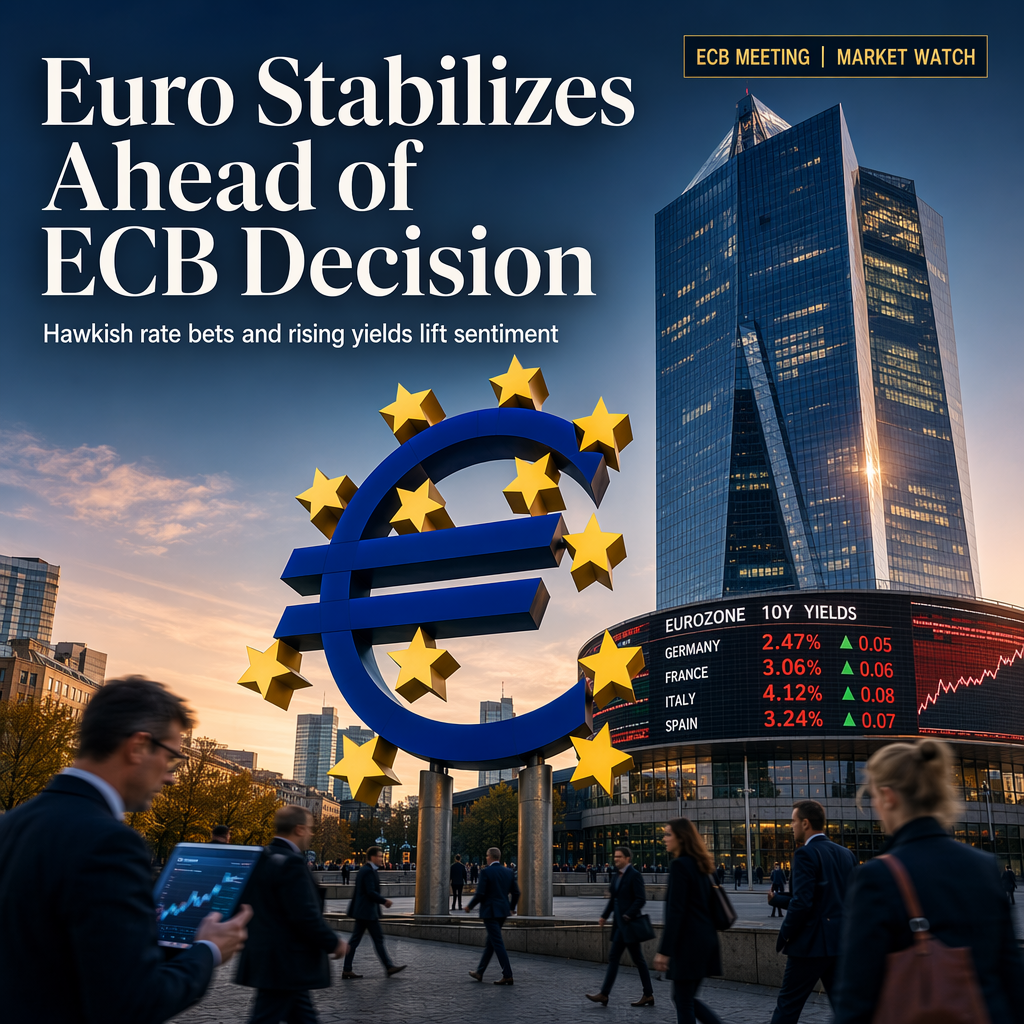
The Euro is showing signs of recovery, led primarily by improving spot demand and hedge unwinding, as noted by BNY’s Geoff Yu. This has resulted in Eurozone assets reaching their highest net exposure in more than two years, although forward and swaps demand remain weak, limiting overall conviction in the currency’s rebound. EUR/USD is seeing light bids, while EUR/GBP is considered more attractive on a risk-reward basis, especially if Pound momentum fades, despite facing net sales this week [1].
Ahead of the European Central Bank (ECB) meeting, Euro-zone yields have climbed to fresh year-to-date highs. Markets are pricing in two to three further ECB rate hikes, with another hike in September almost fully discounted. MUFG’s Lee Hardman forecasts one final September hike but warns that sustained higher energy prices could increase the risk of additional tightening and weigh on Euro-area growth. Short-term yields have risen more recently in Europe than in the US, shifting yield spreads against the USD. President Lagarde is expected to have little scope to push back against market expectations for multiple rate hikes, given rising inflation risks [3].
Meanwhile, the US Dollar Index is holding onto most of its weekly gains, supported by elevated US Treasury yields, US economic outperformance, hawkish Fed pricing, and strong foreign demand for long-term US securities. Brown Brothers Harriman’s Elias Haddad sees near-term USD risks skewed to the upside, with upcoming July PMI readings set to test whether the US growth advantage persists. Second-tier US economic data, including weekly jobless claims and manufacturing indices, are also on deck [2].
No direct market reaction or analyst opinions regarding the Euro’s movement were provided in the sources, but the combination of improving spot flows, hawkish ECB pricing, and rising yields suggests a cautiously positive outlook for the Euro, tempered by concerns over energy prices and limited forward demand. The US Dollar remains resilient, with upside risks persisting due to strong economic fundamentals and rate expectations [1][2][3].
CONCLUSION
The Euro is stabilizing ahead of the ECB decision, supported by spot demand and hawkish rate expectations, while US Dollar strength persists on elevated yields and robust economic data. Market sentiment is cautiously positive for the Euro, but conviction remains limited due to weak forward demand and energy price risks. Investors are closely watching upcoming central bank decisions and economic releases for further direction.