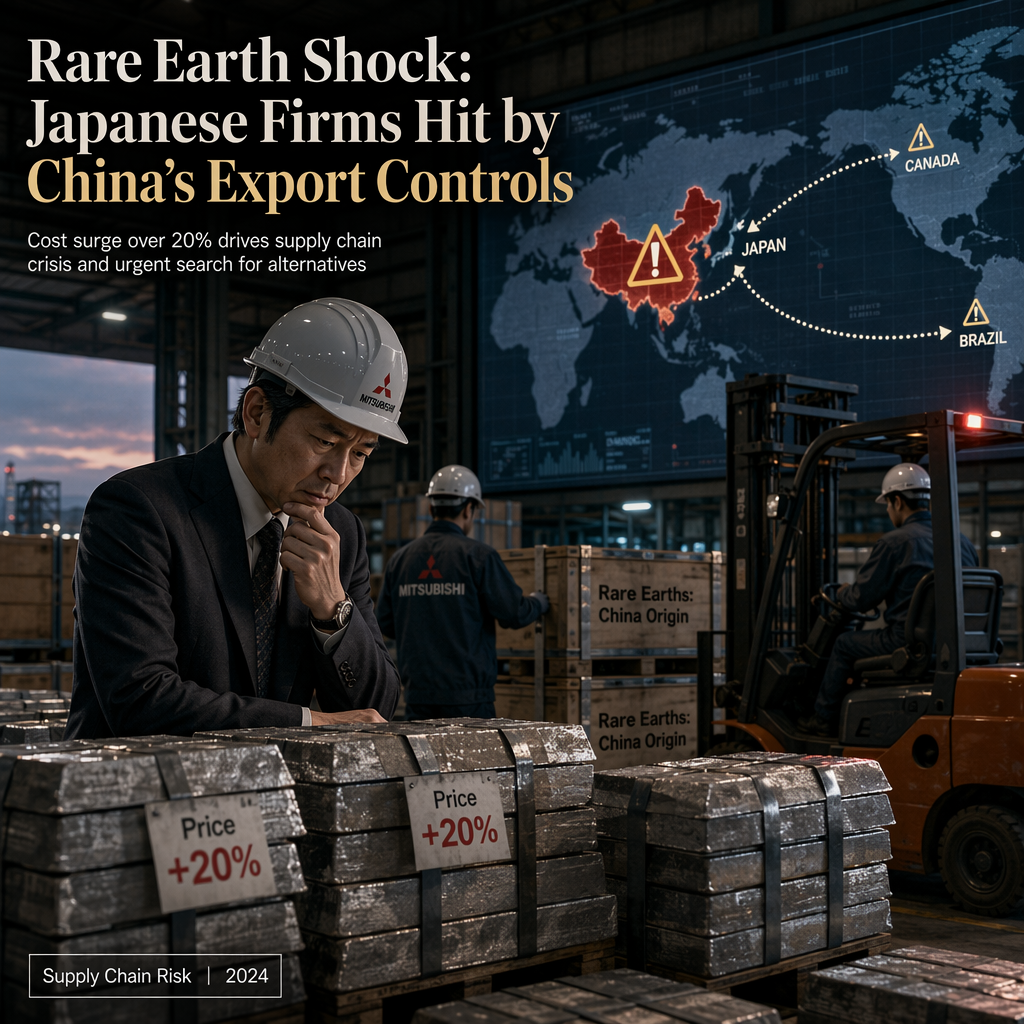
Japanese companies have experienced a significant increase in rare-earth procurement costs, with a private-sector survey revealing an average year-on-year rise of more than 20% [1]. This surge is attributed to China's tightening of rare-earth export restrictions, which has directly impacted supply chains and driven prices higher [1]. The survey also found that 61% of the rare earths imported by Japanese firms originate from China, underscoring the country's heavy reliance on Chinese supply [1].
The increased costs have created challenges for Japanese manufacturers, with one in ten companies reportedly unable to pass on the extra expenses to customers at all [1]. Market analysts highlight that this dependency on China exposes Japanese firms to significant risks, including price volatility and supply disruptions, especially in the current geopolitical environment [1].
In response, Japanese companies are actively seeking to diversify their supply chains by exploring alternative sources in Canada and Brazil and investing in domestic extraction technologies [1]. However, these initiatives have not yet mitigated the immediate effects of China's export controls [1]. Sector specialists recommend monitoring rare earth price indices for volatility and considering hedging strategies, as technical analysis indicates a sharp upward movement in prices with no clear signs of reversal [1].
The overall market sentiment remains cautious, with the potential for further Chinese restrictions posing additional risks of price increases [1]. Japanese firms are advised to closely monitor China's export policy and look for signs of stabilization in rare earth supply, as elevated costs and supply risks are expected to persist in the near term [1].
CONCLUSION
Japanese companies are grappling with a sharp rise in rare-earth procurement costs due to China's export restrictions, with no immediate relief in sight. The heavy reliance on Chinese supply has heightened market risks, prompting efforts to diversify sources and manage price volatility. Until supply stabilizes, elevated costs and cautious sentiment are likely to continue.