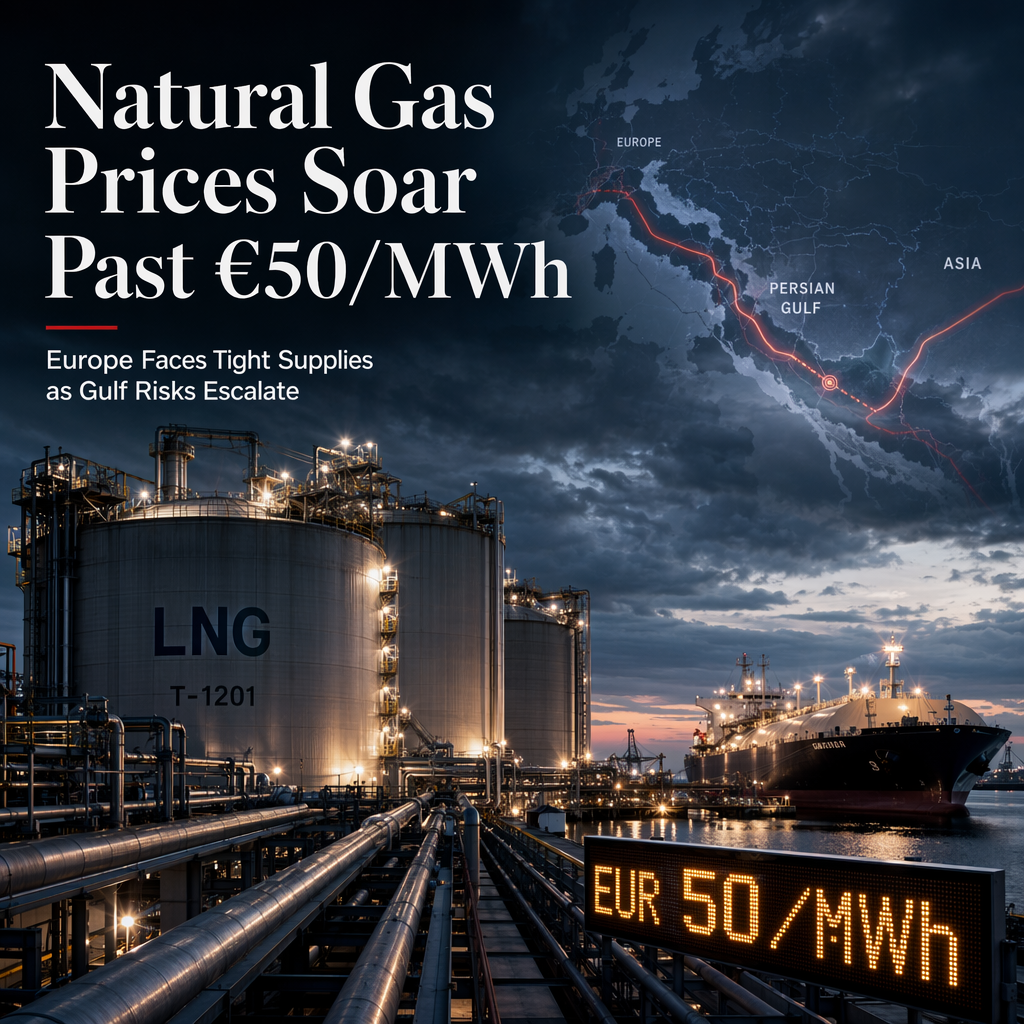
European natural gas prices have experienced a significant increase, with the TTF benchmark settling almost 5.4% higher yesterday and breaking above EUR50/MWh. This surge is attributed to escalating risks in the Middle East, particularly after the United States reimposed a blockade on Iran, which has generated substantial uncertainty regarding LNG flows from the Persian Gulf [1].
The timing of these developments is critical, as Europe enters the natural gas injection season with storage levels at just 52% of capacity, a figure notably below the five-year average of 68%. This lower-than-average storage level heightens Europe's vulnerability to supply disruptions [1].
Additionally, the premium of the JKM (Asian LNG benchmark) over TTF is incentivizing LNG cargoes to be diverted from Europe to Asia, further tightening the European market. The combination of geopolitical risks, low storage, and cargo redirection is contributing to the upward pressure on European natural gas prices [1].
ING analysts Warren Patterson and Ewa Manthey highlight that the market continues to move higher, reflecting ongoing concerns about supply security and the potential for further price volatility as the situation in the Middle East evolves [1].
CONCLUSION
European natural gas prices are climbing sharply due to heightened risks to LNG supply from the Persian Gulf and below-average storage levels. With cargoes being redirected to Asia and ongoing geopolitical uncertainty, the European market faces increased tightness and potential for further price volatility.