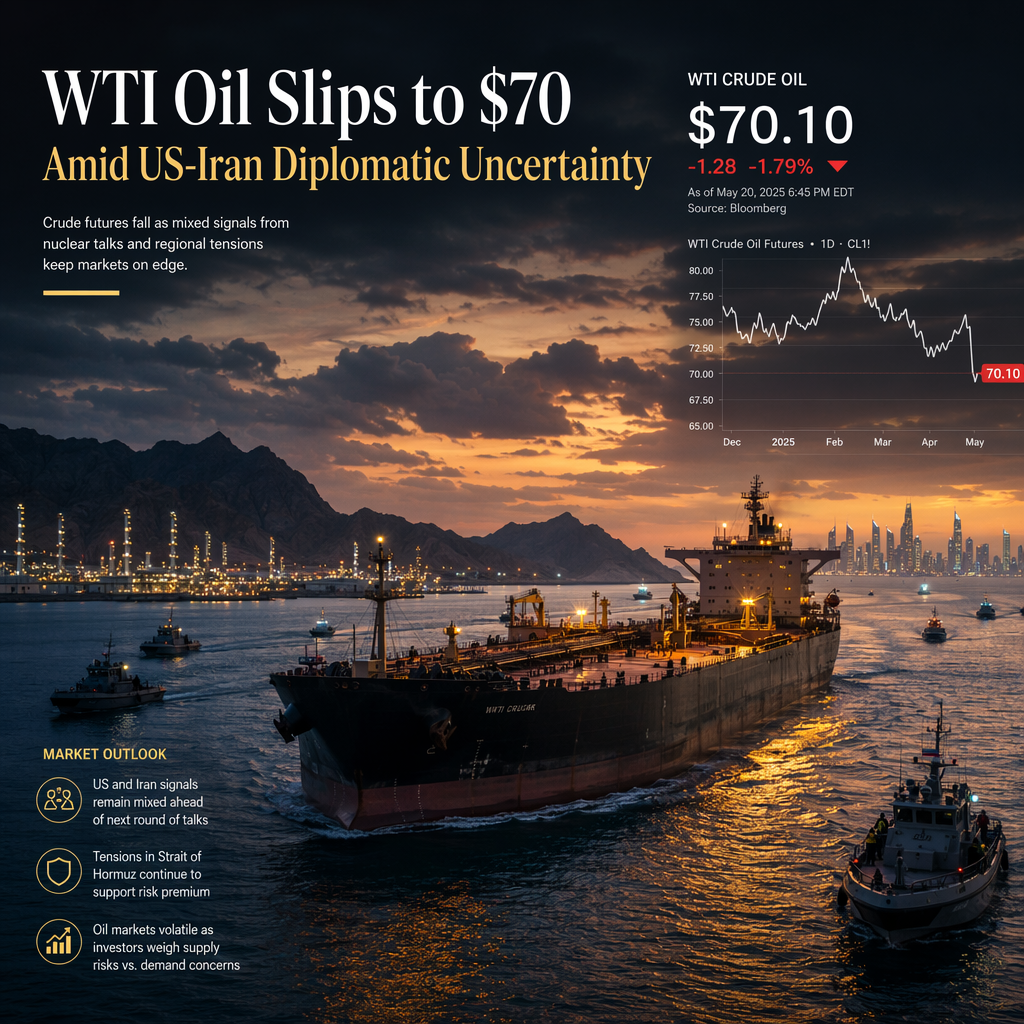
West Texas Intermediate (WTI) crude oil prices declined, trading near $70.10 per barrel during Asian market hours on Tuesday, as traders responded to a complex mix of geopolitical developments in the Middle East and conflicting reports about potential US-Iran diplomatic engagement [1]. According to CNBC, US President Donald Trump announced that the United States and Iran were scheduled to hold new peace talks in Doha, Qatar, on Tuesday, following a weekend marked by renewed hostilities [1]. However, Iranian officials quickly refuted this claim, stating that no meetings with Washington were planned at any level and emphasizing Iran's focus on implementing its existing memorandum of understanding rather than negotiating a final agreement [1].
Further complicating the situation, Tehran reiterated its intention to oversee traffic through the strategic Strait of Hormuz, regardless of Oman's participation in the oversight process [1]. Under the current interim agreement, Iran has agreed not to impose transit fees for 60 days but has suggested it may introduce such charges afterward—a proposal facing strong opposition from the US, Europe, and Gulf Arab states [1].
Over the weekend, maritime shipping through the Strait of Hormuz slowed after clashes damaged two vessels, but tanker operators and crews have continued to transit the route, indicating resilience in the face of heightened tensions [1]. The combination of conflicting diplomatic signals and ongoing risks to shipping in a critical oil transit chokepoint has contributed to volatility in WTI prices [1].
No forward-looking statements or analyst opinions were provided in the article [1].
CONCLUSION
WTI crude oil prices have come under pressure, trading near $70.10 per barrel, as markets react to mixed signals regarding US-Iran diplomacy and ongoing tensions in the Strait of Hormuz. The situation remains fluid, with conflicting official statements and unresolved risks to maritime shipping contributing to market uncertainty.