
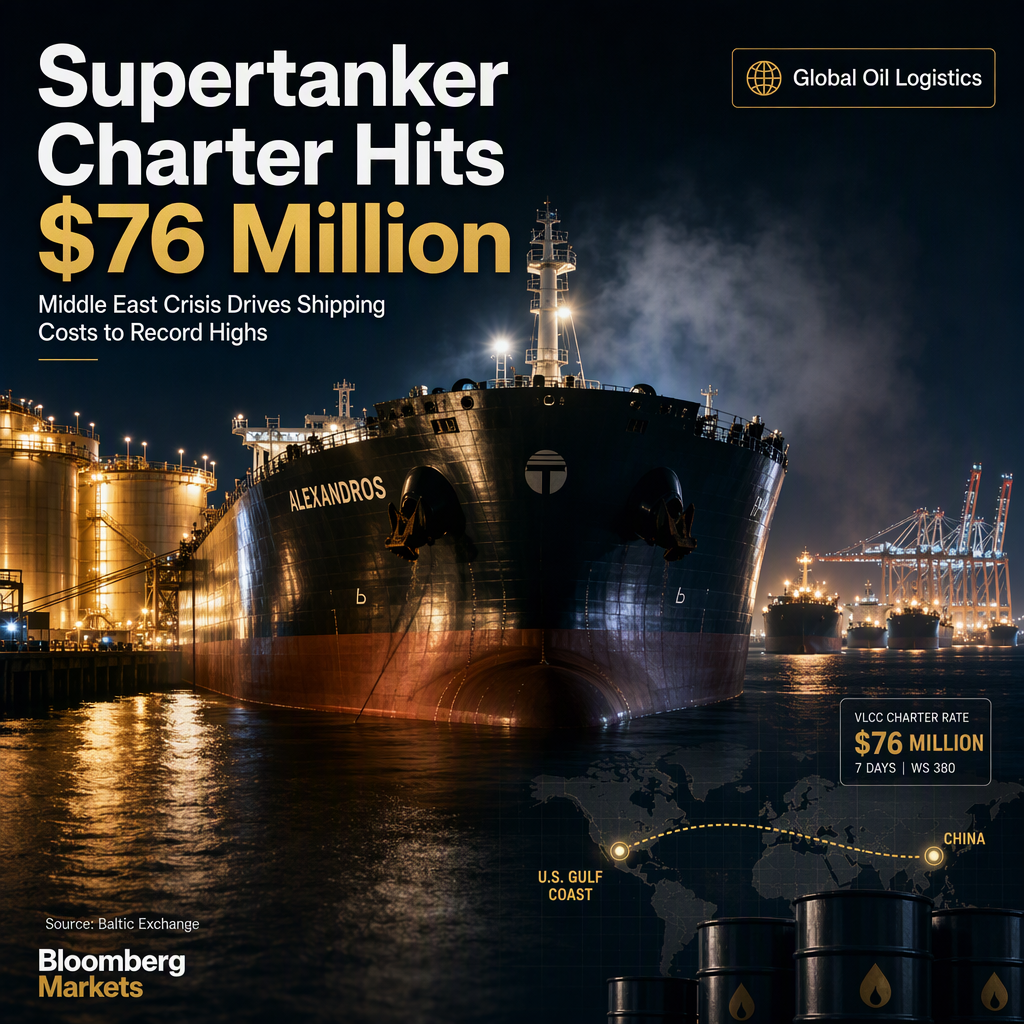
A supertanker was recently chartered by the trading firm Trafigura to transport oil from the U.S. Gulf Coast to China for $76 million, according to a source familiar with the matter [1]. This rate is approximately ten times higher than the pre-war level, which typically ranged from $7 million to $10 million for the same route [1]. The Alexandros, the vessel in question, is expected to load around November 19 [1]. At this charter rate, the shipping cost equates to $38 per barrel of oil, assuming the tanker carries 2 million barrels [1].
The dramatic increase in shipping costs is attributed to the ongoing crisis in the Middle East, which has resulted in a global shortage of available tankers [1]. In response to heightened risks, Middle East oil producers have adopted a shuttle system for exports through the Strait of Hormuz. Under this system, a loaded tanker crosses the strait and then transfers its cargo to another ship in the Gulf of Oman, which then transports the oil to Asia [1].
This shuttle system is designed to reduce the risk of Iranian attacks on tankers but requires a significantly higher number of ships to move the same volume of oil out of the Gulf, further tightening tanker availability and driving up costs [1]. The article does not provide specific market reactions or analyst opinions, but the sharp rise in shipping costs and logistical challenges suggest significant market disruption [1].
CONCLUSION
The chartering of a supertanker for $76 million by Trafigura highlights the severe impact of the Middle East crisis on global shipping costs and oil logistics. The adoption of a shuttle system for oil exports has increased demand for tankers, exacerbating shortages and driving prices sharply higher. This situation underscores ongoing volatility and elevated risk in the global oil transport market.