
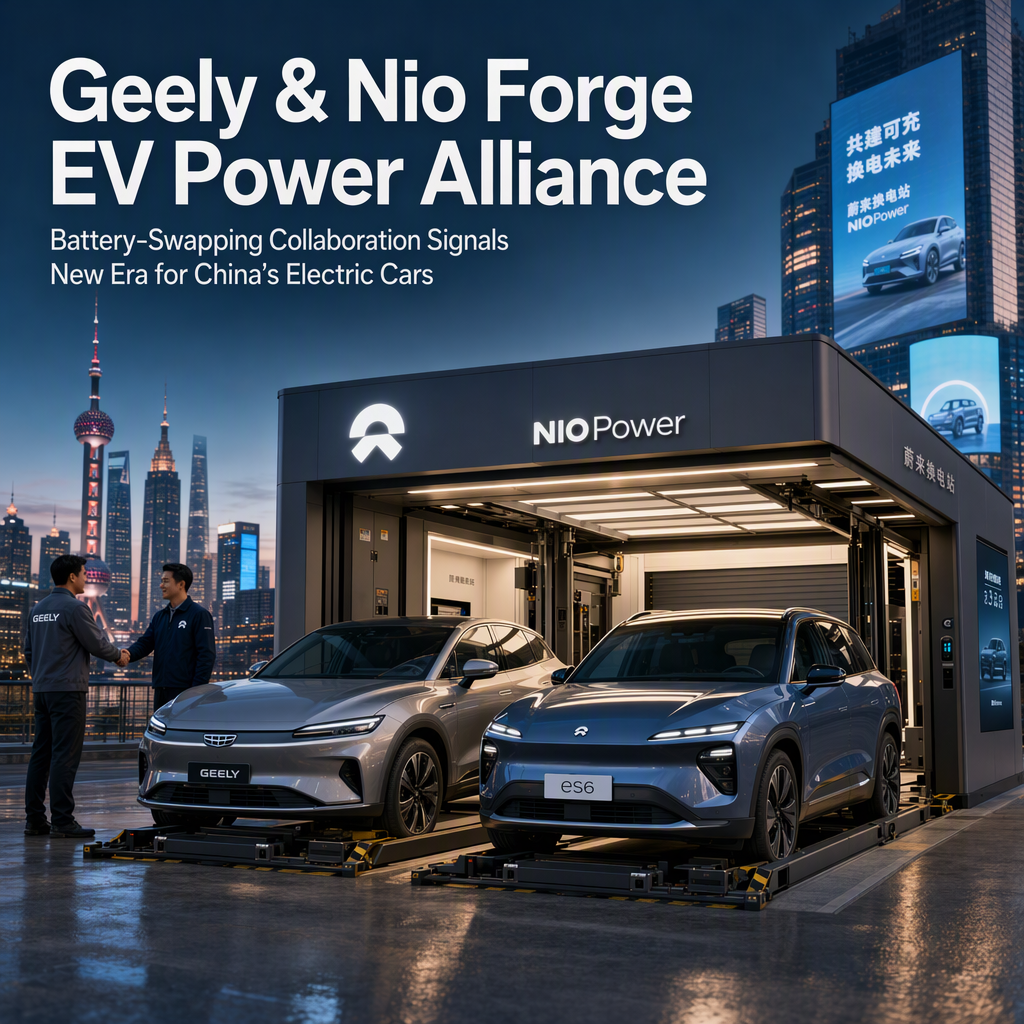
Chinese automotive giant Geely Holding Group has announced the acquisition of a 30% stake in Nio's battery-swapping unit, Nio Power, using a combination of cash and its own battery-swapping assets [1]. This transaction marks a significant step in cooperation between two of China's leading electric vehicle manufacturers and reflects broader efforts by Chinese automakers to deepen partnerships and gain a competitive edge in the increasingly crowded EV market [1].
While the financial terms of the deal were not disclosed, industry analysts suggest that the partnership could accelerate the development of battery-swapping infrastructure and improve operational scale for both Geely and Nio [1]. Battery swapping is viewed as a key differentiator in the Chinese EV sector, offering drivers greater convenience and reduced charging times compared to traditional plug-in methods [1]. Nio Power currently operates one of the largest battery-swapping networks in China, with hundreds of stations strategically located in major cities and along key highway routes [1].
Industry observers believe that this collaboration will enable both companies to expand their battery-swapping service networks and foster technological innovation [1]. The deal is seen as indicative of a broader shift towards increased collaboration and consolidation among Chinese EV manufacturers, as they seek to build scale and share infrastructure [1].
Although the article does not provide specific trading advice or technical price levels, market sentiment suggests that consolidation deals such as this may enhance the competitiveness of leading Chinese EV companies and potentially benefit their shares in the medium term [1]. The acquisition is expected to strengthen Geely's position in the battery-swapping segment, complement its existing EV lineup, and further integrate its supply chain capabilities with those of Nio [1].
CONCLUSION
Geely's acquisition of a 30% stake in Nio Power represents a strategic move to deepen collaboration and scale battery-swapping infrastructure in China's EV market. Industry analysts view the deal as positive for both companies, potentially boosting their competitiveness and operational efficiency. While immediate market reactions are not detailed, the partnership is expected to support medium-term growth and innovation in the sector.