
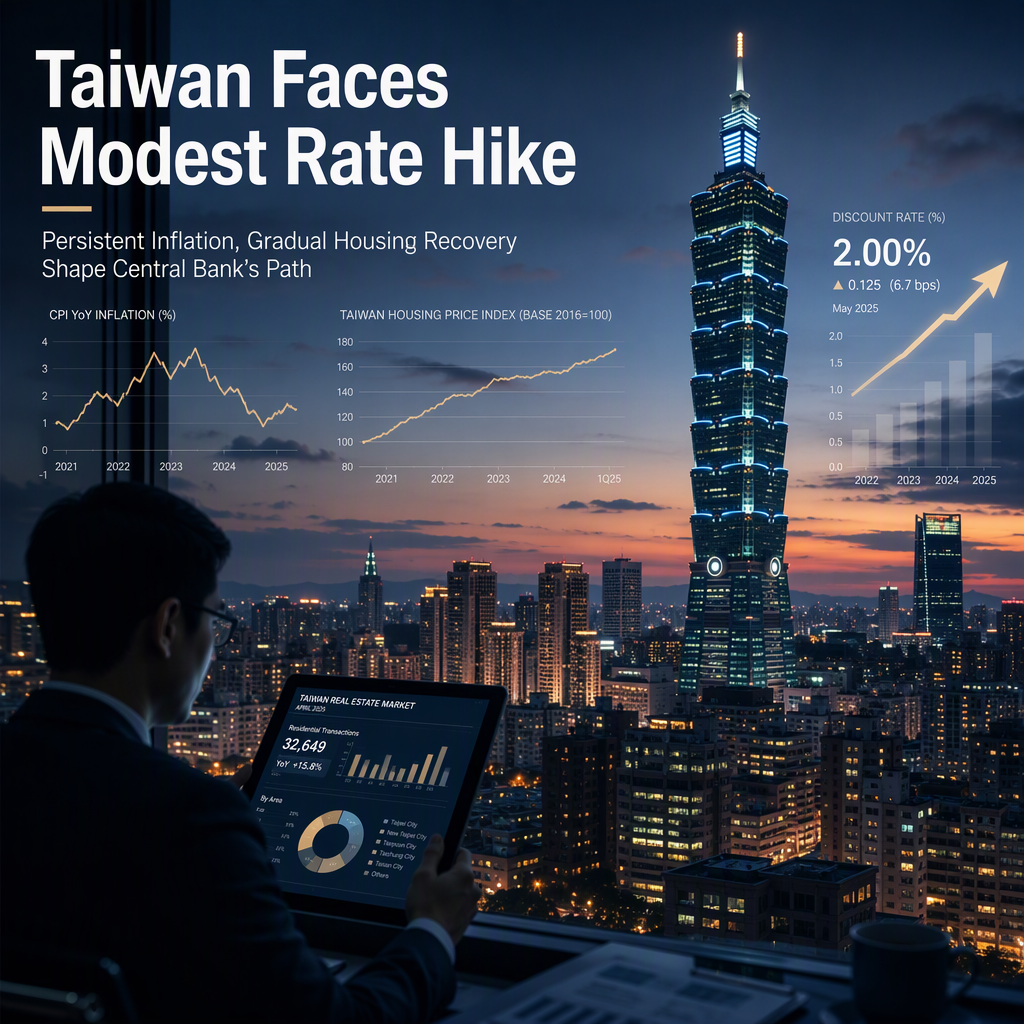
DBS economist Ma Tieying anticipates that the Central Bank of the Republic of China will raise its policy discount rate by 12.5 basis points to 2.125% in December. This expectation is based on the Consumer Price Index (CPI) remaining above 2% for approximately six consecutive months and the potential for electricity price increases following the November local elections, which could further elevate inflation expectations and reinforce the case for a December rate hike [1].
Financial conditions in Taiwan are already tighter, and the central bank has been gradually easing housing credit controls. At its September meeting, the central bank raised the loan-to-value (LTV) cap on second-home mortgage loans to 70%, marking the second easing of housing credit controls in 2023 [1].
DBS projects a gradual and modest recovery in Taiwan's housing market from the fourth quarter of 2026 into 2027. Early signs of recovery are evident in the existing-home market, with Sinyi housing prices returning to slightly positive year-on-year growth since the second quarter, and total building transactions also showing positive year-on-year growth in the third quarter [1]. However, the new-home market remains under pressure, as the number of new units under construction has declined since 2023, and new completions are only beginning to ease this year. Demand for new homes remains weak, with potential buyers waiting for lower prices [1].
CONCLUSION
DBS expects the Taiwan central bank to implement a modest rate hike in December due to persistent inflation and potential electricity price increases. While the existing-home market shows early signs of recovery, the new-home segment continues to face challenges, suggesting a cautious but improving outlook for Taiwan's housing market.