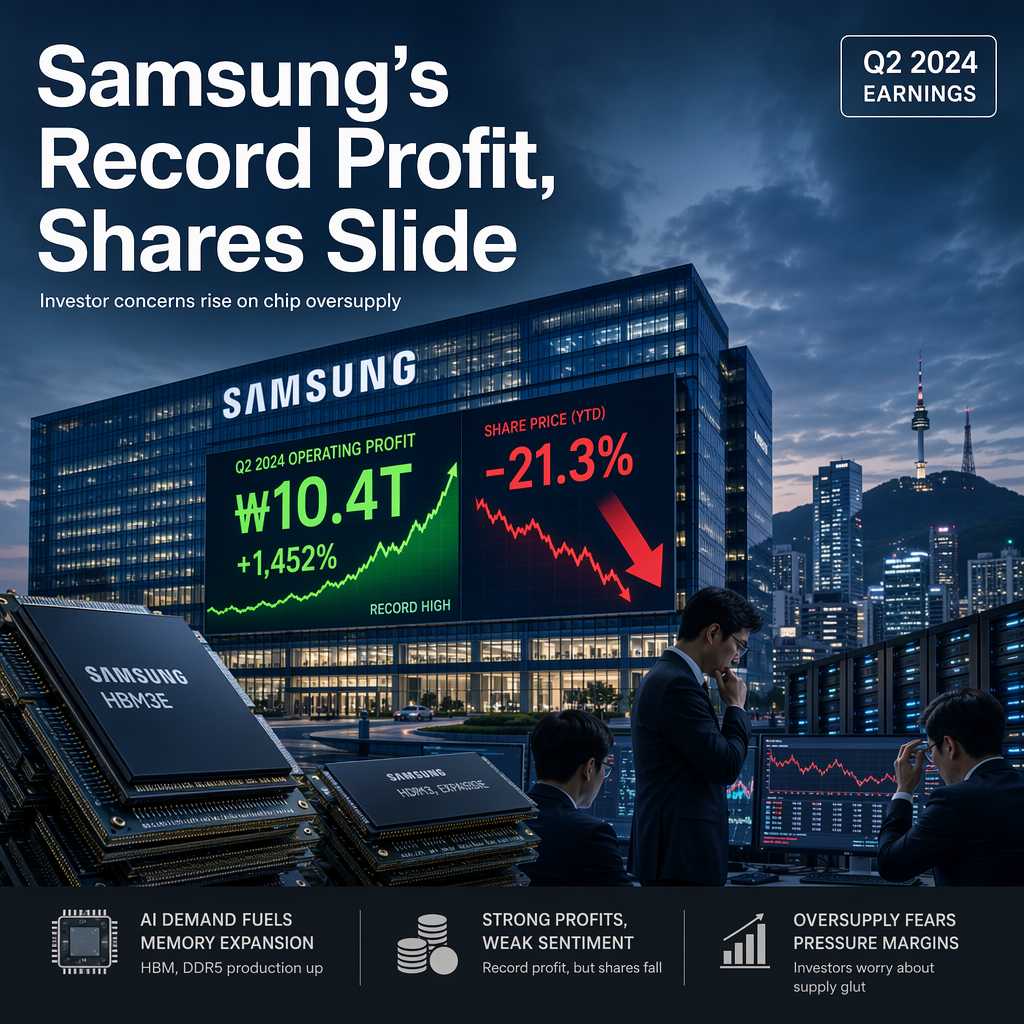
Samsung Electronics reported a dramatic increase in operating profit for the second quarter, soaring more than 19 times year-on-year to 89.4 trillion won ($58.4 billion), driven by a persistent memory chip shortage and rising demand for artificial intelligence (AI) computing applications [1]. Despite this substantial financial performance, Samsung's shares fell by 8% as investors grew concerned about a potential oversupply in the memory chip market [1].
The South Korean chipmaker has announced plans to construct additional fabrication plants (fabs) to address the surging demand, particularly from data centers and AI-related sectors [1]. However, analysts warn that this aggressive capacity expansion could eventually result in a supply glut, which may exert downward pressure on chip prices and profit margins [1].
Market watchers are closely monitoring the supply-demand balance, highlighting the risk of increased volatility in Samsung's share price if oversupply fears persist [1]. Technical indicators referenced by some market participants suggest that the recent share price decline could test key support levels should these concerns continue [1].
While Samsung maintains an optimistic outlook, citing robust demand from AI and data center clients as primary growth drivers, analyst sentiment remains mixed. The strong financial results are tempered by caution regarding future market conditions and the potential for price corrections if supply outpaces demand [1].
CONCLUSION
Samsung's exceptional profit growth underscores the current strength of the AI-driven memory chip market, but the sharp share price decline reflects investor anxiety about future oversupply. The company's expansion plans and mixed analyst sentiment suggest ongoing volatility and uncertainty for Samsung's stock in the near term.