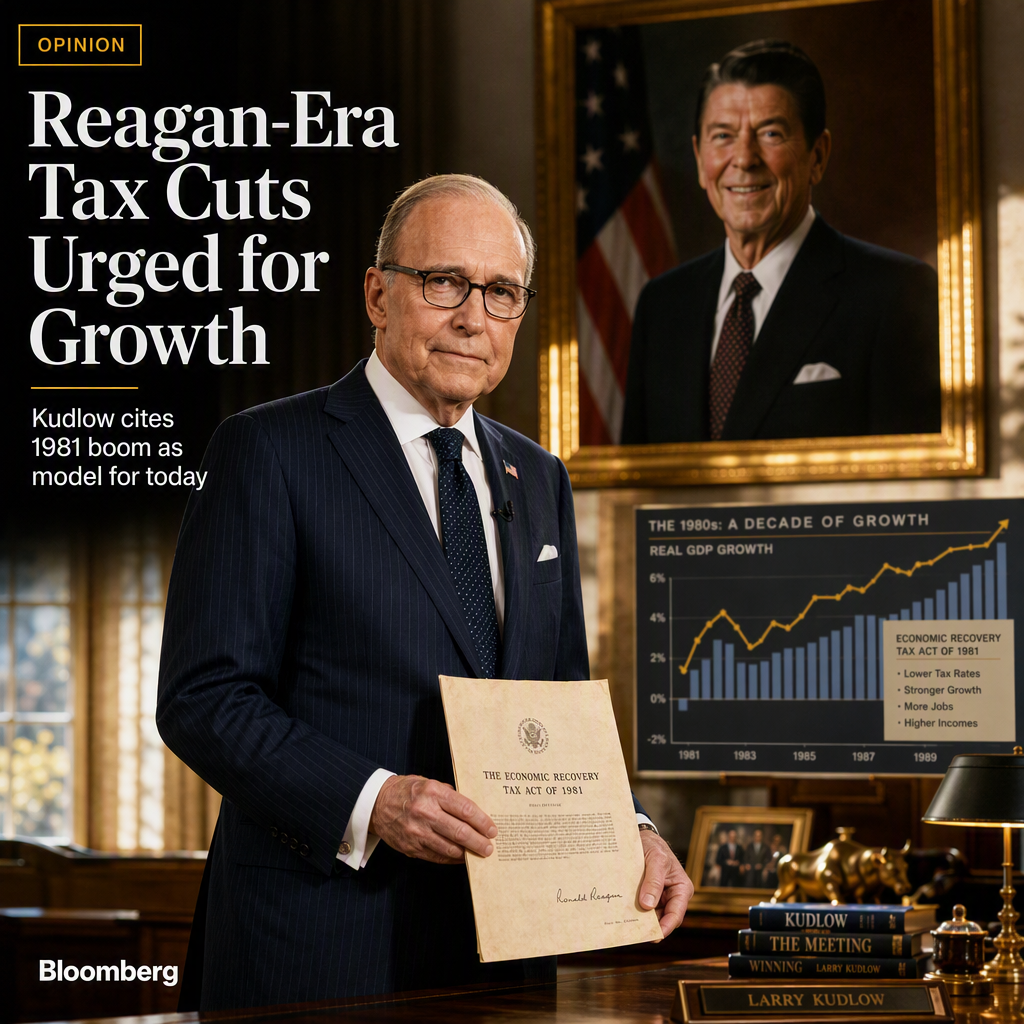
Larry Kudlow, in a recent commentary, advocated for a return to Reagan-style reconciliation tax cuts, referencing the significant economic impact of the 1981 tax cut legislation under President Ronald Reagan [1]. Kudlow highlighted that the original bill passed the House by a vote of 238 to 195 and the Senate by 89 to 11, with President Reagan signing the bill into law in August 1981 [1]. He emphasized that these tax cuts were central to the 'Reagan revolution,' a supply-side economic approach that argued lowering taxes would promote growth, jobs, wages, wealth, and national security [1].
Kudlow cited data from the Reagan era, noting that the economy experienced real growth of about 5.5 percent per year for more than seven years during Reagan's two terms [1]. He also mentioned that the revenue base increased by almost 25 percent during the Reagan boom, attributing this to the Laffer Curve theory, which suggests that lower tax rates can lead to higher tax revenues through increased economic growth and reduced tax avoidance [1].
The commentary detailed the broad scope of the 1981 tax cuts, including a headline 25 percent income tax reduction, as well as lower taxes on marriage, estates, inheritance, capital gains, interest, dividends, savings, retirements, and businesses [1]. Kudlow argued that these measures led to a roaring stock market, job growth, and improved national morale, contrasting the period with the preceding Carter years [1].
While Kudlow did not provide specific forward-looking statements or analyst opinions, he urged current Republican lawmakers to consider adopting a similar approach to tax policy, invoking the successes of the Reagan era as a model for contemporary economic growth [1].
CONCLUSION
Larry Kudlow's commentary draws a direct line between Reagan-era tax cuts and subsequent economic prosperity, advocating for a similar policy approach today. The article presents a positive view of supply-side tax cuts, emphasizing historical data and urging policymakers to revisit these strategies for renewed growth.