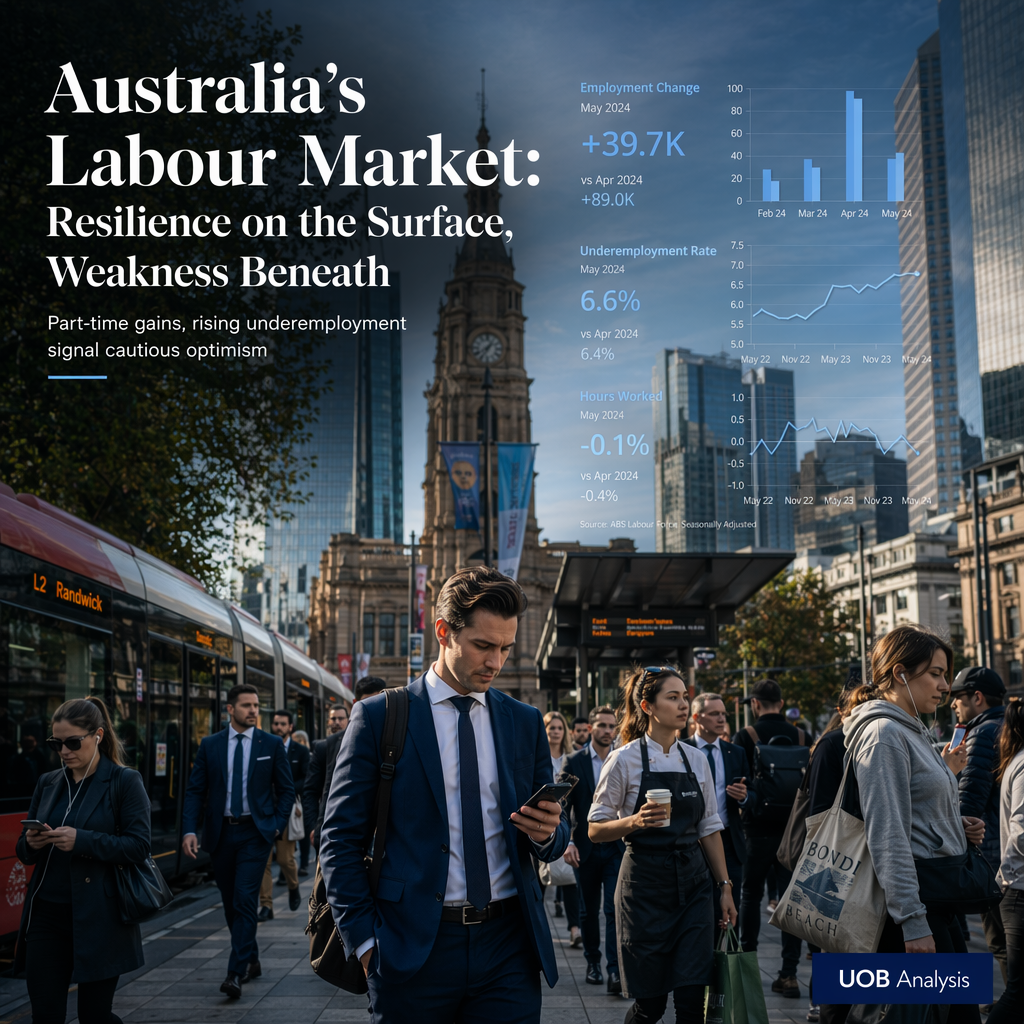
Australia's labour market data for May revealed a mixed picture, according to UOB's Lee Sue Ann. The unemployment rate dipped to 4.4%, accompanied by a 40.3k increase in employment, with most of the gains concentrated in part-time positions. The participation rate also rose to 66.7% [1].
Despite these seemingly positive headline figures, underlying indicators pointed to emerging slack in the labour market. Total hours worked declined by 1.1% over the month, and the underemployment rate increased to 5.9%, signaling a deterioration in labour utilisation. The trend unemployment rate also edged up to 4.4% from 4.3% previously, suggesting a gradual loosening of labour market conditions beneath the surface [1].
UOB's analysis highlights that the composition of job gains, skewed towards part-time roles and accompanied by softer hours worked, suggests that firms remain cautious about expanding labour demand. The data supports the narrative of a gradual and uneven cooling in the Australian economy. While the resilience in headline employment figures reduces near-term downside risks, the softer underlying indicators point to continued moderation in labour market momentum [1].
CONCLUSION
Australia's May labour market data presents a resilient headline but reveals underlying weakness, with rising underemployment and declining hours worked. This suggests a gradual loosening in labour market conditions, indicating that the economy may continue to moderate in the coming months.