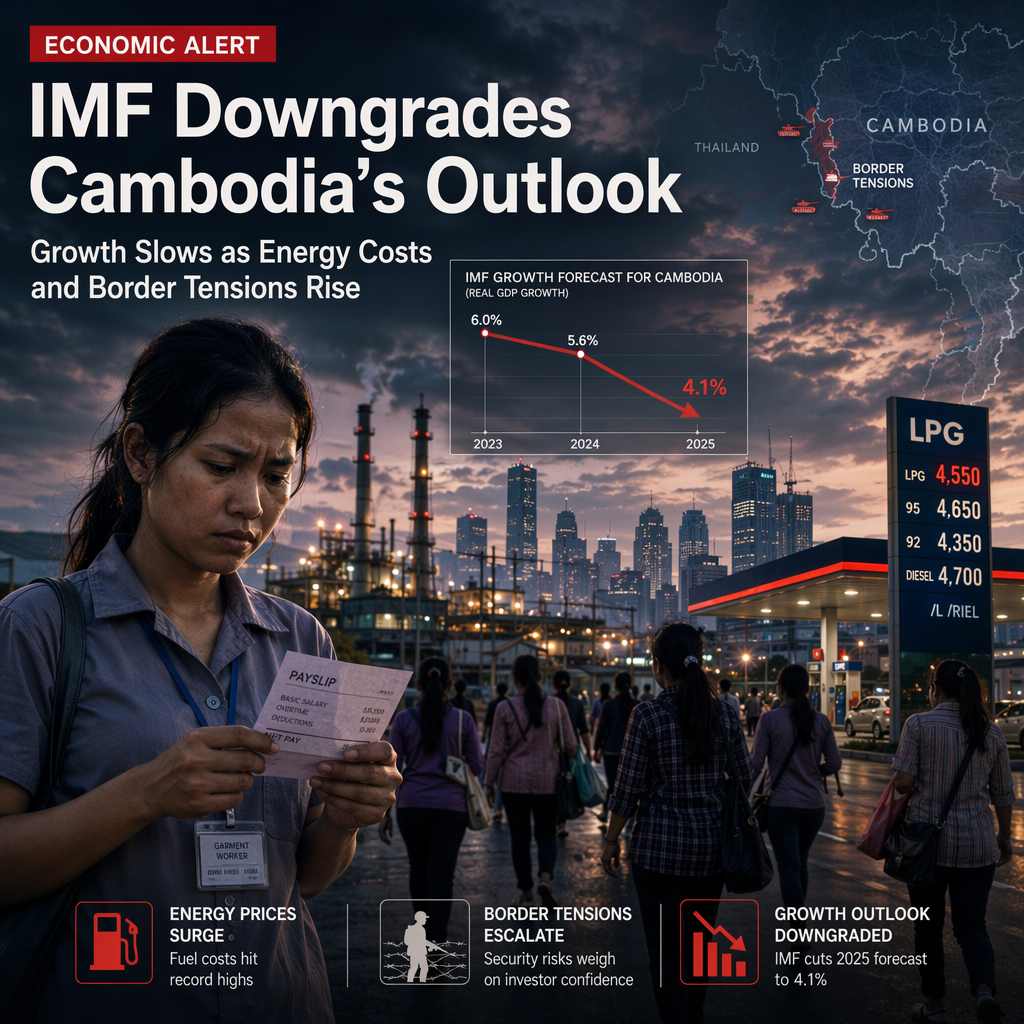
The International Monetary Fund (IMF) has significantly downgraded its economic forecasts for Cambodia, citing a combination of rising energy prices, ongoing conflict at the Thai-Cambodian border, and the persistent impact of the cyber scam industry as key factors depressing the country's growth and accelerating inflation [1]. According to the IMF, Cambodia's economic growth is now projected to slow to 3%, while inflation is expected to double to 5.6% [1].
The textile and garment sector, a cornerstone of Cambodia's economy, continues to face substantial challenges, further compounding the nation's economic difficulties [1]. The IMF report highlights that the convergence of these pressures is likely to further suppress growth and drive up consumer prices in the near term [1].
Broader concerns over Cambodia's economic resilience have been raised, with the country facing additional risks from regional geopolitical tensions and the threat of emerging sanctions targeting cyberscam operations [1]. Market analysts warn that these developments could lead to increased volatility in Cambodia's financial sector and potentially undermine investor confidence [1].
In light of the IMF's revised forecasts, there is an indication that policymakers may need to implement further measures to support economic growth and contain inflation as Cambodia's economic fundamentals come under mounting pressure [1].
CONCLUSION
The IMF's sharp downgrade of Cambodia's economic outlook signals heightened risks for the country's growth and inflation trajectory. With multiple headwinds, including energy prices and regional tensions, policymakers may need to act decisively to stabilize the economy and restore investor confidence.