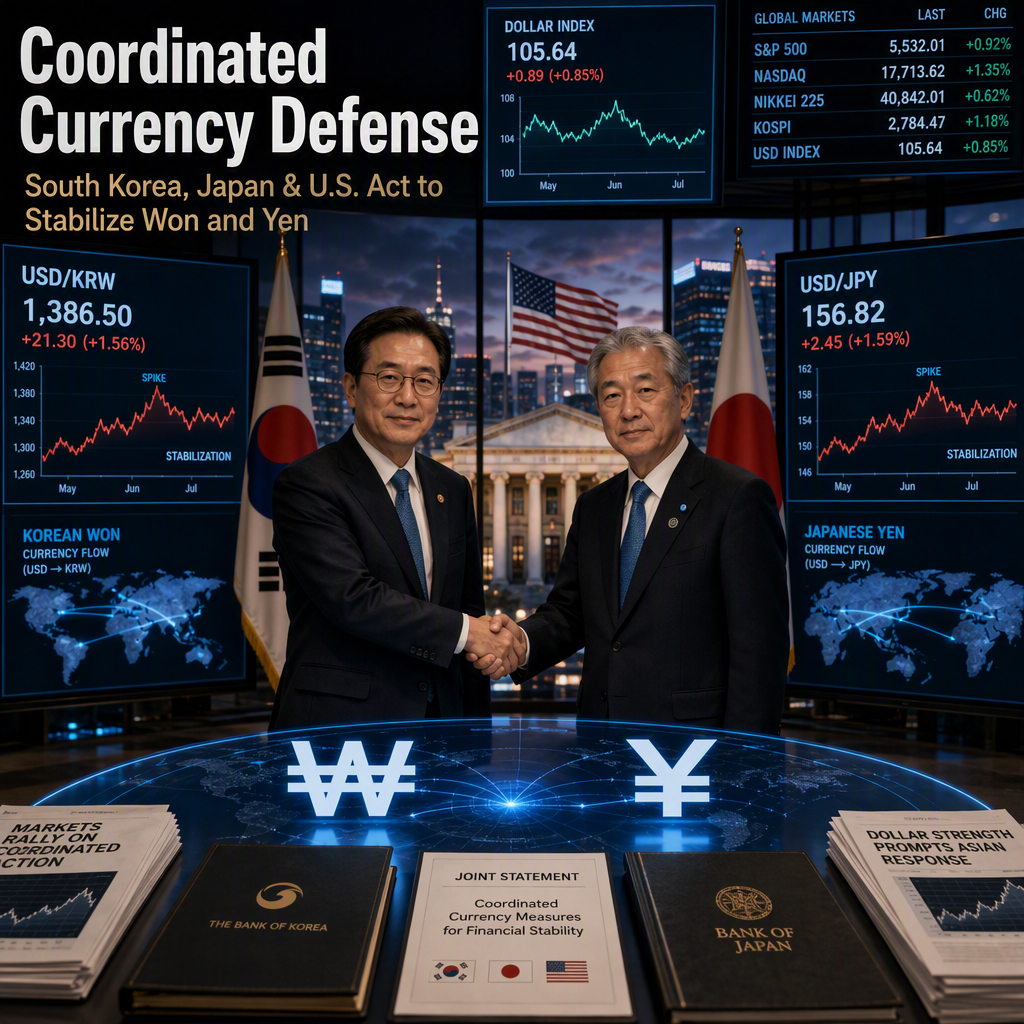
South Korea and Japan have both taken significant steps to stabilize their respective currencies against the U.S. dollar, with market participants observing signs of coordinated intervention between Seoul and Tokyo. The South Korean won has remained firm against the dollar, a development attributed to suspected intervention by South Korean monetary authorities and the conversion of dollars raised from SK Hynix's recent U.S. listing into won, which provided additional support for the currency at a time when other regional currencies have weakened against the dollar [1]. Analysts suggest that the timing of these interventions points to a concerted effort by both countries to prevent excessive depreciation and address broader regional concerns about financial stability [1].
In parallel, the U.S. and Japan executed a coordinated intervention to shore up the yen, with the U.S. lending dollars to Japan using Treasury bonds as collateral through a repo facility. This mechanism was designed to prevent Japan from having to sell large quantities of U.S. Treasurys, which could have destabilized U.S. debt markets and driven yields higher [2]. U.S. Treasury Secretary Scott Bessent and Japanese Finance Minister Satsuki Katayama both referenced the use of this repo facility, highlighting the pragmatic nature of the intervention despite public statements emphasizing friendship between the two nations [2]. No specific details were released regarding the amount lent or the terms of the repo arrangements, but market participants noted that this structure allowed Japan to raise dollars without liquidating its significant U.S. government bond holdings [2].
Market analysts observed that these interventions helped stabilize both the won and the yen in the short term, with technical analysis indicating support for the won and the yen holding firm following the announcement [1][2]. However, traders cautioned that underlying pressures from a strong U.S. dollar and shifting global monetary policy persist, and the durability of these interventions may depend on further structural changes or policy adjustments [1][2]. Investors are closely monitoring key price levels, support and resistance points, and any future official statements from Seoul and Tokyo regarding their currency strategies [1][2].
The coordinated actions by South Korea, Japan, and the U.S. underscore a willingness to cooperate on financial stability amid ongoing market volatility. The interventions reflect both pragmatic and strategic considerations, aiming to maintain market stability and protect national financial interests [1][2].
CONCLUSION
The coordinated currency interventions by South Korea and Japan, with U.S. support for the yen via a repo facility, have provided short-term stability for the won and yen amid ongoing dollar strength. While these measures have been effective in the immediate term, market participants remain cautious about their long-term impact and are watching for further policy developments. The situation highlights the importance of international cooperation in managing currency volatility and financial market risks.