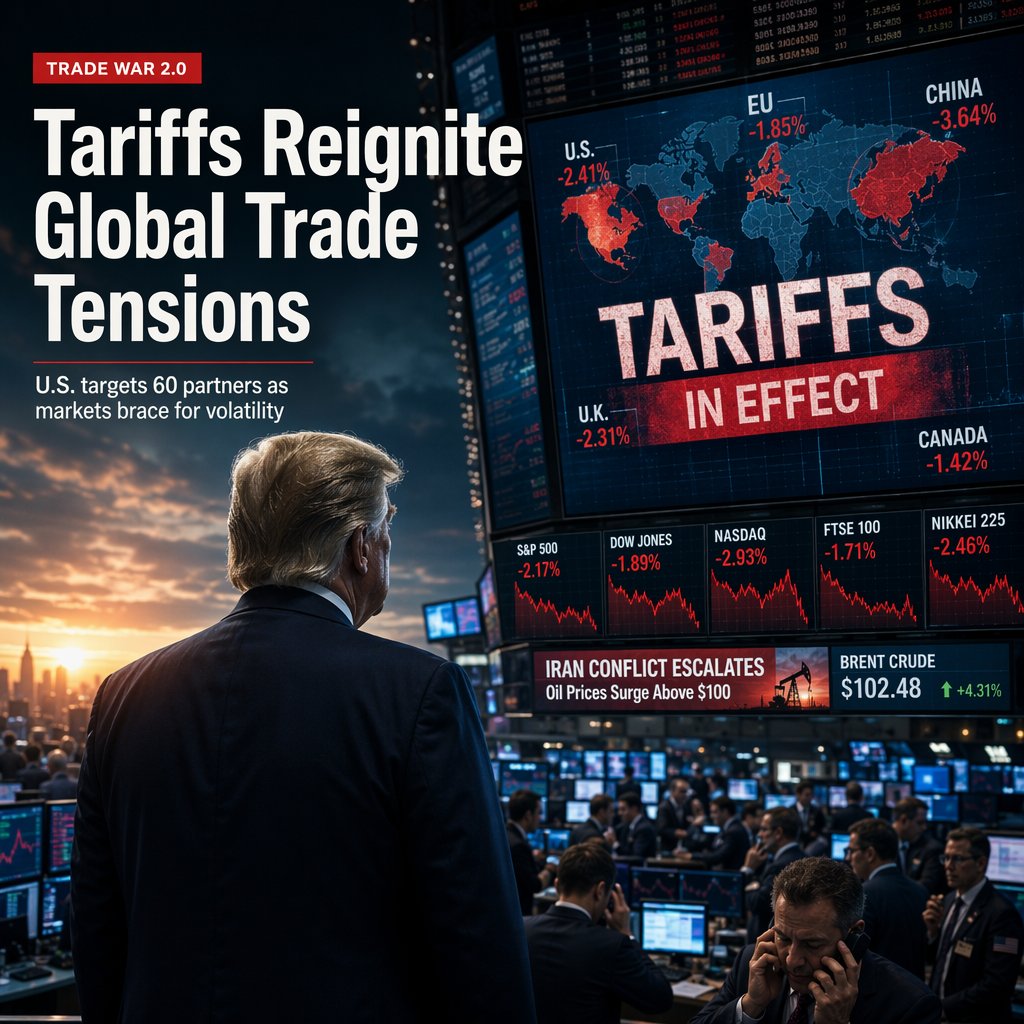
On July 27, 2026, the Trump administration announced a new wave of tariffs targeting 60 trading partners, including the European Union, China, the U.K., and Canada, reigniting global trade tensions. The tariffs, ranging from 10% to 12.5%, took effect at 12:01 a.m. E.T. on Friday, replacing the previous 10% baseline tariff that expired on July 24. This move comes as the U.S. military conflict with Iran enters its sixth month and global markets continue to face the effects of the Middle East conflict and persistent inflationary pressures [1].
Investment strategists have warned that the renewed trade tensions could create a structural drag on global growth. Emma Moriarty, portfolio manager at CG Asset Management, emphasized that the Trump administration's commitment to tariffs is significant, especially given the current backdrop of a global energy shock and increasing supply chain bottlenecks. Moriarty stated, "For markets, the implications should be clear: we have to position for a low growth and high inflation outcome" [1].
Despite the announcement, the initial market reaction was muted, as investors had largely anticipated the renewed tariffs due to the expiry of the previous duties. This contrasts with the sharp market declines seen after the 'Liberation Day' levies in April 2025. However, analysts note that the current economic environment is more challenging, with oil prices rebounding above $100 this week amid ongoing hostilities in the Middle East and fading hopes for a ceasefire [1].
The new tariffs are being implemented under Section 301 of the Trade Act of 1974, following a Supreme Court ruling in February that declared the previous tariffs illegal. Russ Mould, investment director at AJ Bell, commented that while the outcome was not a complete shock to markets, it adds another layer of uncertainty as sentiment is affected by the U.S.-Iran conflict and concerns about tech sector expenditure [1].
CONCLUSION
The Trump administration's latest tariff measures have reignited global trade tensions at a time of heightened economic uncertainty. While markets initially reacted with restraint, analysts warn of a prolonged period of low growth and high inflation as a result of these policies. The new tariffs are expected to add further uncertainty to already volatile global markets.