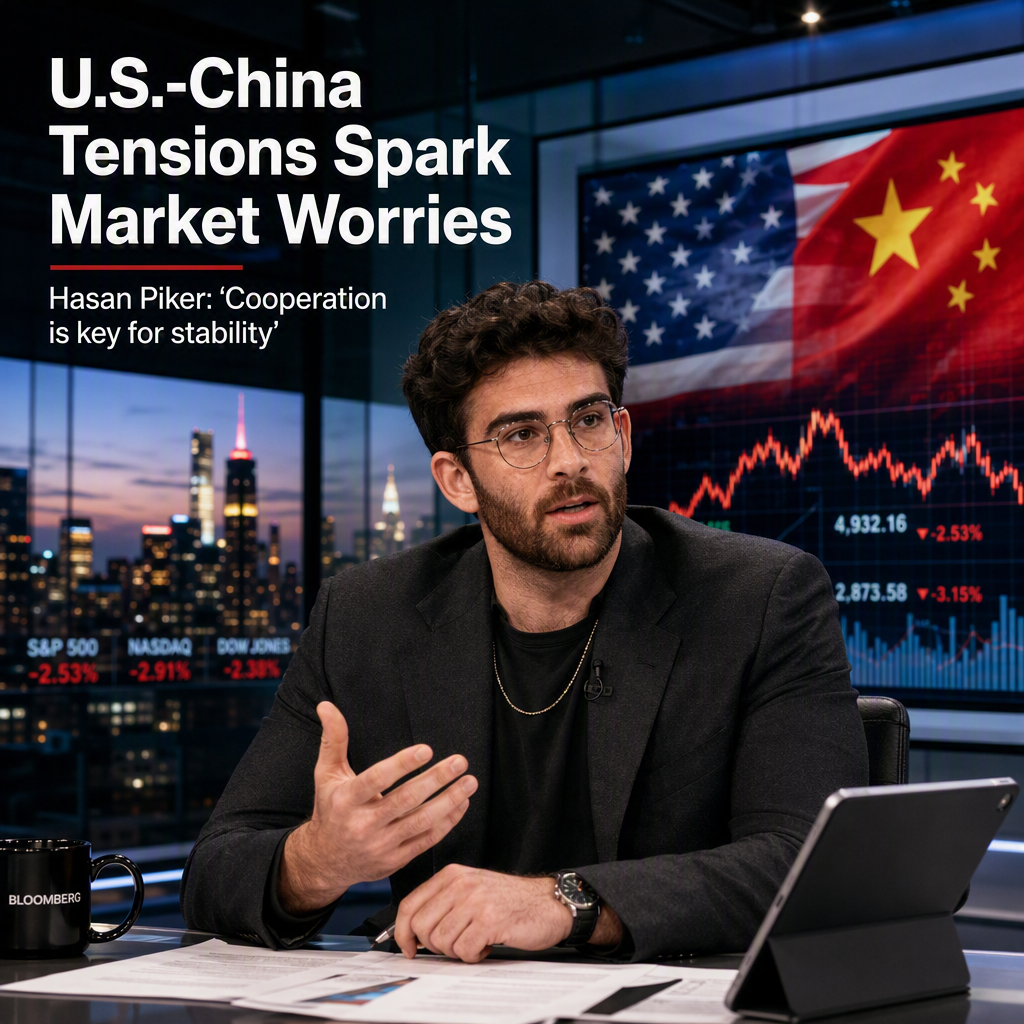
Political commentator Hasan Piker, known for his advocacy of far-left policies, has weighed in on the escalating tensions between the U.S. and China just weeks before the U.S. midterm elections in November. In an interview with Nikkei Asia, Piker argued that 'cooperating with China is better for the U.S. than trading threats,' emphasizing the economic interdependence between the two nations and warning of the global risks associated with trade conflicts [1].
Piker highlighted a 'sense of despair' among younger generations, citing high inflation, wage stagnation, and unaffordable housing as key factors fueling political polarization and openness to alternative economic systems [1]. He cautioned that ongoing tariff wars and political posturing could have negative consequences for both the American and global economies, including supply chain disruptions, increased consumer costs, and heightened volatility in global financial markets [1].
He stressed the importance of prioritizing diplomacy and economic cooperation over protectionist measures or aggressive rhetoric, which he believes only serve to destabilize global markets [1]. Piker also advocated for the U.S. to invest in its own competitiveness through education, infrastructure, and technology, rather than focusing solely on restricting Chinese companies, stating that 'strengthening our own economy is a more sustainable approach than trying to weaken others through trade barriers' [1].
Regarding market sentiment, Piker noted that investors are increasingly wary of geopolitical risks, with uncertainty between the world's two largest economies leading to market volatility and lower business confidence indices [1].
CONCLUSION
Hasan Piker's comments underscore the risks of escalating U.S.-China tensions, warning that protectionist policies and aggressive rhetoric could destabilize global markets and erode business confidence. He advocates for diplomacy and domestic investment as more sustainable strategies. The market takeaway is a cautious sentiment, with investors wary of increased volatility amid ongoing geopolitical uncertainty.