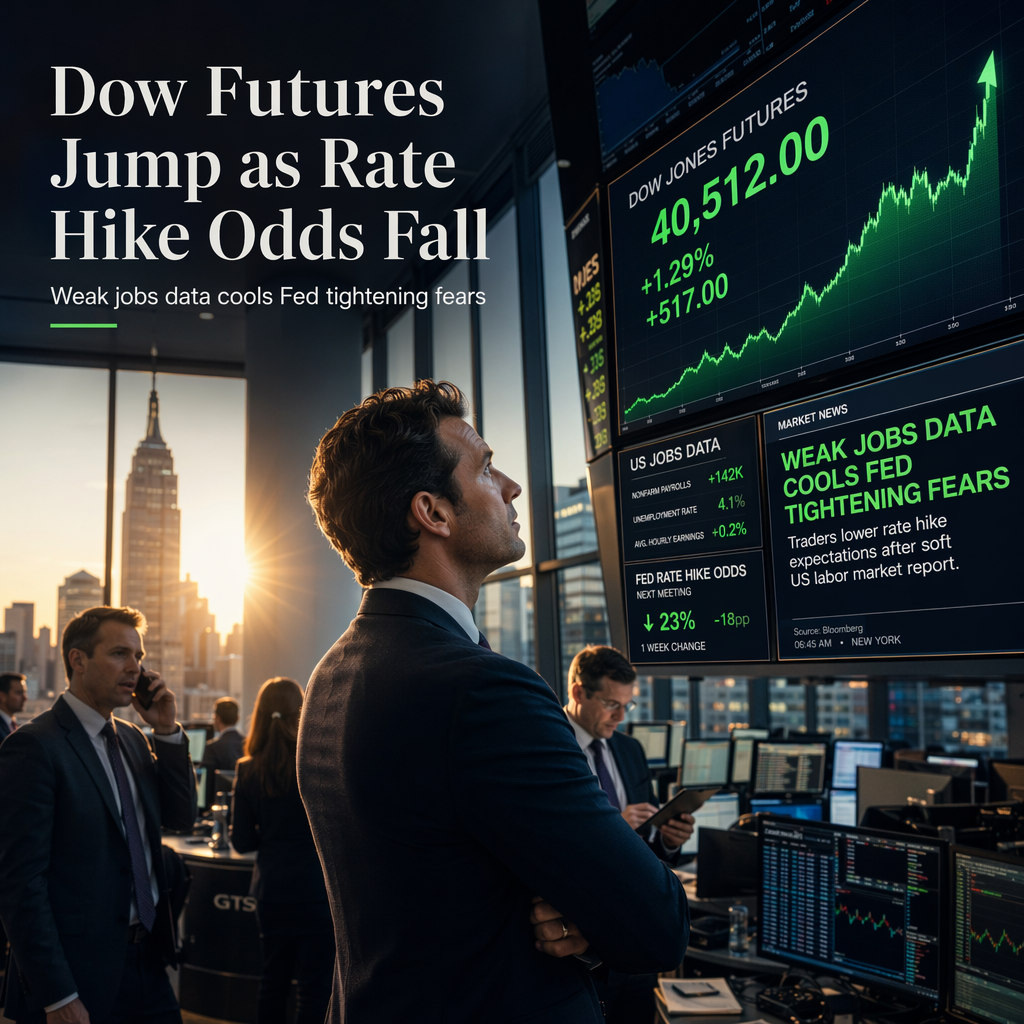
Dow Jones futures climbed 0.24% to trade above 53,300 during European trading hours on Friday, while S&P 500 futures rose 0.46% near 7,560 and Nasdaq 100 futures advanced 1.0% to around 29,850. This uptick in futures followed a mixed performance on Wall Street Thursday: the Dow Jones surged 1.03%, the S&P 500 finished flat, and the Nasdaq 100 slid 0.8%, with chipmakers leading the tech sector's decline for a second consecutive session due to concerns over potentially inflated valuations from artificial intelligence optimism [1].
The primary catalyst for the market's shift was the release of disappointing US labor data on Thursday. The June Nonfarm Payrolls (NFP) report showed the US economy added only 57,000 jobs, significantly missing the market consensus of 110,000. Despite this, the unemployment rate unexpectedly ticked down to 4.2% from May's 4.3%. The sharp slowdown in hiring signaled a cooling broader economy and prompted financial markets to aggressively rethink the outlook for Federal Reserve interest rate hikes. According to the CME FedWatch tool, the probability of a September rate hike dropped to 53%, down from 66% before the labor data was released [1].
Federal Reserve Chair Warsh delivered a moderately hawkish message, scoring 5.6/10 on the FXS SpeechTracker, indicating a cautious but not extreme stance. Warsh refused to provide forward guidance and emphasized a renewed focus on price stability, warning that the Fed would not be comfortable with inflation above 2%. He also highlighted artificial intelligence as a key structural force in the economy, suggesting the US could benefit but reiterating that the inflationary impact remains a central bank decision. The FXS Fed Sentiment Index remained unchanged at 123.64, reflecting a continued hawkish tone from the Fed, though without new signals of imminent tightening [1].
Overall, the combination of weaker labor data and steady, hawkish Fed messaging has led markets to reassess the likelihood of further rate hikes, with futures responding positively to the perceived reduction in tightening risk.
CONCLUSION
Weaker-than-expected US jobs data has eased market expectations for a September Fed rate hike, leading to gains in major US index futures. However, the Federal Reserve maintains a hawkish stance, emphasizing price stability and cautioning against expectations of higher inflation tolerance. The market takeaway is a cautious optimism, with reduced rate hike fears but no clear signal of imminent policy easing.