
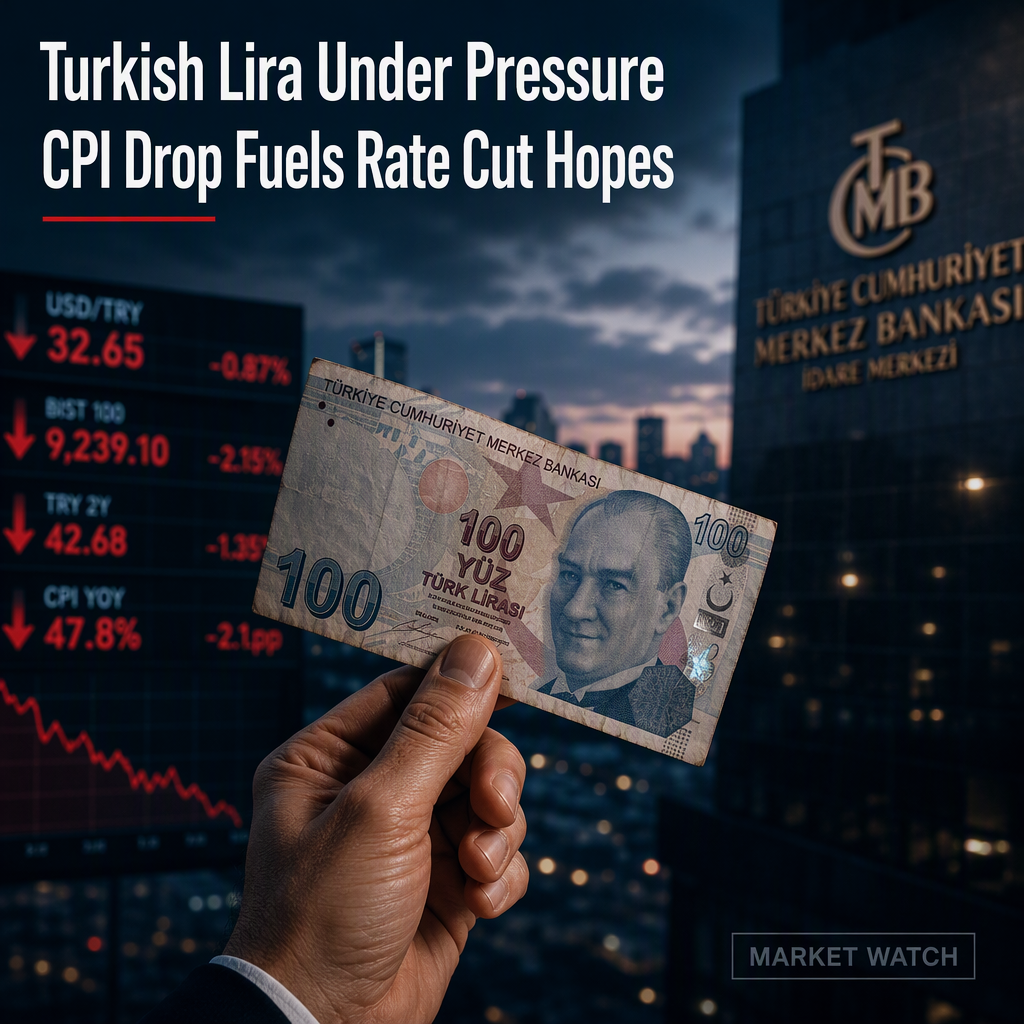
Turkey's September Consumer Price Index (CPI) surprised markets by falling below 30% year-on-year, registering at 29.7% compared to the previous 31.51% year-on-year reading. Month-on-month, prices increased by 1.8%, which was softer than consensus forecasts, while Core C inflation moderated to 28.7% year-on-year with a 2.1% month-on-month rise. Commerzbank's Tatha Ghose notes that the year-on-year decline was influenced by base effects, but also highlights a genuine deceleration in the month-on-month rate of increase after seasonal adjustment [1].
This softer inflation data is seen as providing the Central Bank of Turkey (CBT) with the opportunity to cut interest rates by 100 basis points later in the month. The drop in inflation below 30% year-on-year, a level not seen in almost five years, is cited as giving policymakers the scope to implement a rate cut they have been seeking [1].
Despite the positive inflation surprise, the Turkish Lira (TRY) did not benefit in the market, as it remains heavily managed through central bank and state bank intervention. According to Commerzbank, such intervention can only smooth the path but cannot change the underlying direction of the currency. The prospect of a rate cut, combined with the risk of inflation re-accelerating later in the year, is expected to keep the Lira under pressure [1].
CONCLUSION
Turkey's softer-than-expected CPI data has created conditions for a potential rate cut by the central bank, but the Turkish Lira remains vulnerable due to ongoing intervention and the risk of renewed inflation. Market participants are likely to remain cautious, anticipating continued pressure on the Lira despite the temporary improvement in inflation figures.