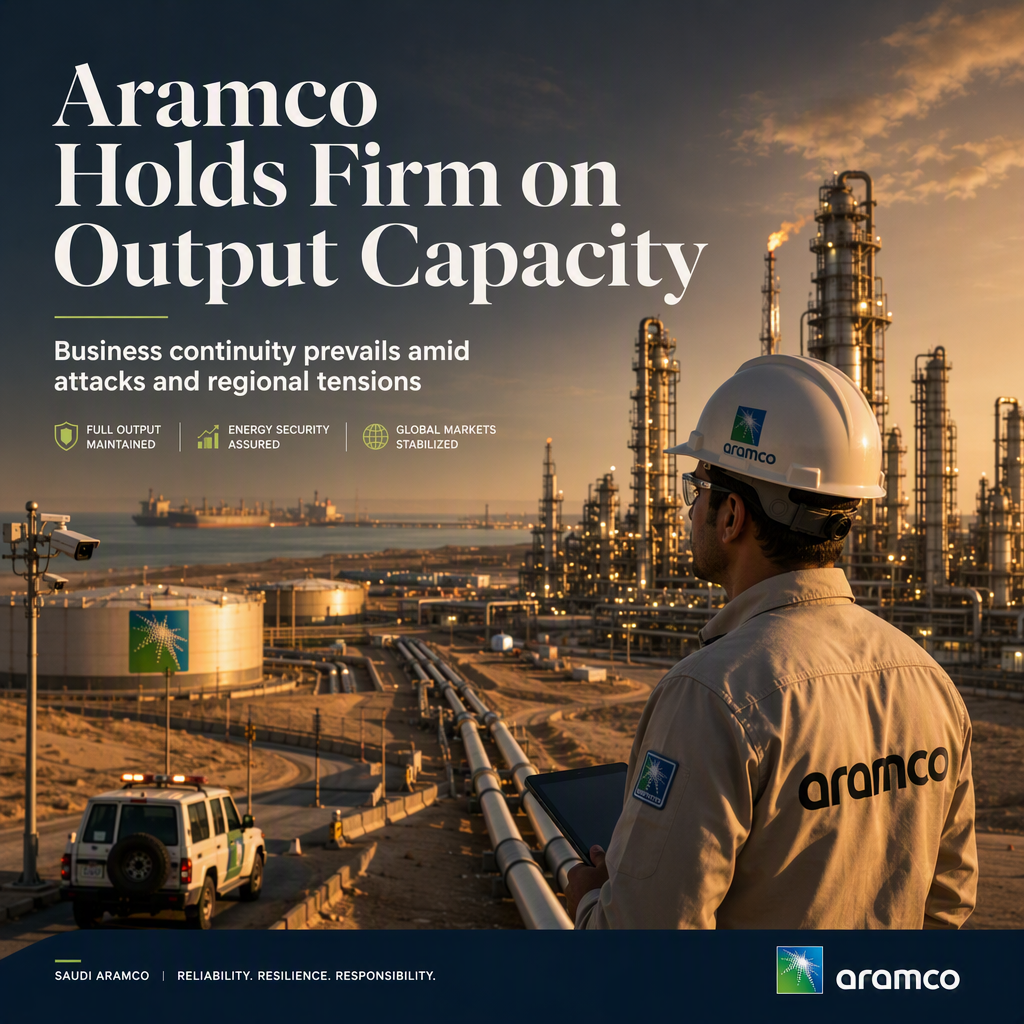
Saudi Aramco has reported that the July attacks on its assets resulted in no material operational or financial impact, according to BNY's Geoff Yu. Despite some facilities being targeted and experiencing interruptions, alternative pipelines, storage, and export terminals have ensured business continuity and preserved output, even amid disruptions around the Strait of Hormuz [1].
Chief Executive Officer Amin Nasser stated that Aramco retains its full production capacity of 12 million barrels per day, which could be ramped up within three weeks if requested by the government. The company is also working to expand export flexibility in response to ongoing risks in the Strait of Hormuz, considering upgrades to the East-West pipeline and increased use of the Yanbu terminal [1].
Nasser further emphasized that threats in the Red Sea have not affected export volumes, and the company continues to engage in contingency planning for shipments. These measures provide reassurance that Saudi oil supply remains intact, even as geopolitical and shipping risks remain elevated [1].
CONCLUSION
Saudi Aramco's ability to maintain full production capacity and export volumes despite recent attacks and ongoing geopolitical risks offers reassurance to the oil market. The company's contingency planning and infrastructure flexibility help mitigate potential supply disruptions, supporting market stability.