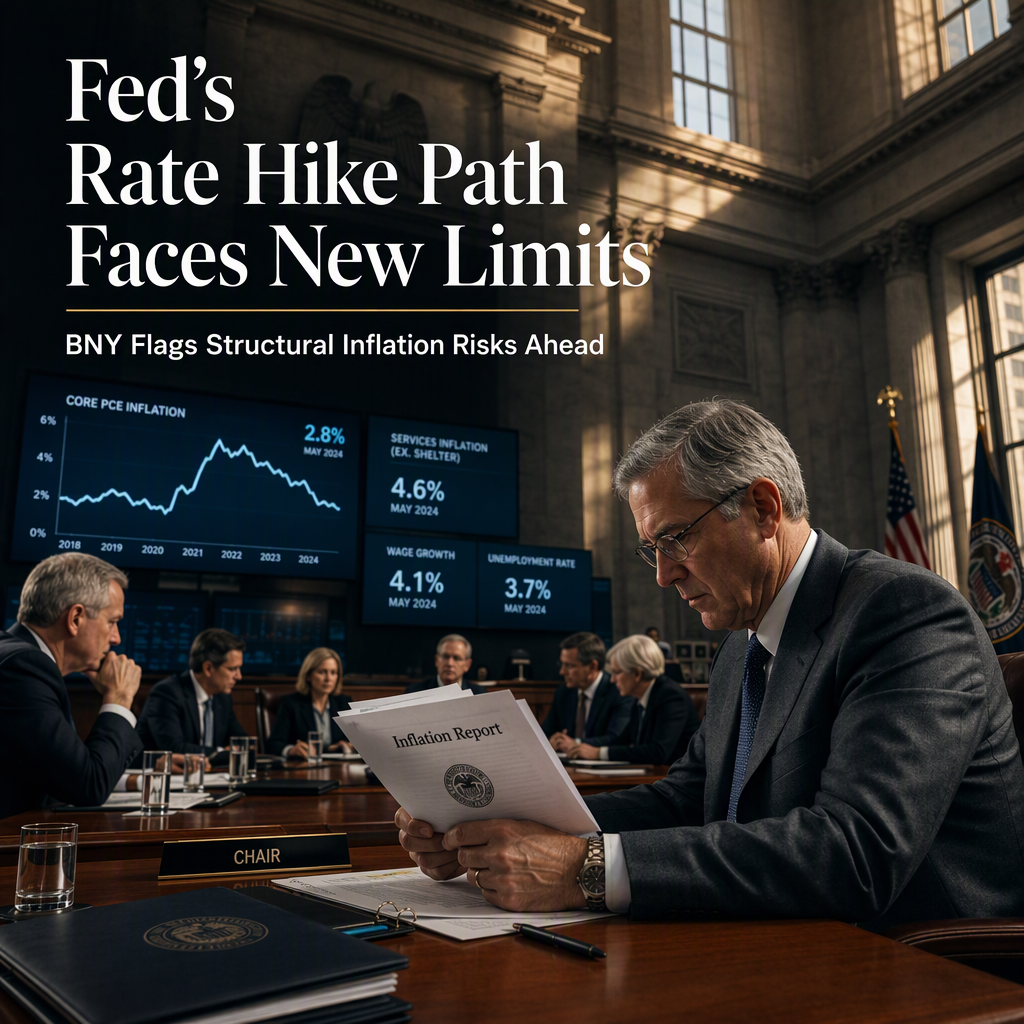
John Velis at BNY Markets asserts that the Federal Reserve's ability to continue raising interest rates is constrained by the nature of current US inflation, which is being driven by non-rate-sensitive components of core PCE [1]. Velis expects the Fed to implement one more rate hike in December 2026, but expresses uncertainty about the likelihood of all the hikes currently priced in for 2027 actually being delivered [1]. He notes that the effectiveness of tighter monetary policy depends on whether it can address the specific inflation shock, and warns that if tightening only cools demand without impacting key contributors to services inflation, the Fed may have to relent next year [1].
Velis emphasizes that the current policy regime is focused more on preserving the Fed's credibility and its reputation for fighting inflation, rather than relying solely on rate actions to curb inflation unless demand is also restrained [1]. He acknowledges the market's hawkish pricing but cautions that unintended consequences could alter the outlook [1]. Even if energy prices provide some relief, Velis argues that a positive supply shock does not eliminate the possibility of traditional demand-driven inflation [1].
No specific market reactions or analyst opinions regarding asset prices or ticker symbols are mentioned in the article [1].
CONCLUSION
BNY Markets suggests that the Federal Reserve's rate hike trajectory may be limited by structural supply shocks driving inflation, raising doubts about the feasibility of all hikes priced for 2027. The focus remains on maintaining policy credibility, with market participants advised to watch for unintended consequences that could shift the outlook. Overall, the sentiment is cautious, with medium market impact expected.