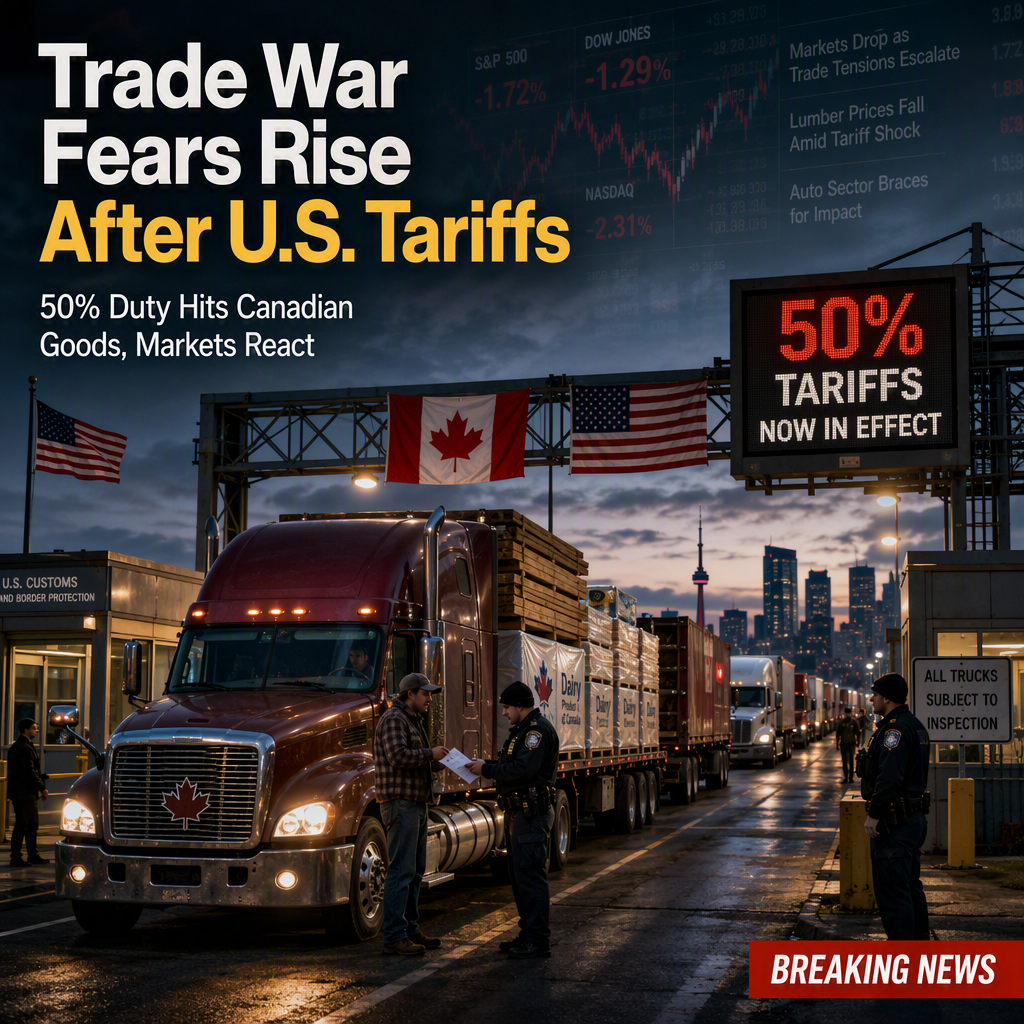
The Trump administration has announced the imposition of 50 percent tariffs on a variety of Canadian goods following the breakdown of trade negotiations between the United States and Canada late Friday night [1]. These tariffs, which represent a significant escalation in trade tensions, are set to impact a wide range of Canadian products imported into the U.S., including lumber, dairy, and auto parts [1]. The administration justifies the move as necessary to protect American industries and jobs, but experts caution that such high tariffs could have far-reaching economic consequences [1].
Market analysts warn that the immediate effect of these tariffs will likely be higher prices for American consumers on affected Canadian goods [1]. A trade analyst noted, 'Anytime you see tariffs at this level, there’s an immediate impact on the cost structure for both manufacturers and consumers,' suggesting that price increases at the checkout counter and potential shortages could occur if Canadian suppliers reduce shipments [1].
In response, some Canadian officials have pledged to retaliate with their own tariffs targeting U.S. goods, heightening concerns about an escalating trade war between the two countries [1]. This has led to increased market volatility, particularly in sectors directly impacted by the tariffs, such as manufacturing and agriculture [1]. While no specific technical chart analysis or support/resistance levels have been provided, market sentiment remains cautious as traders and investors monitor the situation for further developments [1].
Economic advisors are recommending that market participants closely watch both U.S. and Canadian market indices for signs of prolonged disruption or potential policy changes in the coming weeks [1].
CONCLUSION
The imposition of 50 percent tariffs on Canadian goods by the U.S. marks a significant escalation in trade tensions, with immediate implications for consumer prices and market volatility. Both countries are bracing for potential retaliatory measures, and analysts advise close monitoring of the situation for further economic impacts.