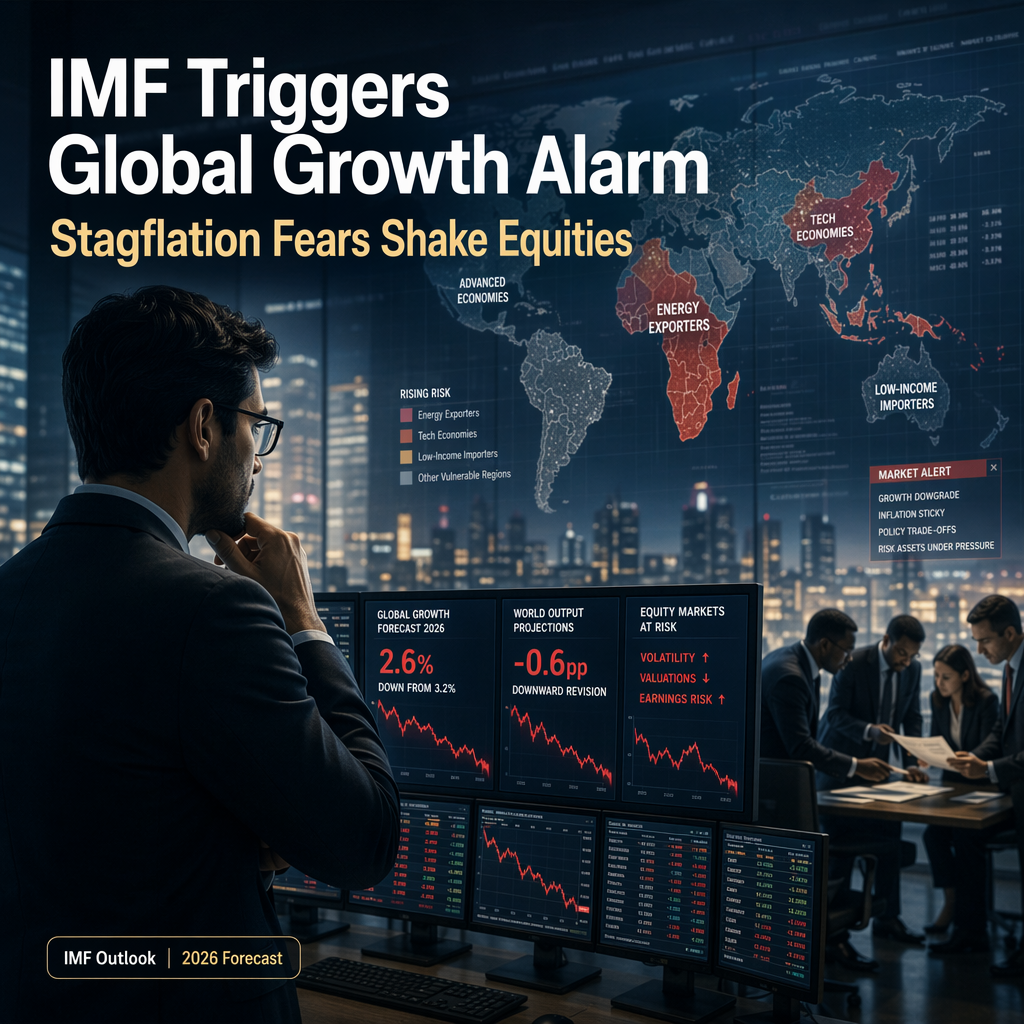
The International Monetary Fund (IMF) has revised its 2026 global growth forecast downward to 3.0%, according to BNY’s Geoff Yu, with the projection that growth will rebound to 3.4% in 2027. However, this remains below the average growth rates of 3.5% anticipated for 2024 and 2025, highlighting a period of sluggish expansion ahead [1]. The IMF’s updated outlook points to uneven impacts across different economies, particularly affecting energy exporters, technology-driven economies, and low-income importers [1].
Headline inflation is expected to rise from 4.1% in 2025 to 4.7% in 2026 before easing to 3.9% in 2027, indicating that the recent disinflation trend has stalled. Both the Bank of Japan (BoJ) and the New York Federal Reserve have warned that higher energy prices and tariffs are likely to continue fueling inflationary pressures [1].
Geoff Yu notes that markets are currently contending with stretched valuations, fading momentum, and a shift from acceleration to consolidation as earnings season approaches. Stagflation risks remain a concern, with the IMF’s growth downgrades and persistent inflationary pressures contributing to a cautious market outlook. Key downside risks identified include renewed geopolitical conflict, trade fragmentation, and a potential correction in technology stocks [1].
While geopolitical tail risks are considered well-covered, Yu suggests that this alone is unlikely to provide sufficient support for markets facing these headwinds [1].
CONCLUSION
The IMF’s downgrade of its 2026 global growth forecast and warnings of persistent inflation have heightened concerns about stagflation and downside risks for equities. Market sentiment remains cautious, with stretched valuations and fading momentum ahead of earnings season. Investors are advised to remain vigilant amid ongoing geopolitical and economic uncertainties.