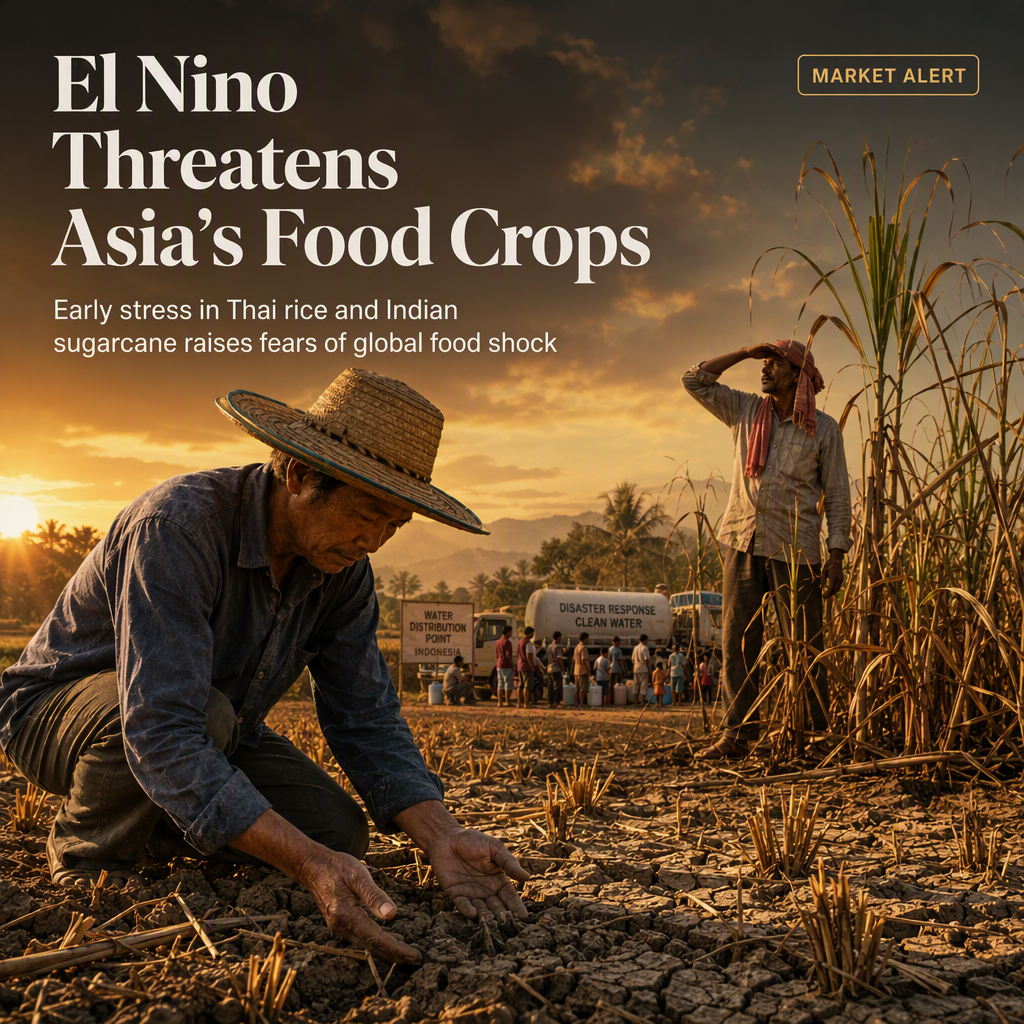
The anticipated arrival of what some predict could be the strongest El Nino on record is already impacting key agricultural regions, with Thai rice and Indian sugarcane crops showing early signs of stress [1]. These developments are raising concerns among market participants about a potential global food shock, as both crops are vital to local economies and the stability of global food supplies [1]. In drought-hit areas of Indonesia, villagers have begun collecting free clean water distributed by regional disaster agencies, illustrating the immediate effects of the changing climate [1].
Market analysts are warning that prolonged dry spells or erratic weather patterns associated with El Nino could lead to reduced harvests in Thailand and India, which may in turn drive up food prices and stoke inflation not only in producing countries but also in import-dependent nations across Asia and beyond [1]. Farmers and traders are closely monitoring rainfall patterns and soil moisture levels, with early technical indicators already pointing to below-average conditions in several key growing regions [1].
Trading sentiment remains cautious, and there is an expectation of price support for rice and sugar futures if crop conditions continue to deteriorate [1]. The market is also referencing historical price levels from previous strong El Nino years as potential guides for future movements [1]. Industry participants, including exporters and commodity analysts, are urging governments to prepare for possible supply disruptions and to implement measures to protect vulnerable populations from food insecurity [1].
The article emphasizes the importance of ongoing weather monitoring and market analysis, as further deterioration in crop conditions could trigger sharper movements in agricultural commodity markets [1].
CONCLUSION
Early signs of El Nino are already impacting Thai rice and Indian sugarcane crops, raising the risk of a global food shock and higher commodity prices. Market participants are adopting a cautious stance, with analysts warning that further crop deterioration could lead to significant price volatility and inflationary pressures. Governments and industry players are being urged to prepare for potential supply disruptions and safeguard food security.