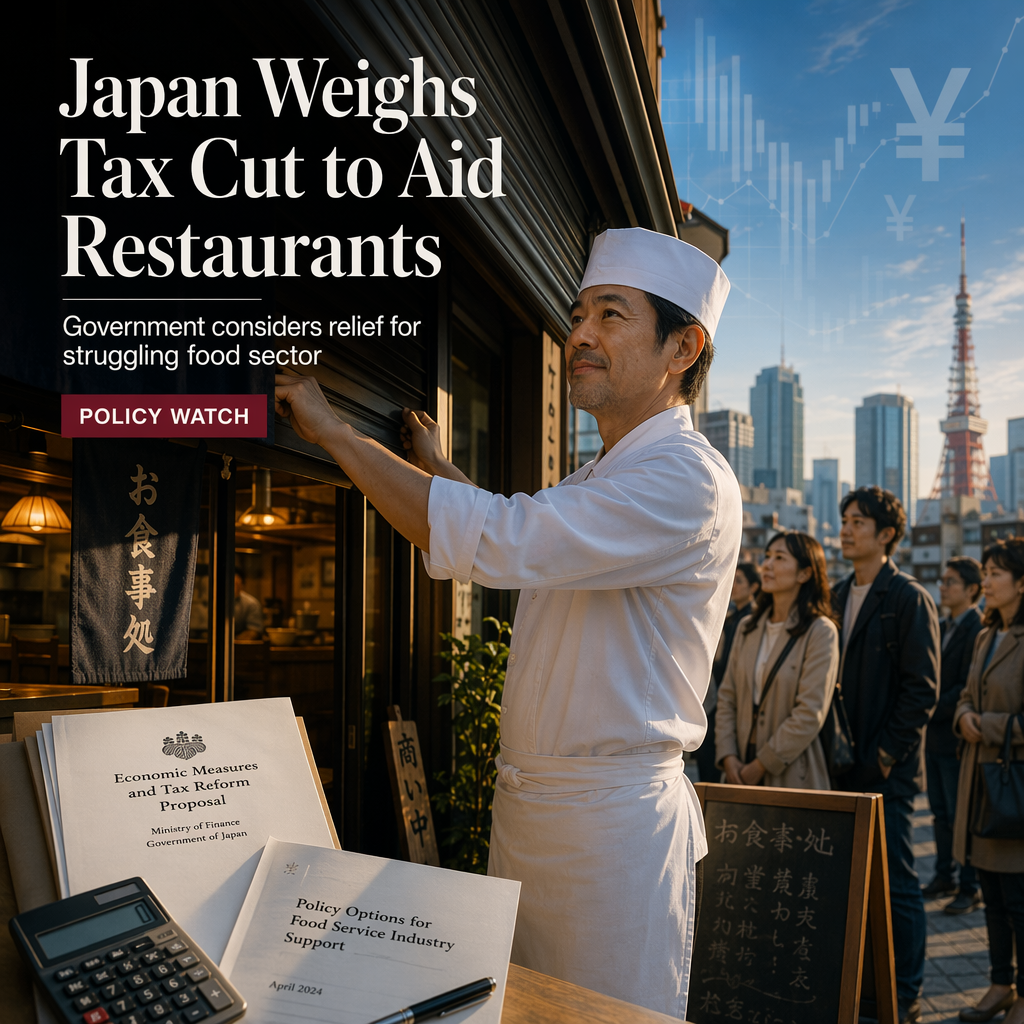
The Japanese government has outlined an interim proposal that includes a potential consumption tax reduction and financial support measures for the food service industry, which has been struggling due to the impacts of the COVID-19 pandemic and rising prices [1]. The proposal aims to stimulate economic activity, and discussions are ongoing regarding the necessity and specifics of the tax cut [1].
For the food service sector, the interim plan details enhanced support for cash flow, such as strengthened lending and guarantees by financial institutions, as well as expanded government subsidy programs [1]. These measures are intended to address the severe revenue challenges faced by the industry [1].
Market participants are reportedly hopeful that a tax cut could boost consumption, but there are also cautious opinions regarding the fiscal impact and the timing of implementation [1]. Some voices in the market emphasize that while cash flow support may provide short-term stability, fundamental demand-stimulating measures are essential, and coordination with monetary and broader economic policies is necessary [1].
The government plans to continue consultations with industry groups and market stakeholders as it works toward finalizing the proposal and determining the timing of its implementation [1].
CONCLUSION
The Japanese government's consideration of a consumption tax cut and expanded financial support for the food service industry has generated cautious optimism in the market. While short-term support is welcomed, stakeholders stress the need for comprehensive demand-boosting measures and careful policy coordination. The final details and timing of the measures remain under discussion.