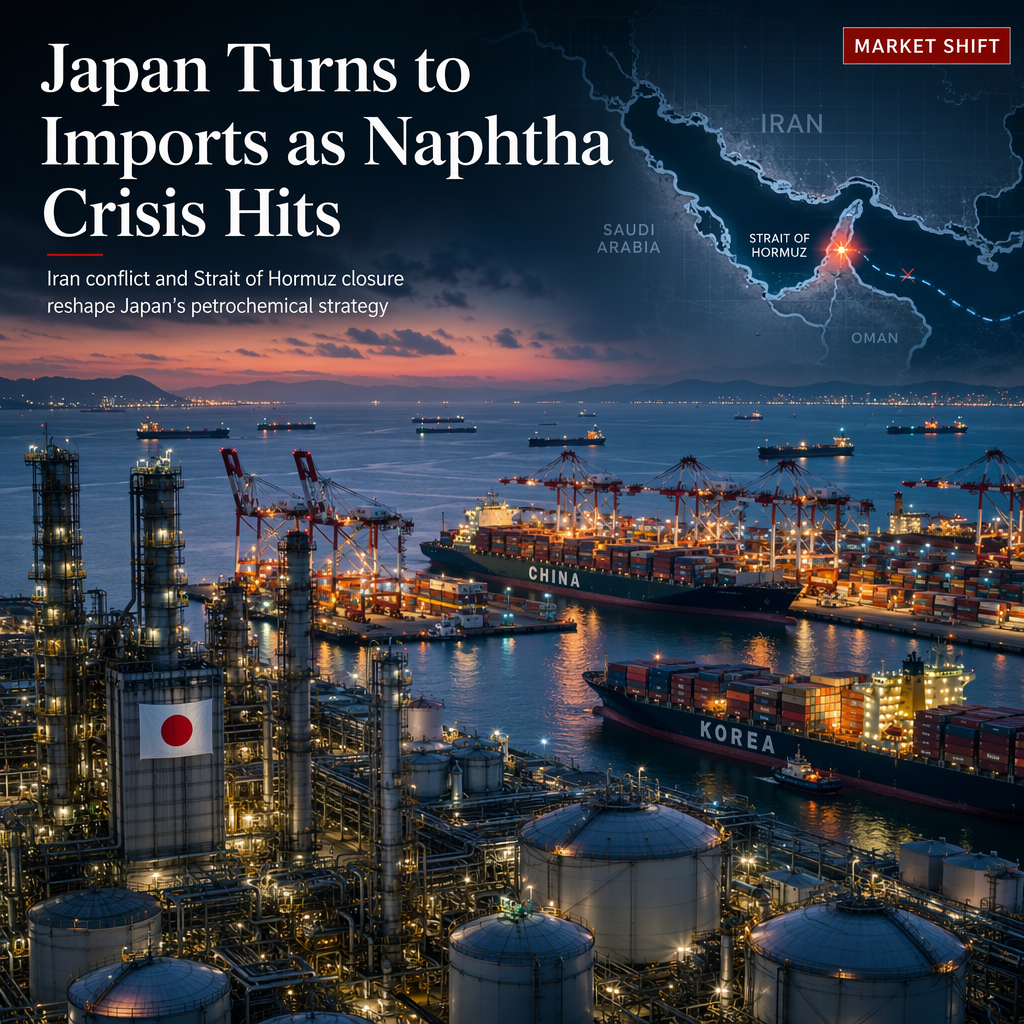
Japan has shifted to a net importer of basic petrochemicals, a significant change driven by a surge in naphtha prices following supply disruptions linked to the Iran war and the closure of the Strait of Hormuz [1]. The increased cost of domestic production, due to higher naphtha prices, has made imports from China and South Korea more economical for Japanese buyers [1]. This strategic shift allows Japanese manufacturers to better manage procurement and align with downstream market demand, as importing petrochemicals instead of producing them from naphtha provides greater flexibility [1].
The article highlights that the Iran war and the closure of the Strait of Hormuz are directly impacting naphtha supply and pricing, escalating domestic production costs for Japanese companies [1]. As a result, Japanese manufacturers are leveraging the cost advantages of imports to optimize their supply chains and procurement strategies [1]. The ongoing volatility in the naphtha and petrochemical markets is underscored, with price levels and supply chain disruptions remaining central to trading decisions and market analysis [1].
No specific financial data, price levels, or trading advice are provided in the article, but the overall sentiment reflects heightened uncertainty and adaptation within Japan's petrochemical industry [1].
CONCLUSION
Japan's transition to a net importer of petrochemicals is a direct response to surging naphtha prices and supply disruptions caused by the Iran war and the closure of the Strait of Hormuz. This shift is reshaping procurement strategies and increasing market volatility, with Japanese manufacturers seeking flexibility and cost advantages through imports.