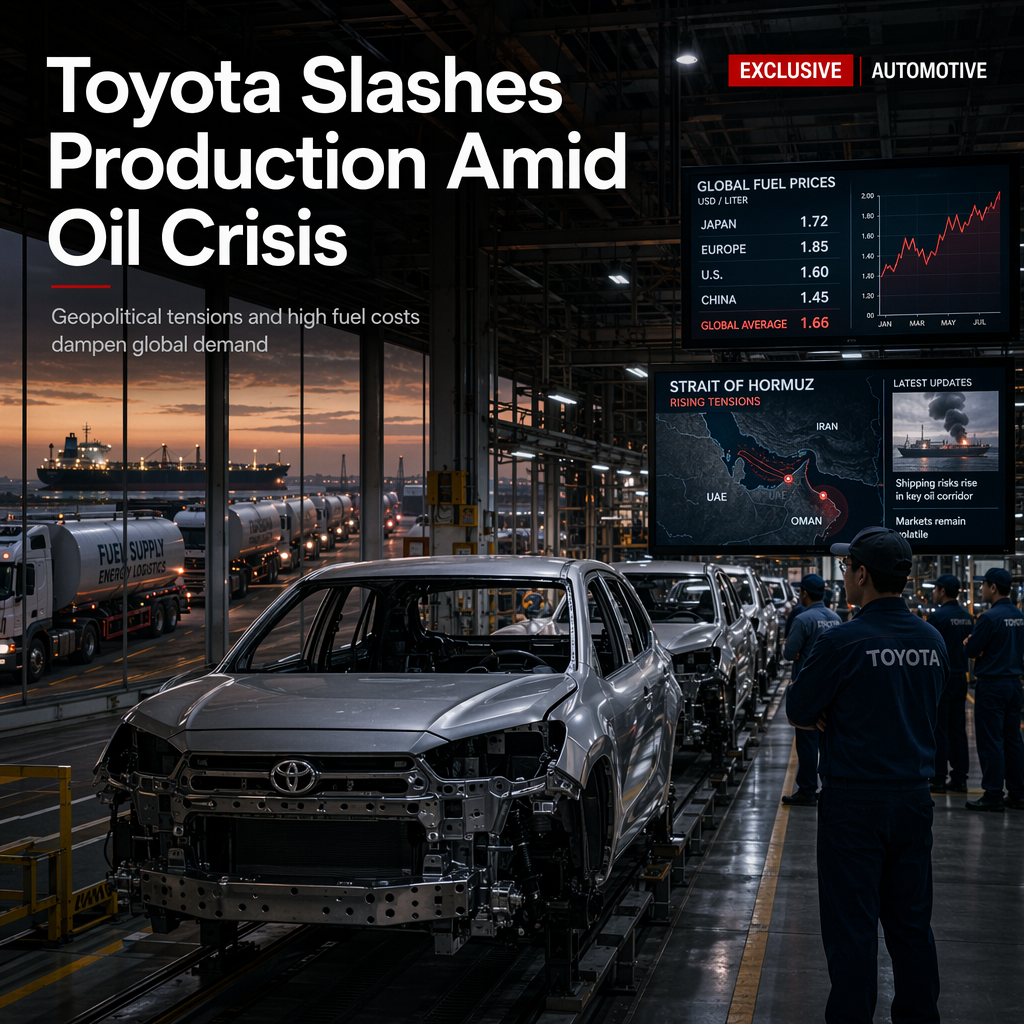
Toyota Motor plans to reduce its overseas vehicle production by approximately 100,000 units by around February 2027, according to information obtained by Nikkei. This decision is driven by weaker demand resulting from the de facto closing of the Strait of Hormuz, a critical oil shipping lane, which has kept fuel costs persistently high and dampened consumer demand in overseas markets [1].
The production cut will affect several models, including the Avalon sedan intended for the Chinese market. Toyota's move is a direct response to prolonged uncertainties and weaker sales trends linked to the ongoing conflict involving Iran [1]. The company has not provided details regarding specific factory closures or potential worker layoffs associated with these production adjustments [1].
Toyota is closely monitoring market conditions and fuel price trends and may further adjust its strategy if disruptions in the Strait of Hormuz continue or intensify. The company’s actions reflect broader challenges faced by Japanese automakers, including increased competition from Chinese manufacturers and volatile energy markets [1].
No forward-looking statements from analysts or additional market reactions were mentioned in the article. Toyota’s latest production cut underscores its efforts to maintain profitability and operational flexibility amid shifting global demand [1].
CONCLUSION
Toyota's decision to cut overseas production highlights the significant impact of geopolitical tensions and high fuel costs on global automotive demand. The company is taking proactive steps to adapt to market uncertainties, with further adjustments possible if current disruptions persist.