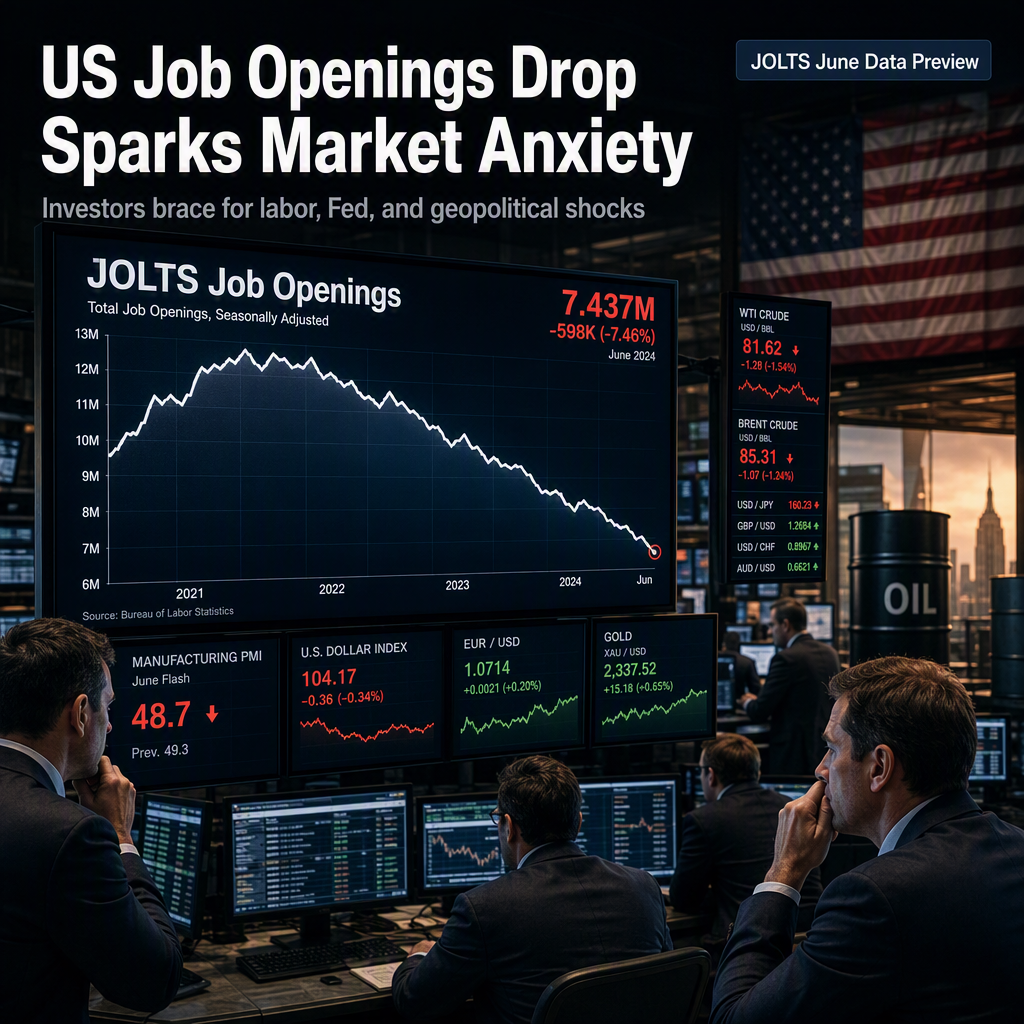
US labor market attention is centered on the upcoming JOLTS Job Openings data for June, with TD Securities forecasting a notable decline to 7.0 million from 7.594 million in May, which is below the consensus estimate of 7.504 million [1][2]. This anticipated drop is seen as a correction after a recent surge in job openings, which TD Securities analysts believe is unsustainable and likely to align more closely with softer private-sector hiring indicators [1][2]. The JOLTS data release is expected to set the tone for a series of key US labor reports this week, including the ADP Employment Change and the Nonfarm Payrolls report, both of which are closely watched for signals on the Federal Reserve's near-term monetary policy [2][4].
Despite the expected softness in job openings, recent US manufacturing data has surprised to the upside. The ISM Manufacturing Index rose to 55.6 in July from 53.3 in June, marking its highest level since mid-2022, driven by increases in production, employment, and supplier deliveries, while inventories declined [1]. Prices paid in manufacturing fell by nearly 2 points to 71.1, reversing much of the recent increase, even as oil prices remained elevated [1]. Optimism in the manufacturing sector is attributed to demand from the AI and defense industries, though concerns persist about strained supply chains due to the Iran conflict, ongoing geopolitical tensions, and higher energy costs [1].
On the currency front, the Euro has managed to defend the 1.1500 level against the US Dollar, with analysts citing investor caution ahead of the US labor data and uncertainty over how higher energy prices will impact Eurozone growth and inflation [2]. Rabobank analysts expect the EUR/USD to remain range-bound between 1.14 and 1.15 in the coming months as investors hesitate to rebuild long Euro positions [2]. Similarly, the British Pound has found support at 1.3420 against the US Dollar, but strategists at UOB Group question whether GBP can sustain gains above key resistance levels, noting that the odds of a further rise have diminished after a recent pullback [4].
Gold prices have remained steady, trading in a narrow range between $4,000 and $4,200, as traders weigh the implications of US-Iran peace efforts and the Fed's policy outlook [3]. The Federal Reserve left interest rates unchanged at its July meeting, with Chair Kevin Warsh reiterating the commitment to a 2% inflation target but offering little forward guidance [3]. Market expectations, as reflected by the CME FedWatch Tool, indicate a 62.7% probability of a rate hike in September, which has kept the US Dollar and Treasury yields supported, limiting gold's upside [3].
Geopolitical tensions in the Middle East continue to influence market sentiment, with conflicting statements from US President Donald Trump and Iranian authorities regarding the prospect of negotiations and threats to US naval forces if the blockade of Iranian ports persists [2][3][4]. Elevated oil prices and restricted energy shipments through the Strait of Hormuz are contributing to inflationary pressures and uncertainty about future central bank actions [3].
CONCLUSION
Markets are bracing for a potentially weaker US JOLTS Job Openings report, which could signal a cooling labor market and influence Federal Reserve policy expectations. While manufacturing data remains robust, ongoing geopolitical tensions and elevated energy prices are adding to market caution. Currency and gold markets are largely range-bound as investors await further clarity from upcoming US labor data and central bank signals.