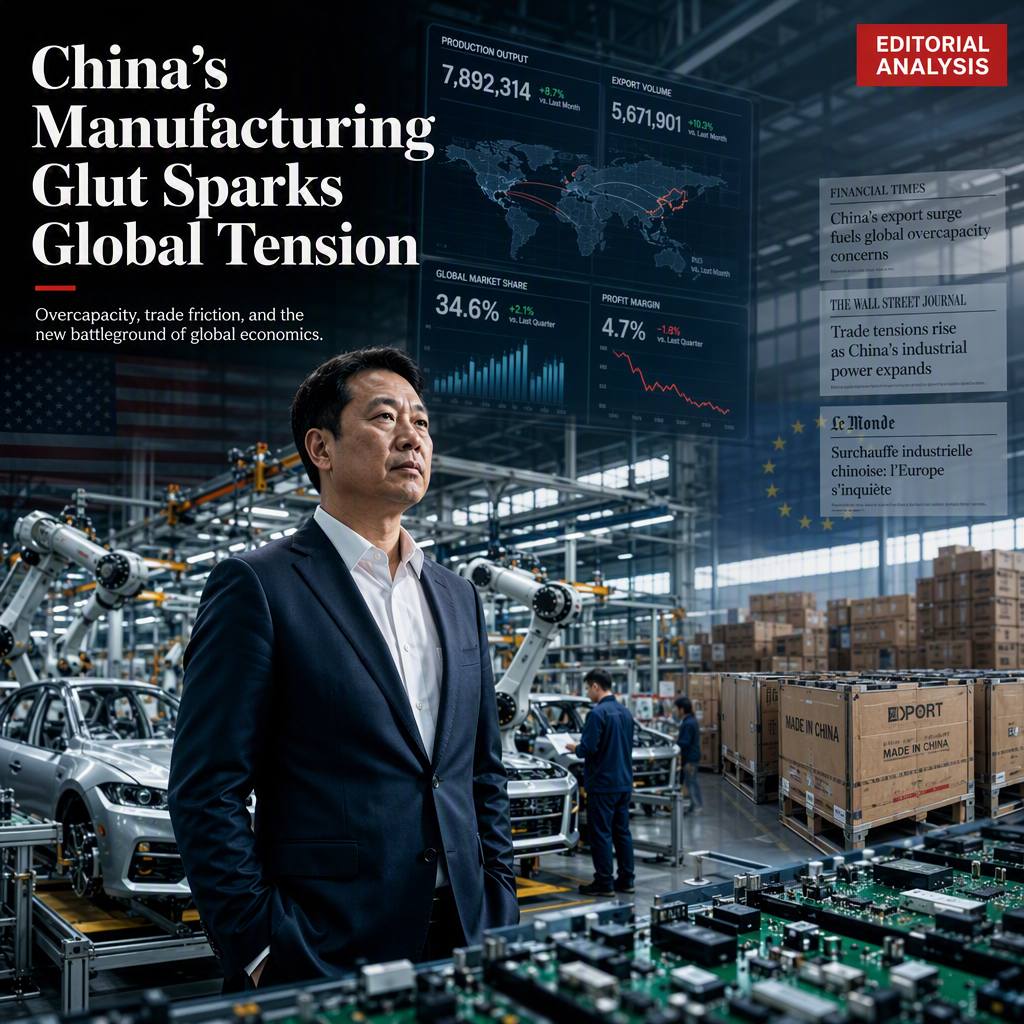
Chinese manufacturers, particularly in the technology and automotive sectors, are engaged in intense competition that has driven rapid technological advances but also resulted in diminishing profits and product surpluses destined for export markets [1]. At Autolink's headquarters in Wuxi, the company is emblematic of this trend, with its CEO describing being 'swept along' by a relentless manufacturing model that prioritizes innovation and efficiency at the expense of profit margins [1].
This hypercompetitive environment has led to overcapacity and gluts in sectors such as electric vehicles and advanced manufacturing, forcing companies to cut costs and prices to maintain their market positions [1]. The resulting influx of competitively priced Chinese goods into global markets has raised concerns in Beijing about both the domestic impact of falling profits and the potential for international backlash [1].
The US and EU have accused Chinese industries of market distortion through overcapacity, prompting Beijing to reject these claims and reiterate its commitment to expanding trade ties while addressing economic challenges with caution [1]. The situation has sparked a broader debate within China regarding the sustainability of its current manufacturing model and the need for policy adjustments to support profitability and prevent trade disputes [1].
CONCLUSION
China's hypercompetitive manufacturing sector is driving innovation but also creating overcapacity and profit pressures, leading to increased scrutiny and accusations from international markets. Beijing is closely monitoring the situation and considering policy responses to balance domestic economic health with global trade relations.