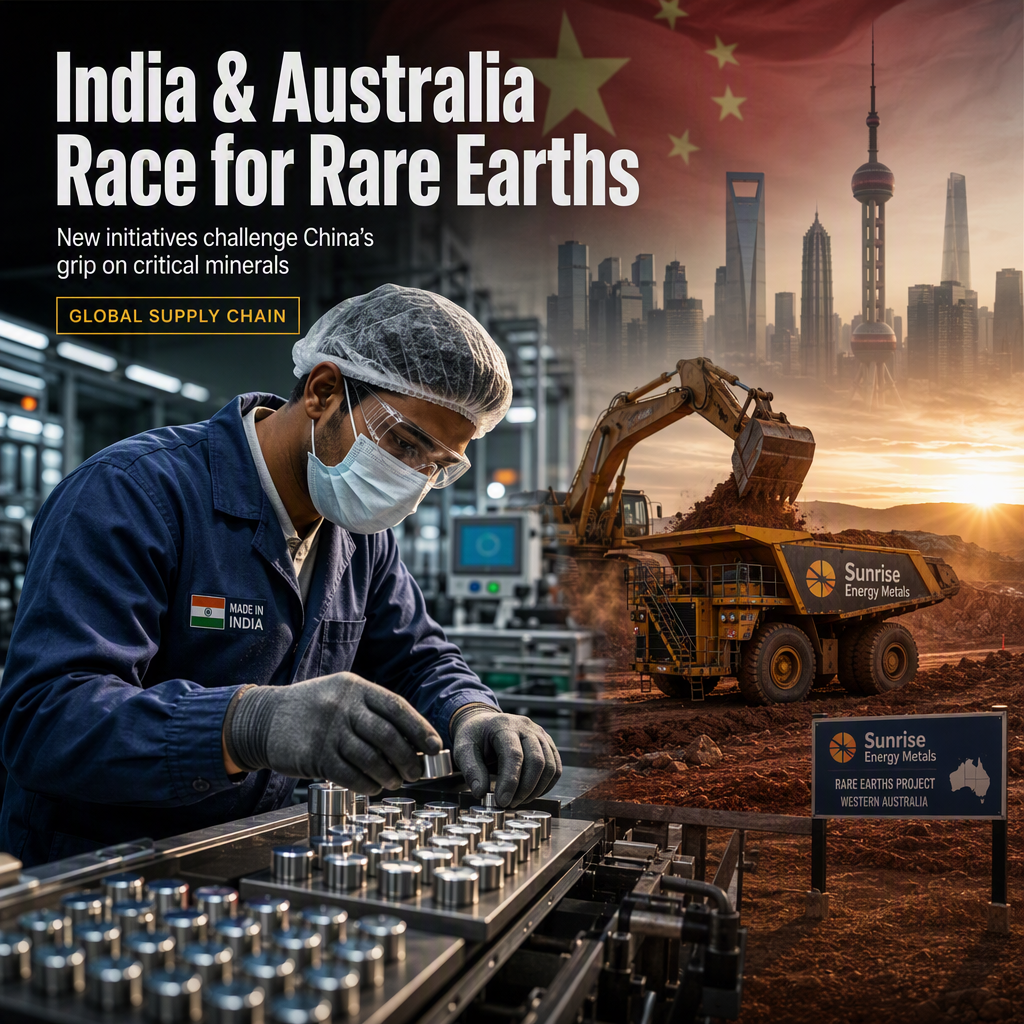
India has launched a 72.8 billion rupee ($764.8 million) initiative under its Production Linked Incentive (PLI) scheme to establish a domestic rare earth magnet industry, aiming to challenge China's dominance, which accounts for over 80% of global supply [1]. The policy encourages the creation of smaller, vertically integrated plants with time-limited subsidies, covering the entire supply chain from mining to finished magnets. However, industry participants and analysts have expressed concerns that this approach may hinder competitiveness against China's large-scale, low-cost producers. A senior executive from a bidding company highlighted that global trends favor specialization and economies of scale, warning that India's strategy could result in higher costs and lower quality [1]. Experts also pointed out the need for a long-term roadmap, policy stability, and investment in R&D to ensure the sector's global competitiveness. Additional challenges include technology transfer, raw material access, and the under-exploration of India's rare earth reserves, while China's export controls continue to create price volatility and supply uncertainty [1].
In a related development, Australian scandium miner Sunrise Energy Metals experienced a 20% surge in its share price after being named a potential recipient of U.S. support for critical mineral projects [2]. Scandium, a rare earth element vital for solid oxide fuel cells, high-strength alloys, and wireless communication chips, has become increasingly difficult to source due to tightening Chinese export restrictions. The market's positive reaction to Sunrise Energy Metals' inclusion in the U.S.-backed projects list underscores the strategic importance of securing alternative supply chains for critical minerals and reducing reliance on China [2]. The CEO of Sunrise Energy Metals emphasized the growing challenges faced by chipmakers and defense firms in sourcing scandium, further highlighting the impact of Chinese controls on global supply chains [2].
Both articles underscore the global race to secure rare earth supplies as Chinese export restrictions intensify. While India is investing heavily to build a self-sufficient rare earth magnet industry, concerns remain about the effectiveness of its approach and the need for sustained support. Meanwhile, the U.S. is backing alternative suppliers like Sunrise Energy Metals in Australia, with immediate positive market reactions reflecting the urgency and strategic value of diversifying critical mineral sources [1][2].
CONCLUSION
India and Australia are taking significant steps to reduce dependence on Chinese rare earth supplies, with India launching a major incentive scheme and Australia receiving U.S. backing for critical mineral projects. While these moves have been met with optimism in financial markets, especially in Australia, concerns persist about the long-term competitiveness and scalability of India's approach. The global rare earth market remains highly sensitive to Chinese export policies, driving both policy innovation and investor interest in alternative supply chains.