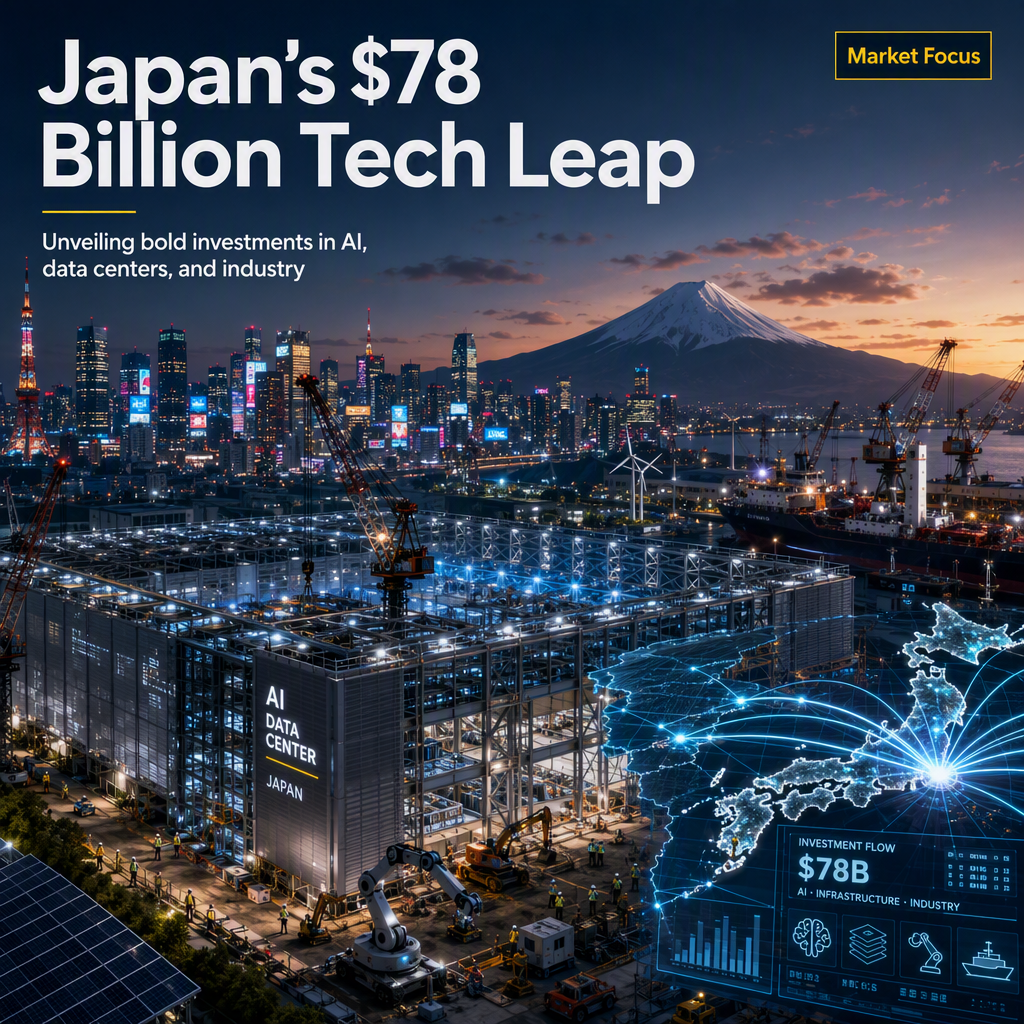
Japan is making a significant push into future-oriented industries, with government budget requests for fiscal 2027 reaching a record high, including 12.17 trillion yen ($78 billion) in an uncapped growth investment framework targeting strategic sectors such as artificial intelligence and space technology [2]. This unprecedented allocation reflects the government's focus on technological advancement, even as it faces rising debt costs and increased defense spending [2].
A Nikkei survey reveals that Japan's plans for artificial intelligence data centers would more than quadruple the country's capacity by 2033, requiring a $60 billion investment [1]. This expansion would position Japan among the global leaders in data center capacity, trailing only the U.S. and China, and aligns with the government's digital transformation agenda [1]. NTT, a major Japanese company, aims to achieve 2 gigawatts of data center capacity by fiscal 2033, highlighting the scale of private sector involvement [1].
The planned investments are expected to create new business opportunities across construction, real estate, energy, and technology sectors, while also presenting challenges related to power consumption, sustainability, and regulatory oversight [1]. Financial analysts and policymakers have expressed concern that the surge in growth and defense spending could further strain Japan's already high public debt levels [2]. The government faces a balancing act between promoting economic growth through investment in cutting-edge sectors and maintaining fiscal discipline [2].
While the focus of the budget requests and data center expansion is on AI and technology, the government has also announced 213.1 billion yen ($1.37 billion) in subsidies over a decade to support capital spending in the shipbuilding industry, aiming to double Japan's shipbuilding capacity by 2035 [3]. This marks the first concrete step in a broader industry revival plan, though no further market analysis was provided in the article [3].
CONCLUSION
Japan is aggressively investing in AI, data centers, and other growth sectors, with record-breaking budget requests and major private sector commitments. While these moves are expected to boost technological competitiveness and create new business opportunities, they also raise concerns about fiscal sustainability amid rising debt and defense costs. The market is likely to view these developments as a strong signal of Japan's commitment to future-oriented industries, but fiscal risks remain in focus.