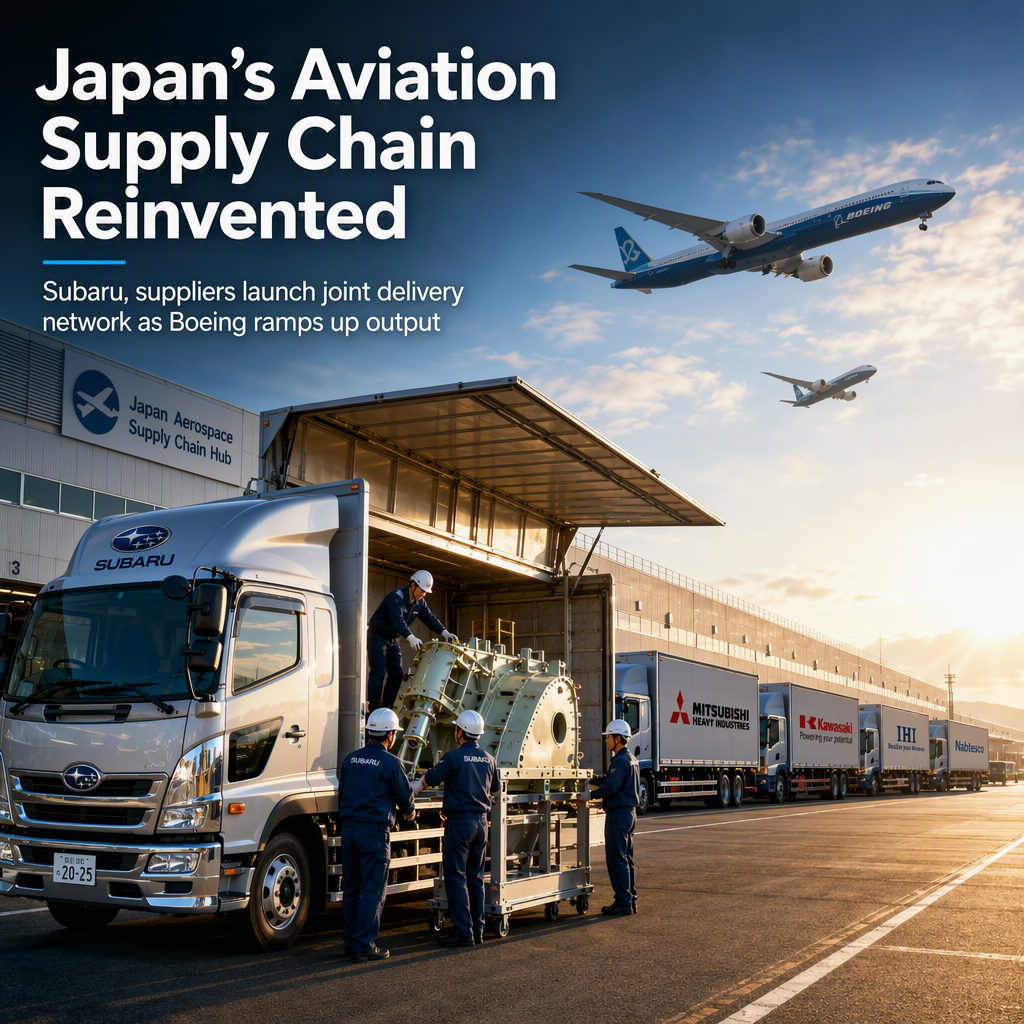
Subaru and other Japanese aviation parts manufacturers are collaborating to implement a joint delivery system for aircraft components sourced from subcontractors, according to Nikkei Asia. This initiative is designed to reduce costs and workloads within the aircraft assembly supply chain as Boeing increases its production output, driving higher demand for efficient and reliable component delivery [1].
The new logistics network will utilize 'milk runs,' a method where a single vehicle makes multiple pickups and deliveries along a set route. This approach is intended to streamline the transport of parts across Japan, optimize truck usage, and alleviate the logistical burden on smaller subcontractors who previously managed their own transportation [1].
Nippon Express will support the launch of this joint delivery network. By pooling logistics resources, Subaru and its partners aim to build a more resilient and cost-effective supply chain, especially as the global aviation industry recovers and production volumes ramp up. The nationwide expansion of the milk run system marks a significant modernization of Japan's aircraft supply chain logistics, in response to rising demand from Boeing and other major customers [1].
CONCLUSION
Subaru and other Japanese aviation suppliers are proactively modernizing their logistics to meet increased demand from Boeing. The joint delivery network is expected to enhance supply chain resilience and efficiency, supporting the industry's recovery and growth.