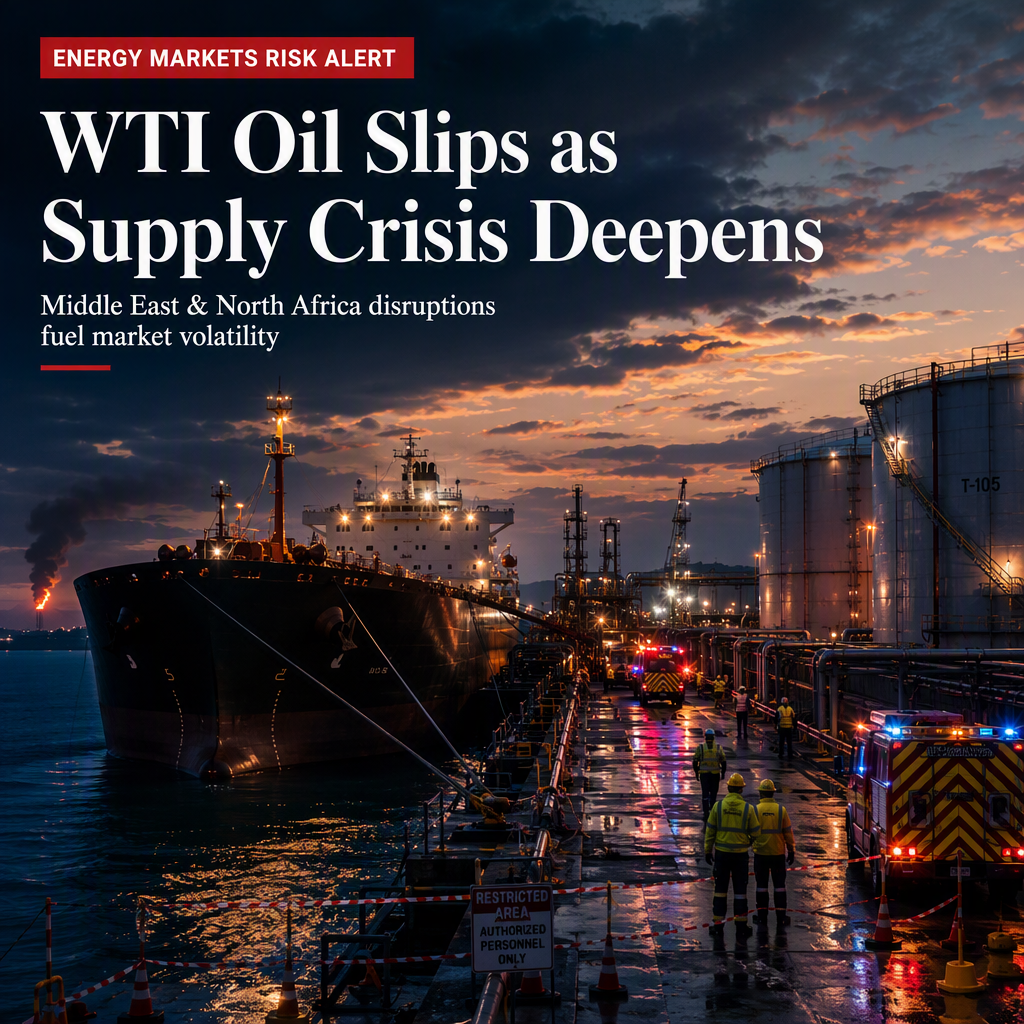
West Texas Intermediate (WTI) oil prices declined to approximately $100.50 per barrel during Asian trading hours on Wednesday, following two consecutive days of gains [1]. This drop comes despite escalating supply disruptions in the Middle East, which have the potential to drive prices higher in the near future [1]. Saudi Arabia has reportedly cancelled several September crude deliveries to European customers after recent drone attacks forced the emergency closure of its critical East-West pipeline. This pipeline is a strategic route that allows oil shipments to bypass the Strait of Hormuz, and there is currently no clear timeline for its reopening due to ongoing attacks by Iran-backed Houthi militants [1].
Supply constraints are not limited to the Middle East. In North Africa, Libya's national oil company has suspended operations at two major oilfields and a pumping station as a result of persistent local protests, further tightening global oil supply [1]. Additionally, military escalations outside the Middle East are contributing to market instability. Russia has targeted petrol stations in Kyiv, while Ukraine has struck a Russian oil refinery, despite an announcement by US President Donald Trump that both nations had agreed to halt attacks on each other's energy infrastructure [1].
According to TD Securities, the risk environment in energy markets remains tilted to the upside. The bank warns that 'upside risks across crude oil and products remain extremely elevated amid energy infrastructure attacks in the Middle East and Russia.' The ongoing vulnerability of key supply assets in these regions is maintaining a significant risk premium in crude and refined product prices [1].
No specific analyst forecasts or forward-looking price targets are provided, but the persistent threats to supply infrastructure suggest continued volatility and elevated risk premiums in the oil market [1].
CONCLUSION
WTI oil prices have slipped despite ongoing and broadening supply disruptions in the Middle East and North Africa, as well as military escalations involving Russia and Ukraine. The market remains on edge, with analysts warning of elevated upside risks and a persistent risk premium due to the vulnerability of key energy infrastructure.