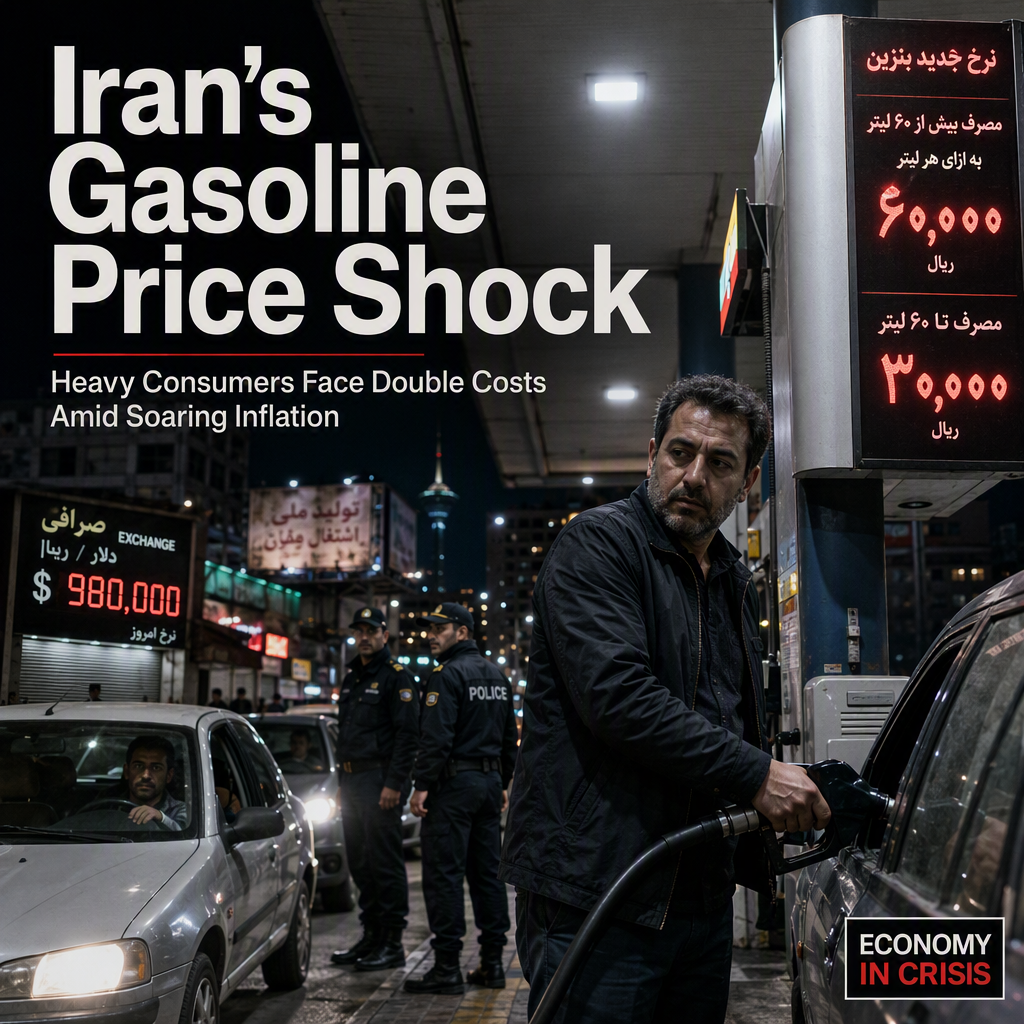
Iran has implemented a significant increase in gasoline prices for its heaviest consumers, marking the second such hike since December, as the country grapples with ongoing economic challenges exacerbated by months of war [1]. Under the new policy, individuals purchasing more than their monthly quota of 110 liters (29 gallons) must now pay 100,000 rials (about 7 cents) per liter, which is double the rate set in December [1]. This measure is expected to impact approximately 15% of gasoline consumers, according to Keramat Veis Karami, CEO of the state oil distribution company [1].
The price hike comes at a time when Iran's gasoline consumption reached a record high of 145 million liters (38 million gallons) per day in August, surpassing the domestic production capacity of 122 million liters per day, with the shortfall being met through imports [1]. The government has stated that the additional revenue generated from the price increase will be distributed to households, though it did not explicitly reference the ongoing war with the United States in its announcement, instead citing the "current situation" [1].
Experts warn that the increase in gasoline prices is likely to further drive up inflation, which is already at an annual rate of about 67%, according to the country's statistics center [1]. The Iranian rial continues to depreciate, with the U.S. dollar trading at 2.22 million rials on Monday [1]. The move has sparked public concern, with residents expressing skepticism about the effectiveness of the measure in addressing broader economic issues such as poverty and unemployment [1].
The immediate aftermath of the price hike saw heightened security at gas stations, with some stations temporarily closed to adjust pump rates and visible police presence at others [1]. Historically, gasoline price increases have triggered widespread protests in Iran, including a deadly crackdown in 2019 and mass demonstrations as far back as 1964 [1].
CONCLUSION
Iran's decision to double gasoline prices for heavy consumers is a direct response to surging consumption and severe economic pressures, but it risks fueling further inflation and public discontent. With inflation already at 67% and the currency at record lows, the measure is likely to have significant market and social repercussions.