
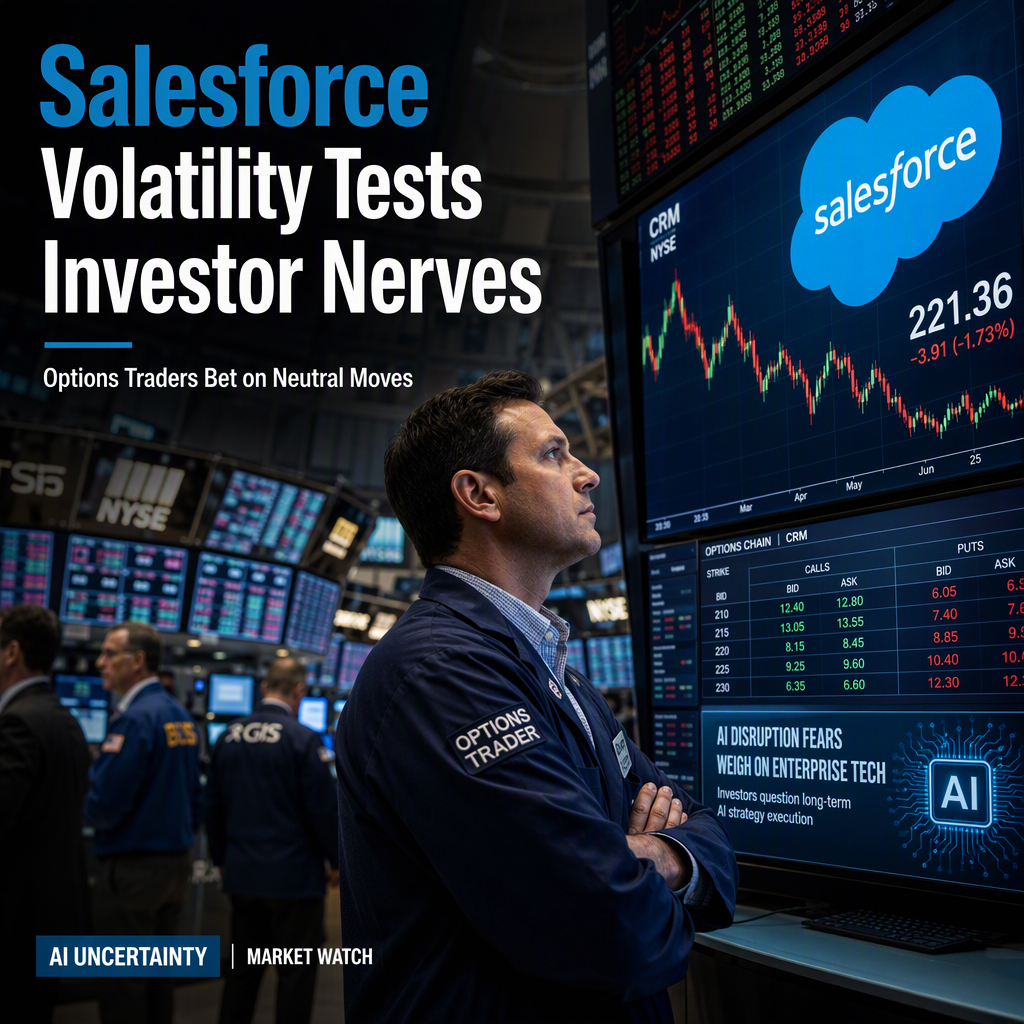
Salesforce shares have experienced significant volatility in 2026, reflecting ongoing investor uncertainty about the company's ability to adapt to an AI-driven overhaul of enterprise software [1]. The stock bottomed in late June, falling more than 40% from the start of the year due to concerns that AI agents could render traditional software subscriptions obsolete [1]. However, Salesforce's Q2 earnings in August exceeded Wall Street expectations, temporarily alleviating fears of a so-called 'SasSpocalypse.' In response, the stock surged from $205 to $252 by the end of the following session, marking a rally of over 22% and the second largest single-day gain in the company's history [1].
Despite this strong earnings performance, Salesforce shares have since lost much of their post-earnings momentum, currently trading near $230. This price remains well above the yearly lows but still represents a decline of nearly 10% year-to-date [1]. The market remains divided, with some investors skeptical about Salesforce's long-term growth prospects in the face of AI disruption, contributing to the stock's lack of a clear trend [1].
Implied volatility for Salesforce is currently around 39%, which is elevated compared to its annual range but consistent with the past month's levels. This is notably lower than the mid-50s volatility spike seen in August around the earnings release. The current volatility suggests sustained, moderately elevated investor uncertainty rather than anticipation of another sharp move [1].
Options traders are responding to this environment by considering neutral strategies such as the short iron condor. One example involves selling the Nov 20 210/200 put spread and the Nov 20 260/270 call spread for a total credit of $3.54. This trade profits if Salesforce remains between $210 and $260 through November 20, bracketing the range established since the August rally stalled [1]. The next major catalyst for the stock is the upcoming earnings announcement, estimated for December, giving traders several weeks to position for continued range-bound action [1].
CONCLUSION
Salesforce's stock remains volatile amid ongoing debates about its future in an AI-transformed software landscape. While strong Q2 earnings provided a temporary boost, persistent uncertainty has kept shares in a choppy range, prompting options traders to favor neutral strategies. The next earnings report in December is expected to be the next significant catalyst for the stock.