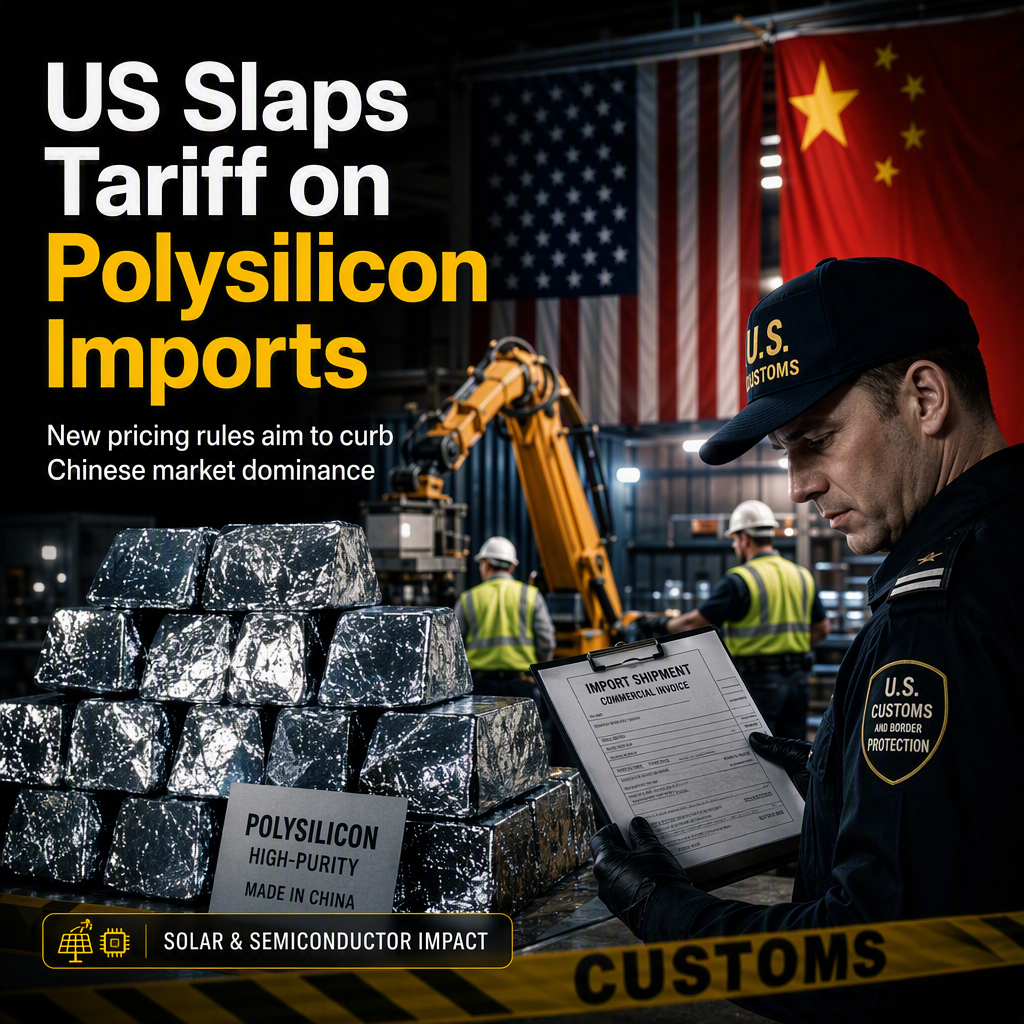
The Trump administration has announced the implementation of a 15% tariff and a minimum price on imports of products made from polysilicon, a critical raw material used in the production of solar panels and semiconductor chips [1]. This move is part of a broader pushback against China's dominance in the polysilicon market, where Chinese companies account for 96% of global production [1]. The solar industry is identified as the primary consumer of polysilicon, while semiconductor chips represented 2.4% of annual consumption in 2025, according to data from the Semiconductor Industry Association [1]. The imposition of tariffs and a minimum price is expected to have significant implications for the solar and semiconductor industries, potentially affecting supply chains and costs for manufacturers reliant on imported polysilicon [1].
CONCLUSION
The US government's decision to impose a 15% tariff and minimum price on polysilicon imports directly targets China's near-monopoly in the sector. This policy is likely to have a substantial impact on the solar and semiconductor industries, with potential ripple effects on global supply chains and pricing.