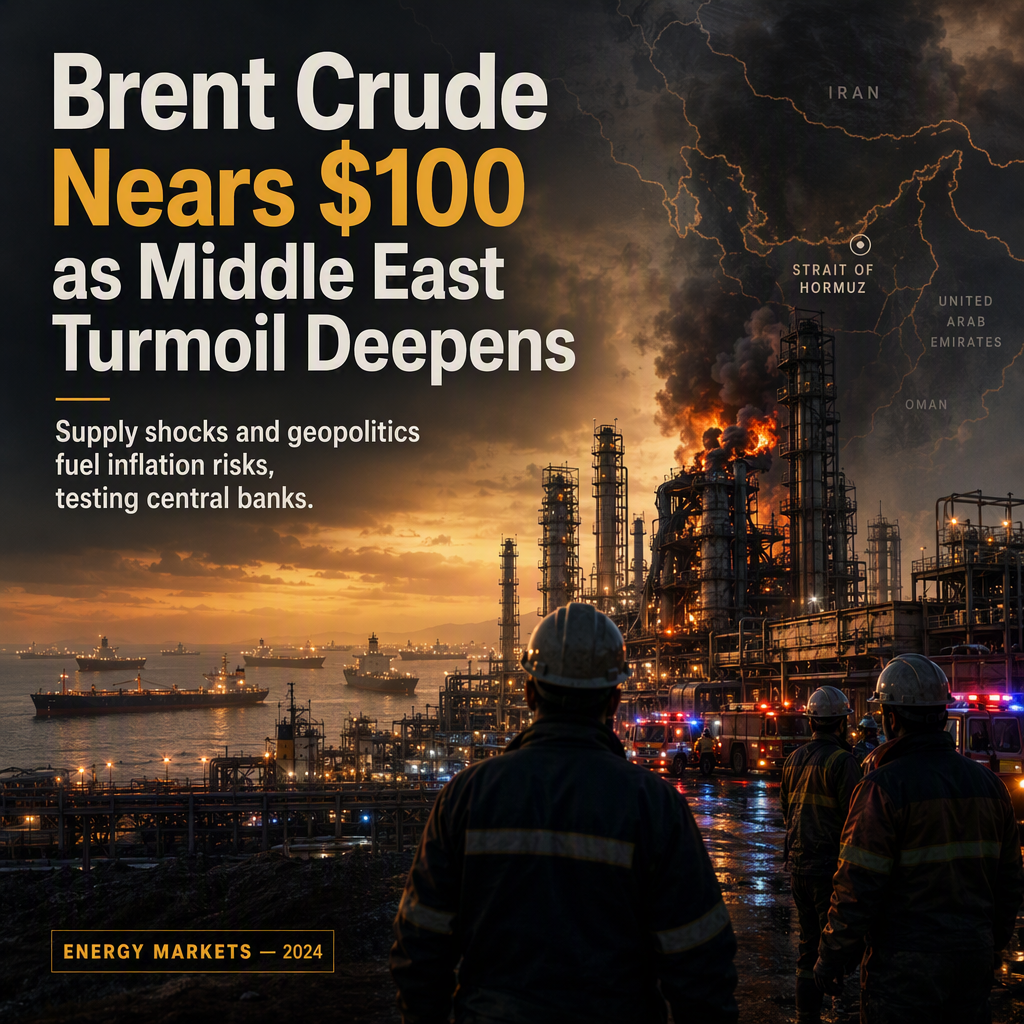
BNY's Geoff Yu reports that energy risk is currently dominating financial markets, with Brent crude expected to trade sustainably above $100 per barrel due to escalating supply disruptions in the Middle East [1]. Saudi Arabia has halted operations at several southern energy facilities following attacks that triggered fires and caused injuries, notably impacting the 400,000 barrel/day Jazan refinery, which has been offline since July [1]. These disruptions are compounded by constrained shipments through the Strait of Hormuz, a result of ongoing U.S.-Iranian conflict, raising the risk of simultaneous supply losses across key Middle Eastern export routes [1].
The situation is further deteriorating as Iran signals a more aggressive military posture and the Houthis threaten to blockade Saudi oil flows, reinforcing upside risks to energy prices and global inflation [1]. As oil prices move back toward $100 per barrel, political pressure over living costs is intensifying, and risk appetite in financial markets is being weighed down [1].
Yu notes that central banks, including the Federal Reserve, are reluctant to tighten monetary policy in the face of a supply shock, but unlike the spring oil price surge, a stronger policy response is now looking increasingly difficult to avoid, with the Fed likely to lead any adjustment [1].
CONCLUSION
Middle Eastern supply disruptions and geopolitical tensions are driving Brent crude prices toward $100 per barrel, heightening global inflation risks and pressuring central banks to respond. The market impact is significant, with risk appetite dampened and policy adjustments increasingly likely. Investors should monitor developments closely as energy risks continue to dominate market sentiment.