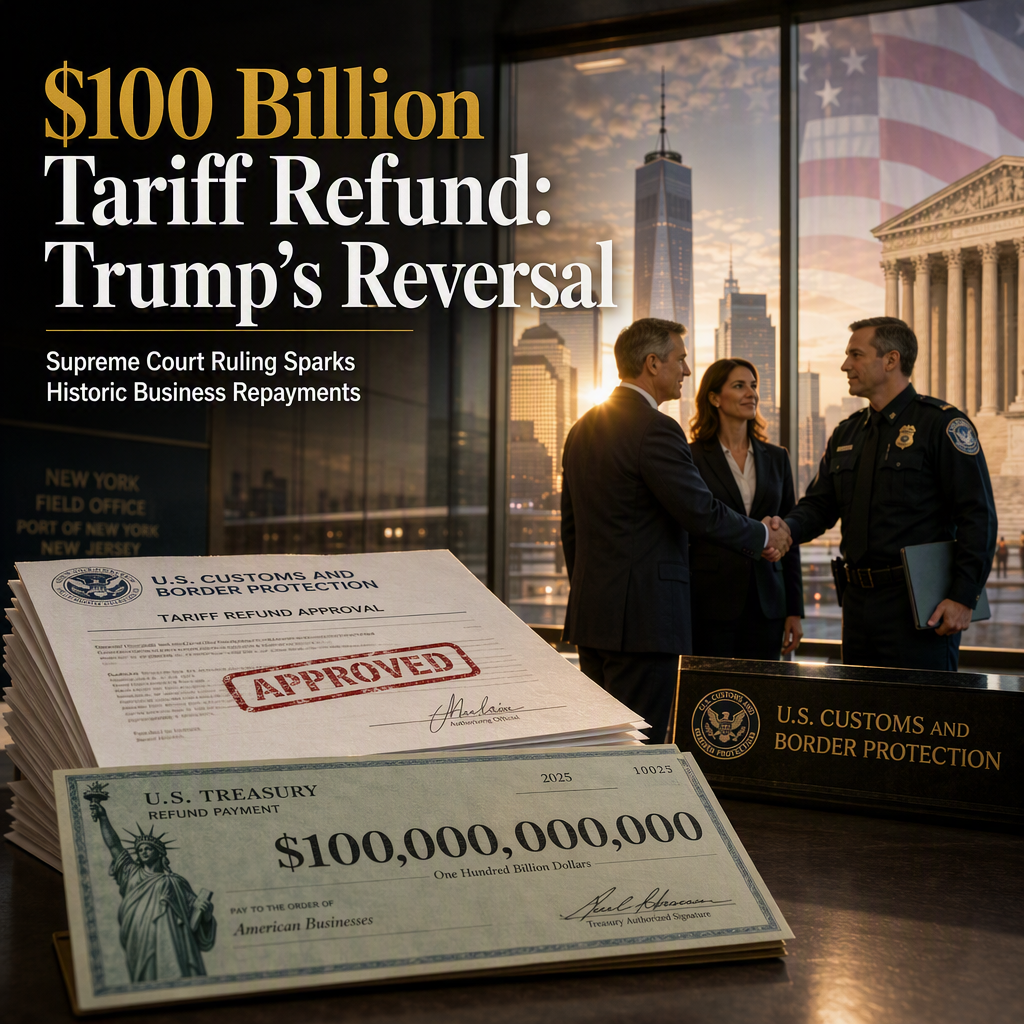
The Trump administration has refunded $100 billion in 'Liberation Day' tariffs to businesses, as reported by the Financial Times and cited in a recent court filing from US Customs and Border Protection [1]. This amount represents approximately 60% of all tariff revenue collected under the policy [1]. Despite these repayments, nearly $29 billion in potential refunds are still under review by trade authorities, and an additional $1.6 billion remains unpaid due to importers not providing their banking details [1].
These repayments were prompted by a significant Supreme Court decision in February, which found that the broad import duties introduced under economic powers were unlawful [1]. The market reaction to this development was modest, with the US Dollar Index (DXY) trading 0.03% lower at around 99.66 at the time of reporting [1].
The article also provides context on tariffs, explaining that they are customs duties levied on certain imports to help local producers compete, and are distinct from taxes in their application and purpose [1]. There is ongoing debate among economists about the effectiveness of tariffs, with some viewing them as necessary for protecting domestic industries and others warning of potential negative consequences such as higher prices and trade wars [1].
Looking ahead, Donald Trump has reiterated his intention to use tariffs as a tool to support the US economy and American producers, particularly targeting imports from Mexico, China, and Canada, which together accounted for 42% of total US imports in 2024 [1]. Trump also plans to use tariff revenue to lower personal income taxes [1].
CONCLUSION
The refund of $100 billion in tariffs marks a significant reversal of previous trade policy following a Supreme Court ruling. While most refunds have been processed, substantial sums remain under review or unpaid. The market reaction has been muted, but future tariff policy remains a focal point as Trump signals continued use of tariffs to support domestic interests.