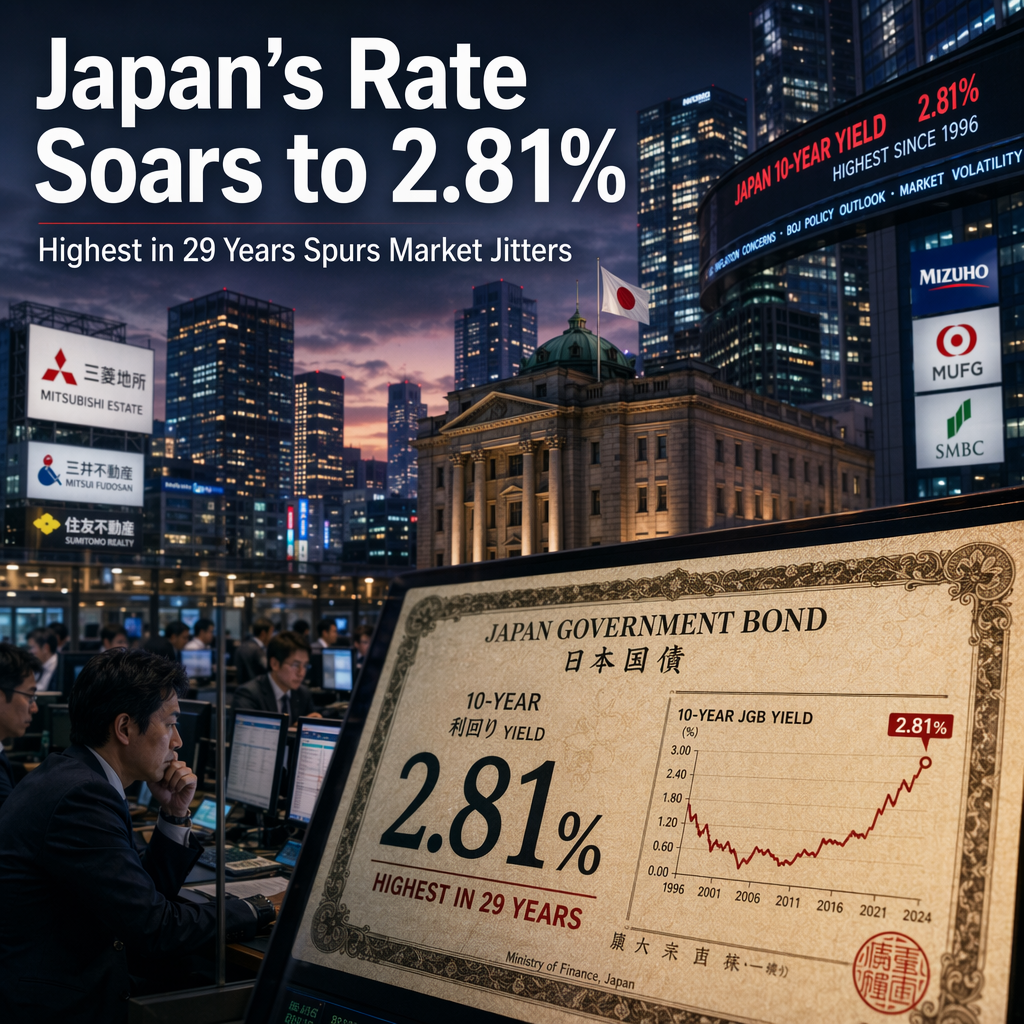
Japan's long-term interest rate temporarily rose to 2.81%, marking its highest level in approximately 29 years, driven by accelerating inflation expectations and rising overseas interest rates [1]. This sharp increase has drawn significant attention in financial markets, with investors selling bonds amid growing domestic price pressures [1]. A major bank trader commented that persistent inflation concerns, combined with speculation about potential changes in the Bank of Japan's monetary policy, have heightened market caution regarding future interest rate movements [1].
The 2.81% level, not seen since 1997, is considered a key technical resistance in the domestic bond market, with the 2.8% range acting as a recent upper limit [1]. Market participants noted that further increases are possible depending on upcoming economic indicators and Bank of Japan announcements, with some analysts suggesting that surpassing 2.8% could bring the 3% range into view, while others believe rates could retreat to the 2.6% range if inflationary pressures ease [1].
The rise in interest rates has impacted equities, with financial stocks being bought while real estate-related stocks faced selling pressure [1]. Investors are increasingly wary of future interest rate trends and monetary policy decisions [1]. Technical analysis shows a rapid jump from the 2.7% range to 2.81%, with increased trading volume and short-term signs of overheating, though the upward trend remains strong [1].
Experts advise that while a short-term correction is possible, caution is warranted for a medium- to long-term uptrend in interest rates. They recommend reviewing bond holdings and rebalancing portfolios in response to these developments [1]. The market is expected to closely monitor upcoming economic data and Bank of Japan policy statements, as interest rate movements are likely to have a significant impact on both domestic and international financial markets [1].
CONCLUSION
Japan's long-term interest rate spike to 2.81% signals heightened inflation concerns and speculation about monetary policy changes. The move has already influenced sector rotation in equities and prompted calls for portfolio adjustments. Market participants are expected to closely watch economic data and central bank actions for further direction.