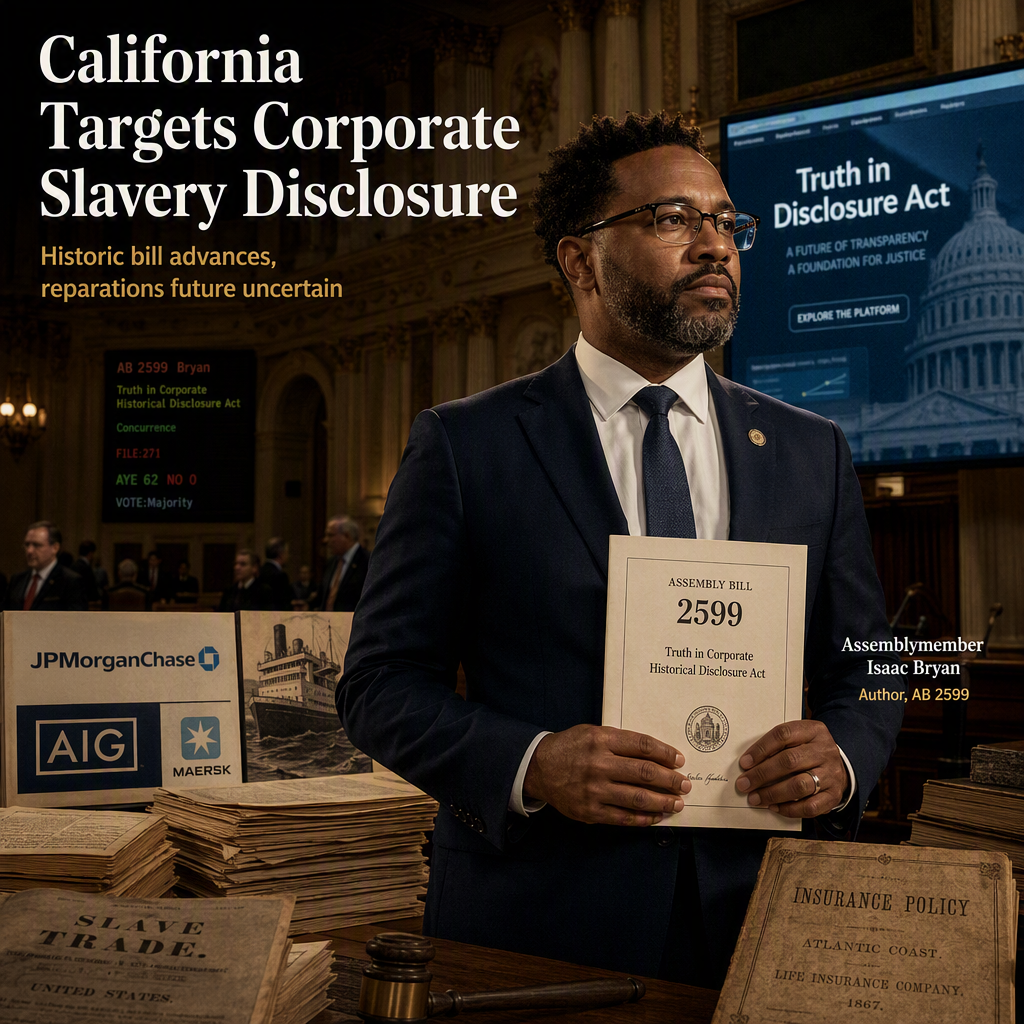
California lawmakers are advancing Assembly Bill 2599, known as the Truth in Disclosure Act, which would require major corporations operating in California with annual worldwide gross receipts exceeding $100 million to review their historical records and submit sworn affidavits disclosing any past ties to chattel slavery [1]. The bill, introduced by Assemblymember Isaac Bryan, D-Ladera Heights, mandates that the California Civil Rights Department establish a digital public platform by January 3, 2028, to archive these disclosures, focusing on sectors historically linked to the antebellum economy such as insurance, banking, tobacco, cotton, sugar, railroads, and shipping [1].
The legislation was advanced by the Senate Appropriations Committee in August as part of the legislative 'suspense file' clearing process, sending it to the full Senate floor for consideration [1]. If enacted and signed by Governor Gavin Newsom, California would become the first state to require major private corporations to report under oath their historical or financial ties to chattel slavery [1].
AB 2599 is part of a broader legislative effort by the California Legislative Black Caucus, following recommendations from the state’s Reparations Task Force [1]. Another related measure, introduced by Assemblymember Tina McKinnor, D-Inglewood, aims to protect potential future reparations payments from state income taxes [1]. McKinnor expressed optimism about Governor Newsom's support for these measures, citing his previous leadership on laws benefiting descendants of formerly enslaved people [1].
Despite these legislative moves, the future of direct cash reparations in California remains uncertain due to significant political and budgetary challenges. Governor Newsom has previously expressed caution regarding direct payments, vetoing earlier standalone measures over legal and fiscal concerns [1]. Federal policies under the Trump administration remain opposed to government-funded racial reparations programs [1].
CONCLUSION
California's push for corporate slavery disclosure legislation marks a significant step in transparency and reparations-related policy, though the path for direct cash reparations remains unclear. The market impact is medium, as major corporations may face new compliance requirements if the bill becomes law, but immediate financial implications are not specified.