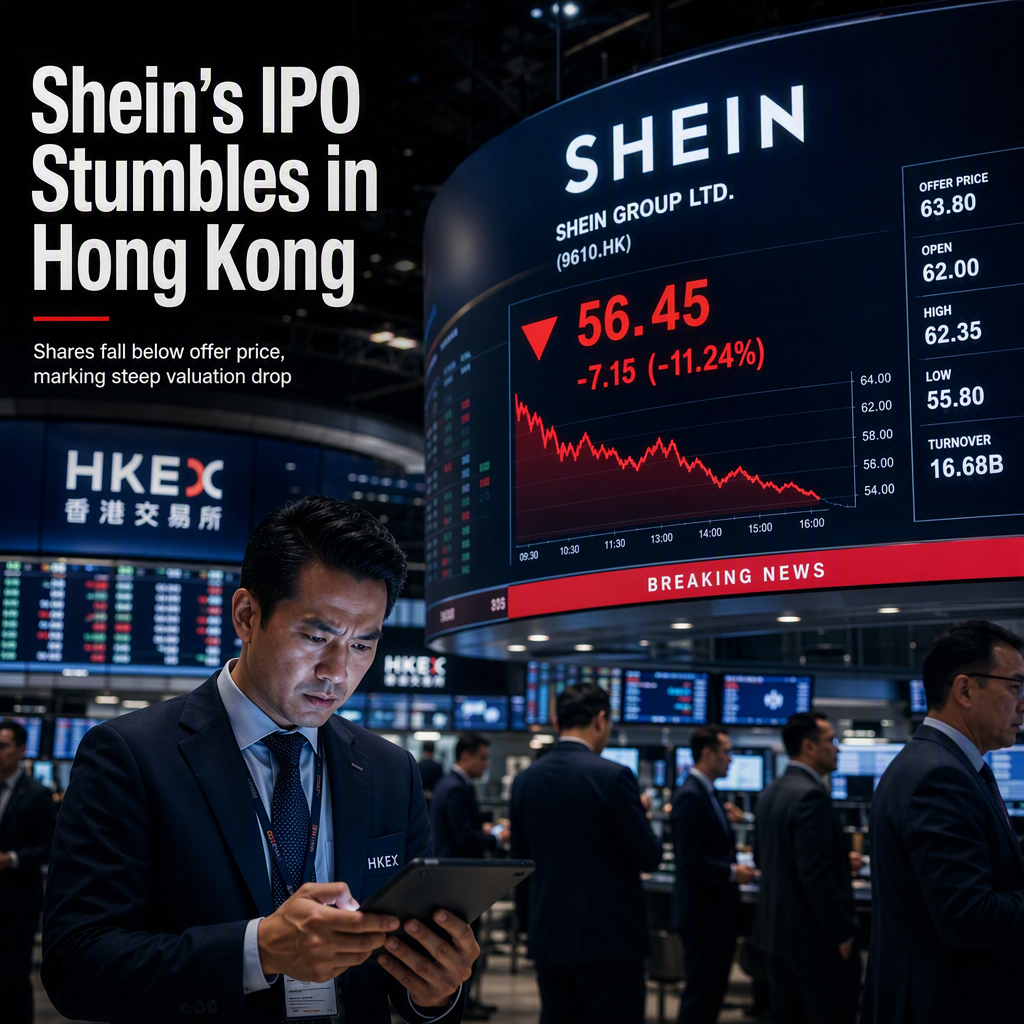
Shein, the China-founded superfast-fashion retailer, made its debut on the Hong Kong stock market on Tuesday. Despite its reputation for rapidly spotting and producing emerging fashion trends at low prices, Shein's shares fell below their initial public offering price on the first day of trading. The company's market capitalization stood at $24.6 billion, a significant decline from its private-market peak valuation of about $100 billion in 2022 [1].
Nikkei Asia's analysis attributes Shein's slowed performance to regulatory changes impacting low-value imports into the U.S. and Europe, which have increased costs in its key Western markets. Additionally, competition has intensified with Temu, another Chinese-owned online retail rival [1]. At its peak, Shein's valuation surpassed that of Fast Retailing, the owner of Uniqlo, but following the Hong Kong listing, Shein's market value is now about a quarter of its previous high [1].
The market currently views Shein as lagging behind the artificial intelligence-driven boom that has fueled investor enthusiasm in other sectors. In contrast, Uniqlo is focusing on strengthening its brand through physical stores and expanding its network of global flagship locations, a strategy that appears to be resonating with consumers, as evidenced by busy stores in Tokyo's Ginza district [1].
The article also notes that superfast fashion, as exemplified by Shein, has faced criticism for promoting a disposable approach to clothing. For sustainable long-term growth, Shein may need to reconsider its business model and pursue a more durable strategy [1].
CONCLUSION
Shein's disappointing Hong Kong IPO debut, with shares falling below the offer price and a market cap far below its 2022 peak, signals investor skepticism about its growth prospects amid regulatory and competitive pressures. The market's shift in sentiment highlights the challenges facing superfast fashion, while rivals like Uniqlo pursue alternative strategies focused on brand strength and physical retail presence.