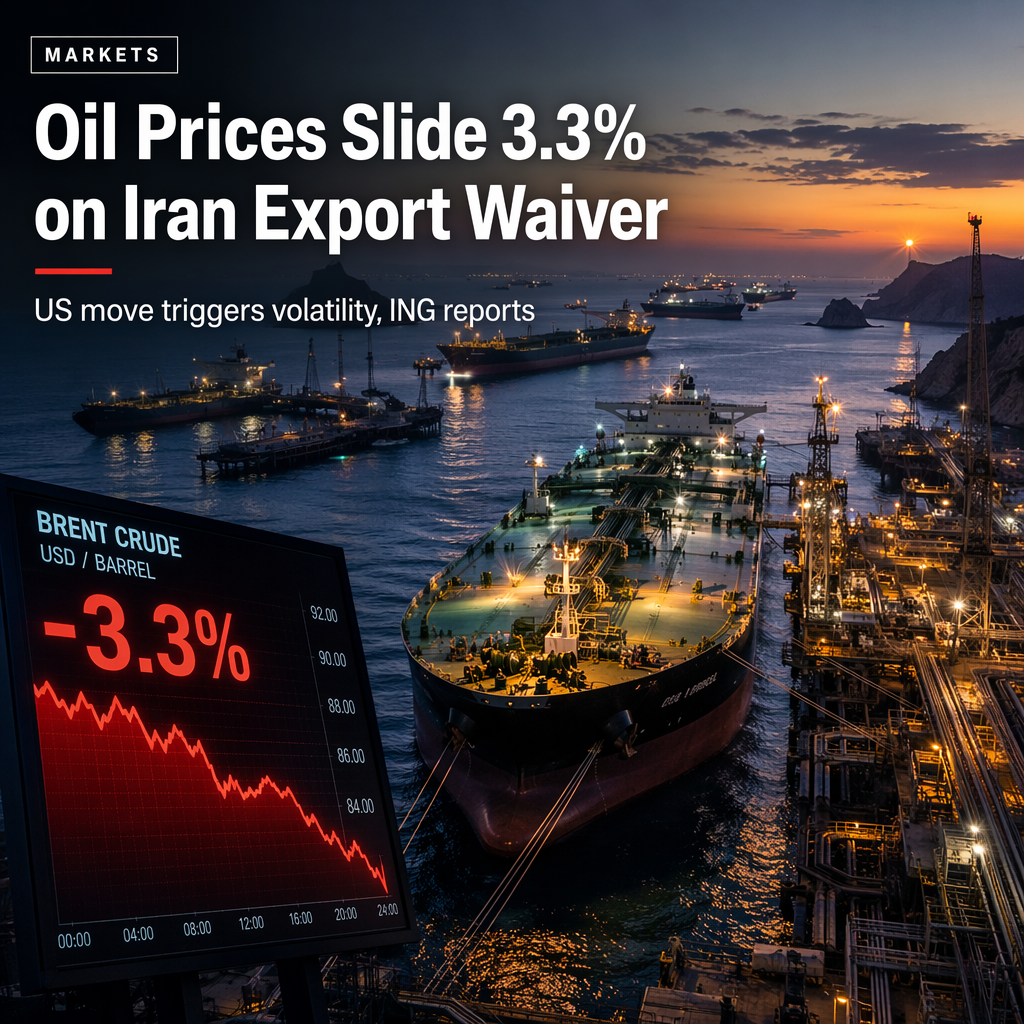
Oil prices experienced a sharp decline following the United States' decision to grant a 60-day waiver permitting Iranian oil exports, according to ING analysts Warren Patterson and Ewa Manthey [1]. This move added to existing downward pressure from increasing oil flows through the Strait of Hormuz [1]. Specifically, ICE Brent crude settled 3.3% lower in response to these developments [1].
The ING analysts emphasized that the primary driver of the recent price drop was the US issuance of the 60-day license for Iranian exports [1]. They also noted ongoing uncertainty regarding the timeline for normalization of oil flows through the Strait of Hormuz, with consensus suggesting it will take months, though recent market price action hints at a potentially faster recovery [1].
Additionally, the analysts highlighted that the fragile ceasefire dynamics between the US and Iran continue to pose significant upside risk for oil price volatility [1]. The evolution of US-Iran negotiations is expected to play a crucial role in determining how quickly energy flows can resume to normal levels [1].
CONCLUSION
The US waiver allowing Iranian oil exports has led to a notable 3.3% drop in oil prices, with market participants closely watching the pace of normalization in Persian Gulf oil flows. ING analysts caution that ongoing US-Iran relations and ceasefire dynamics could continue to drive volatility in the oil market.