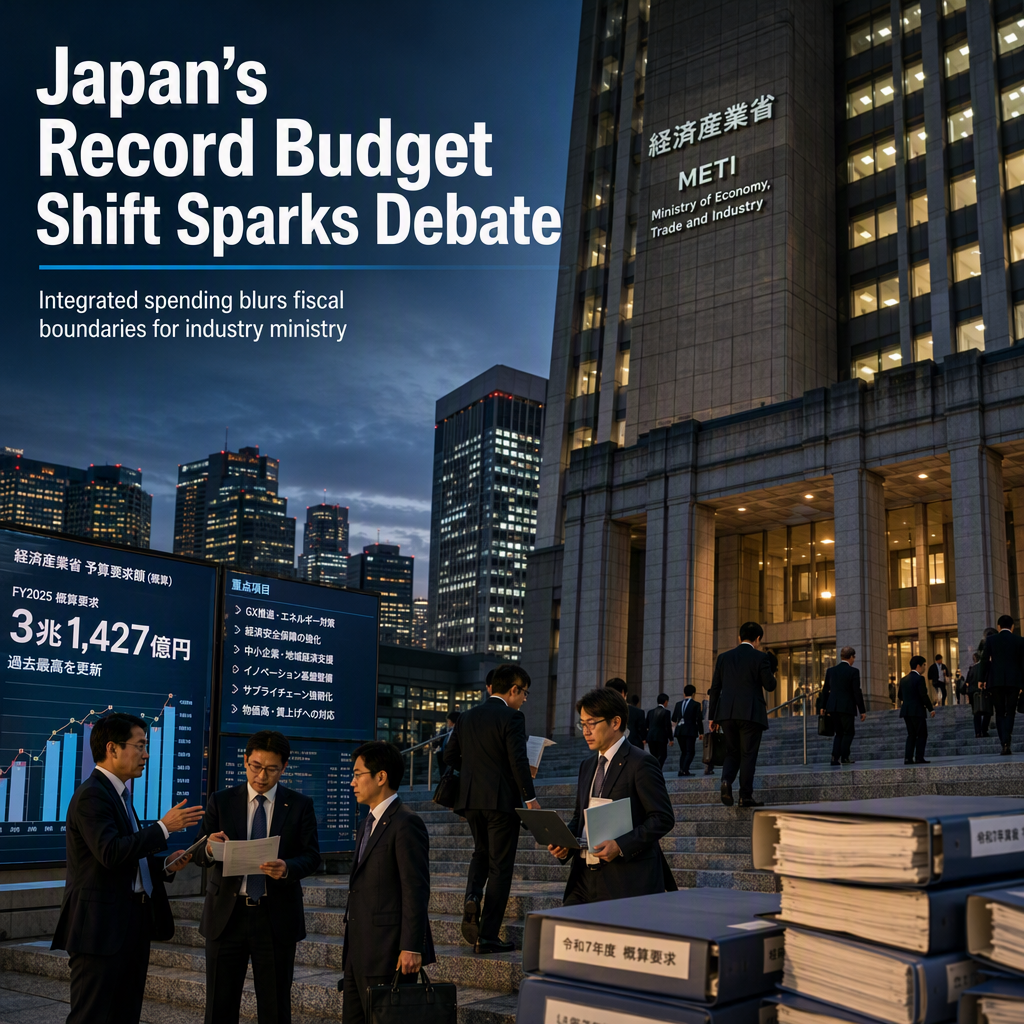
Prime Minister Sanae Takaichi is advocating for the integration of Japan's substantial supplementary budgets into the initial annual budget, marking a significant shift in fiscal policy for the Ministry of Economy, Trade and Industry (METI) [1]. Historically, the ministry's budget was much smaller compared to other ministries, primarily due to its focus on administrative guidance rather than large-scale spending [1]. However, the current landscape has changed dramatically, with METI's budget swelling as hefty supplementary budgets become routine rather than exceptional [1].
This change has raised concerns among fiscal conservatives and policy analysts, who argue that the frequent use of extra budgets undermines their original purpose of addressing urgent and unforeseen needs. The routine integration of supplementary budgets into the main budget process has contributed to a lack of spending discipline and made it increasingly difficult to control overall government expenditures [1]. Critics warn that without strict oversight, this approach could encourage ministries to seek even larger budgets and diminish incentives for prudent fiscal management [1].
Recent budget requests highlight the scale of this trend, with ministries seeking record amounts, including $78 billion in uncapped growth investment and a total request of $918 billion for the next fiscal year [1]. The move to integrate supplementary budgets is intended to enhance transparency and improve fiscal management, but it also blurs the boundaries between emergency measures and regular fiscal policy [1].
These developments have sparked debate about the long-term sustainability of Japan's public finances, as the industry ministry's bloated budget raises questions about fiscal discipline and the effectiveness of oversight mechanisms [1].
CONCLUSION
Japan's shift toward integrating supplementary budgets into the initial budget has resulted in record budget requests and heightened concerns about fiscal discipline. While the move aims to improve transparency, critics warn it may encourage larger spending and threaten the sustainability of public finances. The market is likely to view these developments with caution, given the potential implications for government expenditure and fiscal stability.