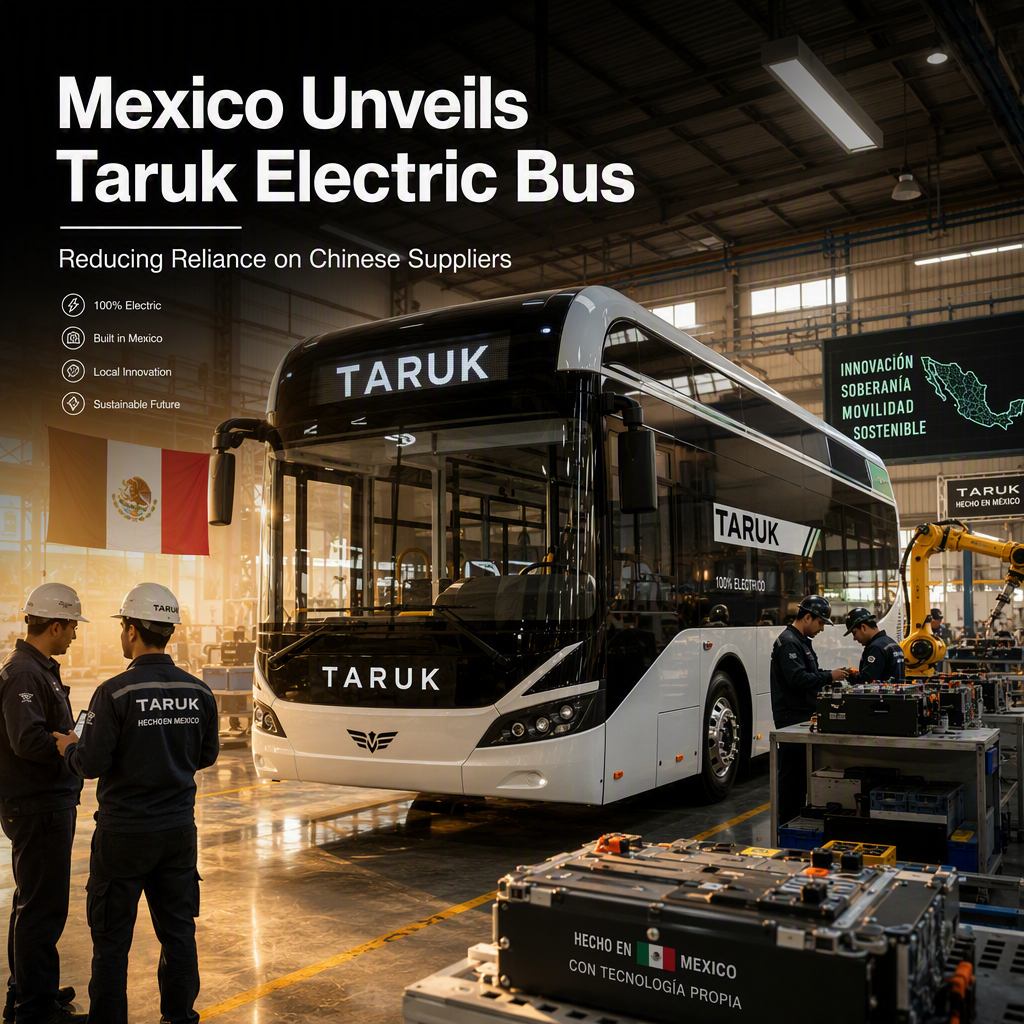
Mexico has initiated the development of a domestically produced electric bus, known as the Taruk project, as part of a strategic effort to decrease reliance on Chinese manufacturers and strengthen its own industrial base in the electric vehicle sector [1]. The project aims to localize up to 80% of the bus's components and establish a domestic battery industry, marking a significant step toward building a local supply chain for electric vehicles [1].
The Taruk project is now entering full-scale development, with the goal of capturing more value from the global shift toward clean transportation and reducing import dependency, particularly for critical technologies such as batteries and electric drivetrains [1]. This initiative is positioned as a response to concerns about overreliance on Chinese suppliers and is intended to boost Mexico's manufacturing capabilities in the rapidly evolving electric vehicle market [1].
No specific financial details, market analysis, or statements from officials or industry representatives are provided in the source article [1]. Additionally, there is no mention of market reactions, analyst opinions, or forward-looking statements beyond the project's stated objectives [1].
CONCLUSION
Mexico's Taruk electric bus project represents a strategic move to localize electric vehicle production and reduce dependence on Chinese suppliers. While the initiative signals a commitment to strengthening the domestic EV supply chain, further financial details and market reactions are not available in the source. The project's progress will be important to monitor as Mexico seeks to capture value from the global clean transportation transition.