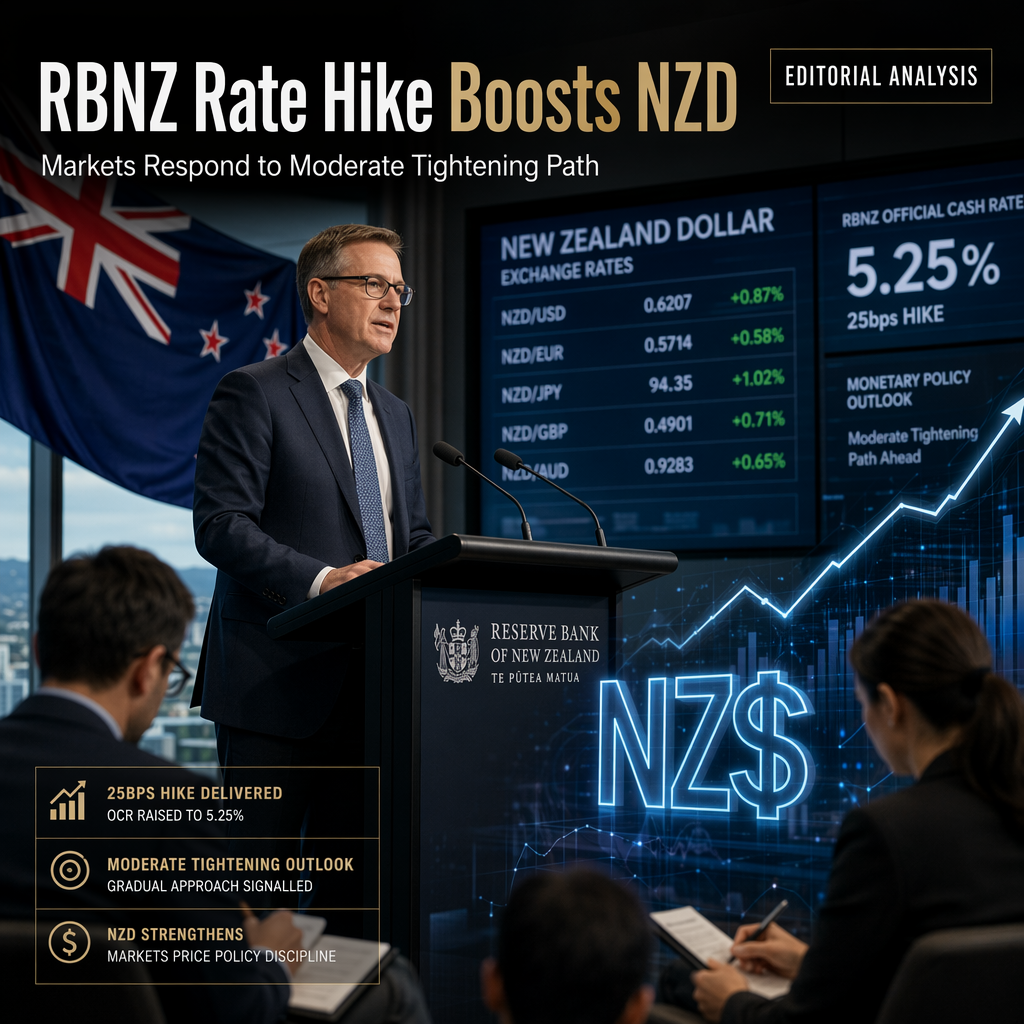
The Reserve Bank of New Zealand (RBNZ) raised its key policy rate by 25 basis points to 2.50%, marking the first rate hike since May 2023 [1]. This decision led to a strengthening of the New Zealand Dollar (NZD) against the US dollar, as it was the only notable move in the currency markets following the announcement [1]. The Overnight Index Swap (OIS) market had largely anticipated the hike, with 18 basis points priced in for the day and a total of 85 basis points over the next twelve months [1].
MUFG's Derek Halpenny noted that while the market had priced in more aggressive tightening, MUFG expects only two additional rate hikes by March 2027, which is slightly less than what the OIS curve currently implies [1]. The RBNZ's communication was described as consistent with a moderate pace of tightening, with no signs of urgency or surprise hawkish rhetoric [1]. In the Record of Meeting, two members indicated that inflation risks were skewed to the upside, but the majority viewed risks as balanced [1].
Despite the rate hike, domestic economic conditions in New Zealand remain fragile, which is expected to limit further gains in the NZD [1]. The 2-year yield increased by just 4 basis points on the day, suggesting that follow-through buying of the NZD should be contained [1].
CONCLUSION
The RBNZ's 25bps rate hike was largely anticipated by markets and resulted in a modest strengthening of the NZD. With the central bank signaling a moderate tightening path and acknowledging fragile domestic conditions, further NZD gains are expected to be limited. Market reaction was measured, reflecting the absence of surprise hawkish signals.