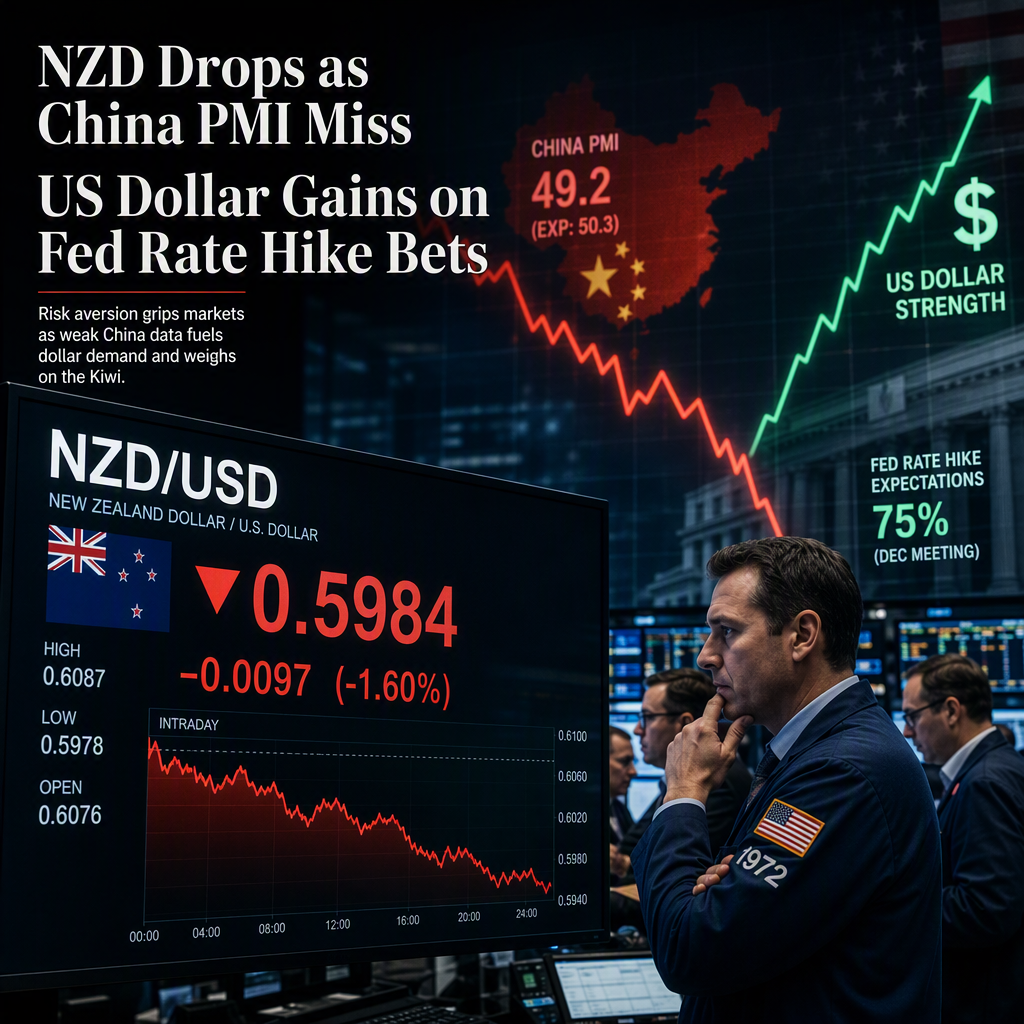
The New Zealand Dollar (NZD) weakened against the US Dollar (USD) on Friday, with NZD/USD trading around 0.5860, down 0.33% on the day, following disappointing economic data from China, New Zealand's largest trading partner [1]. China's official NBS Manufacturing Purchasing Managers Index (PMI) dropped to 49.2 in July from 50.3 previously, missing the market consensus of 50, while the Non-Manufacturing PMI also declined to 49 from 50.2, indicating a broader slowdown in Chinese economic activity [1].
Despite the negative impact from China, New Zealand saw some positive domestic news as the ANZ-Roy Morgan Consumer Confidence Index rose by eight points to 99.3 in July, reaching its highest level since February. Expectations for the economy over the next one and five years also improved, suggesting a gradual recovery in household sentiment [1].
Meanwhile, the US Dollar regained momentum as investors continued to price in the possibility that the Federal Reserve may keep monetary policy restrictive for longer. According to the CME FedWatch tool, traders currently assign around a 65% chance to a 25-basis-point interest rate increase at the September meeting, supported by persistent inflation concerns [1]. The latest US economic data reinforced this view, with the final University of Michigan Consumer Sentiment Index revised higher to 55.2 in July from the preliminary estimate of 54.4, and the Consumer Expectations Index revised up to 55.4. One-year and five-year Consumer Inflation Expectations remained unchanged at 4.2% and 3.3%, respectively [1].
Currency heat map data showed that the New Zealand Dollar was the strongest against the Swiss Franc, but weakened against the US Dollar, Euro, and Japanese Yen [1].
CONCLUSION
The New Zealand Dollar's decline was primarily driven by weaker-than-expected Chinese PMI data, overshadowing improved domestic consumer confidence. The US Dollar strengthened on renewed expectations of a potential Fed rate hike in September. Market sentiment remains cautious, with risk aversion prevailing due to concerns over China's economic outlook.