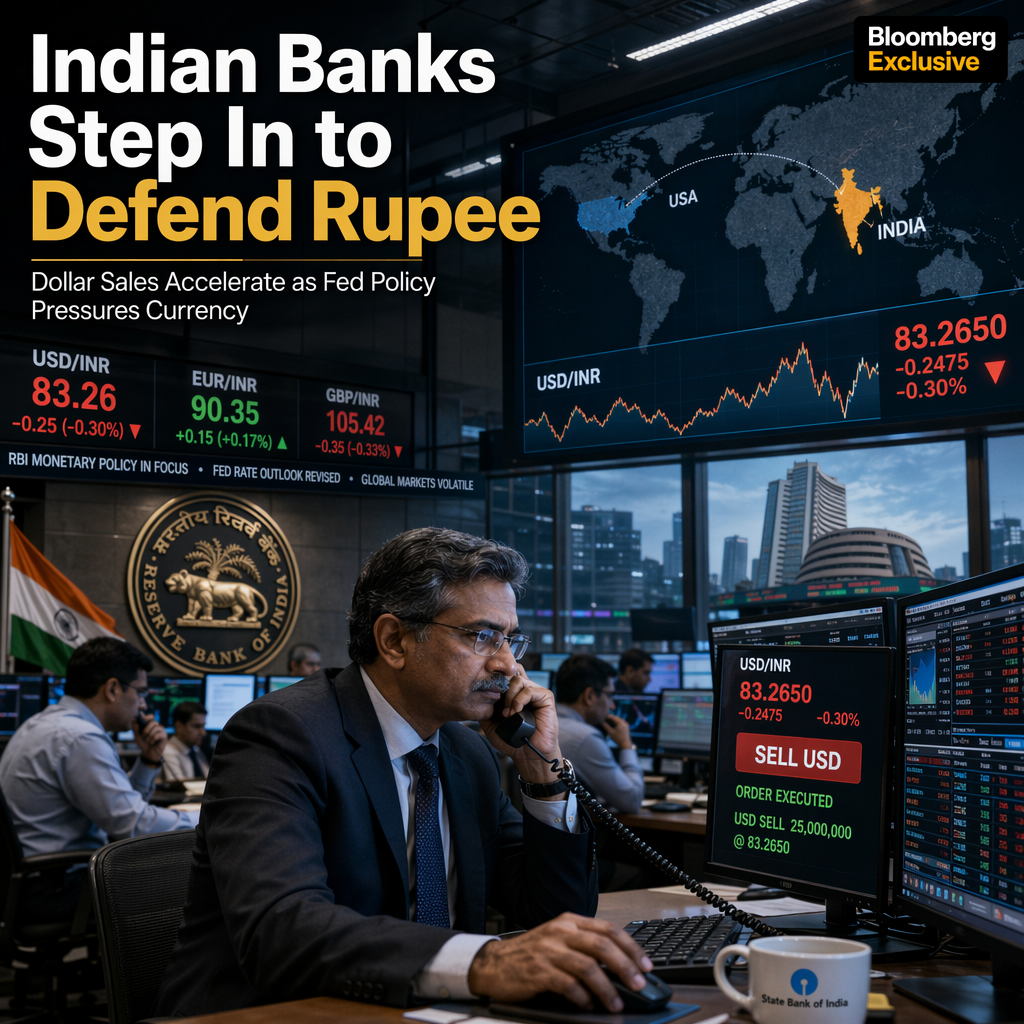
Societe Generale reports that state-controlled banks in India have been actively selling US Dollars for the second consecutive day after the USD/INR currency pair briefly moved above its 50-day moving average of 95.03 [1]. This intervention comes as supportive factors for the Indian Rupee, such as foreign portfolio investor (FPI) debt inflows and lower oil and gold prices, are being offset by a hawkish repricing of the US Federal Reserve's policy outlook [1].
The report further notes that a minor pullback in front-end US yields, prompted by Warsh’s comments on inflation, was largely ignored by the market [1]. Data cited by Societe Generale indicates that the Reserve Bank of India’s (RBI) net short US Dollar position expanded significantly in May, rising by $11.4 billion to reach a record $106.7 billion before the RBI and Ministry of Finance announced policy measures in early June [1].
These actions by state banks suggest an effort to limit Rupee depreciation in the face of external pressures, particularly from US monetary policy expectations. The interplay between domestic support factors and global headwinds continues to shape the near-term outlook for the Indian currency [1].
CONCLUSION
Indian state banks have stepped in to sell US Dollars, capping Rupee losses despite supportive domestic factors being outweighed by hawkish Fed expectations. The RBI’s expanded net short USD position highlights ongoing efforts to stabilize the currency amid global volatility.