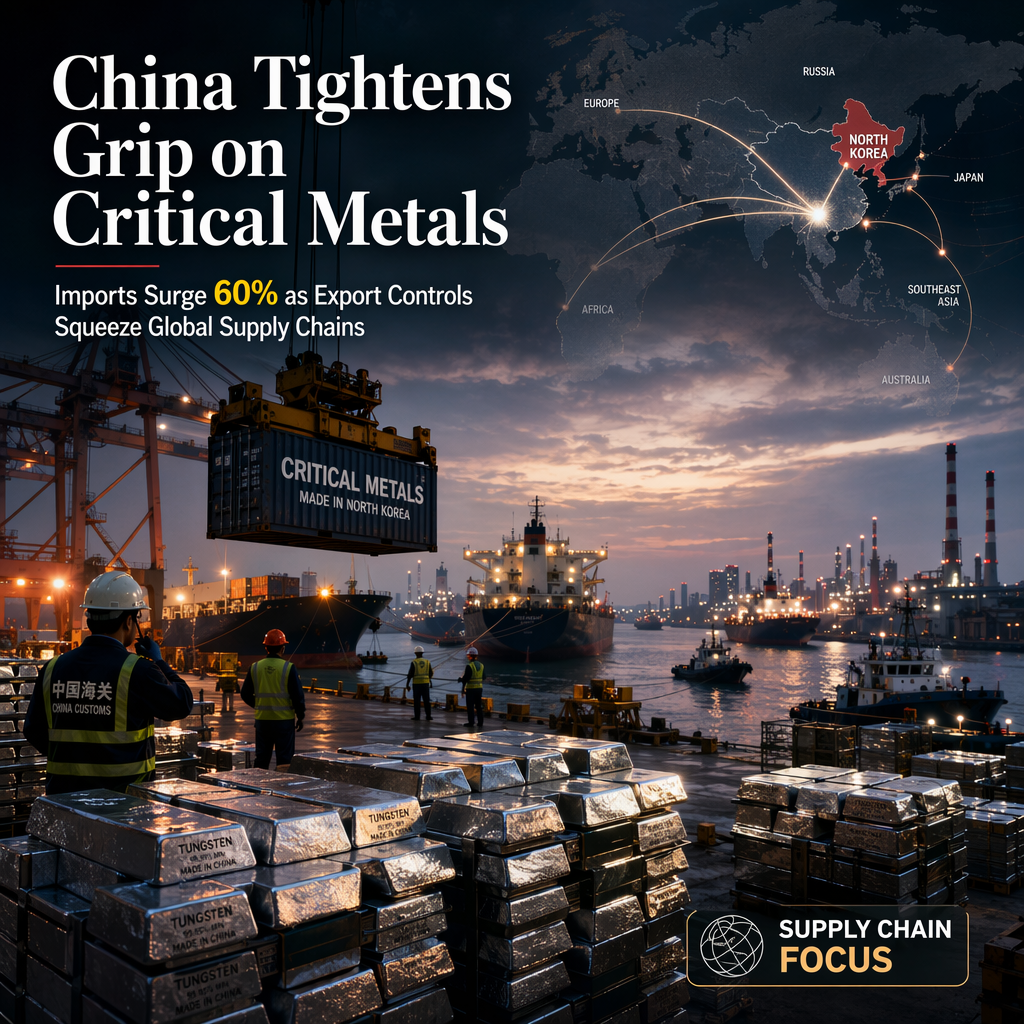
China has significantly increased its imports of critical metals, with trade data showing a 60% surge as the country intensifies efforts to control the global supply chain for these essential resources [1]. This strategic move involves boosting imports, including tungsten from North Korea, while maintaining strict export controls on these materials [1]. The dual approach of amassing supplies and restricting exports highlights Beijing's ambition to solidify its dominance in the global market for critical metals, which are vital for sectors such as electronics, defense, and green technology [1].
The increase in imports is particularly notable in the tungsten sector, where China has ramped up purchases from North Korea despite ongoing geopolitical tensions and international sanctions [1]. By keeping export restrictions in place, China is further tightening its grip on the international supply of these materials, creating significant implications for global supply chains [1].
Countries and companies that rely on critical metals for manufacturing semiconductors, batteries, and other high-tech products may face continued supply uncertainties and price volatility due to China's policy measures [1]. Market analysts are closely monitoring these developments, observing that China's stockpiling and export controls are likely to keep prices elevated and could prompt other nations to diversify their supply sources or invest in domestic production capabilities [1]. The global competition for critical minerals is intensifying as nations seek to reduce their dependence on Chinese supplies [1].
CONCLUSION
China's aggressive import strategy and ongoing export controls on critical metals are reshaping global supply chains and contributing to price volatility. Market participants and governments are expected to respond by seeking alternative sources and investing in domestic production to mitigate supply risks.